
When you purchase through links on our site, we may earn an affiliate commission. Here’s how it works .
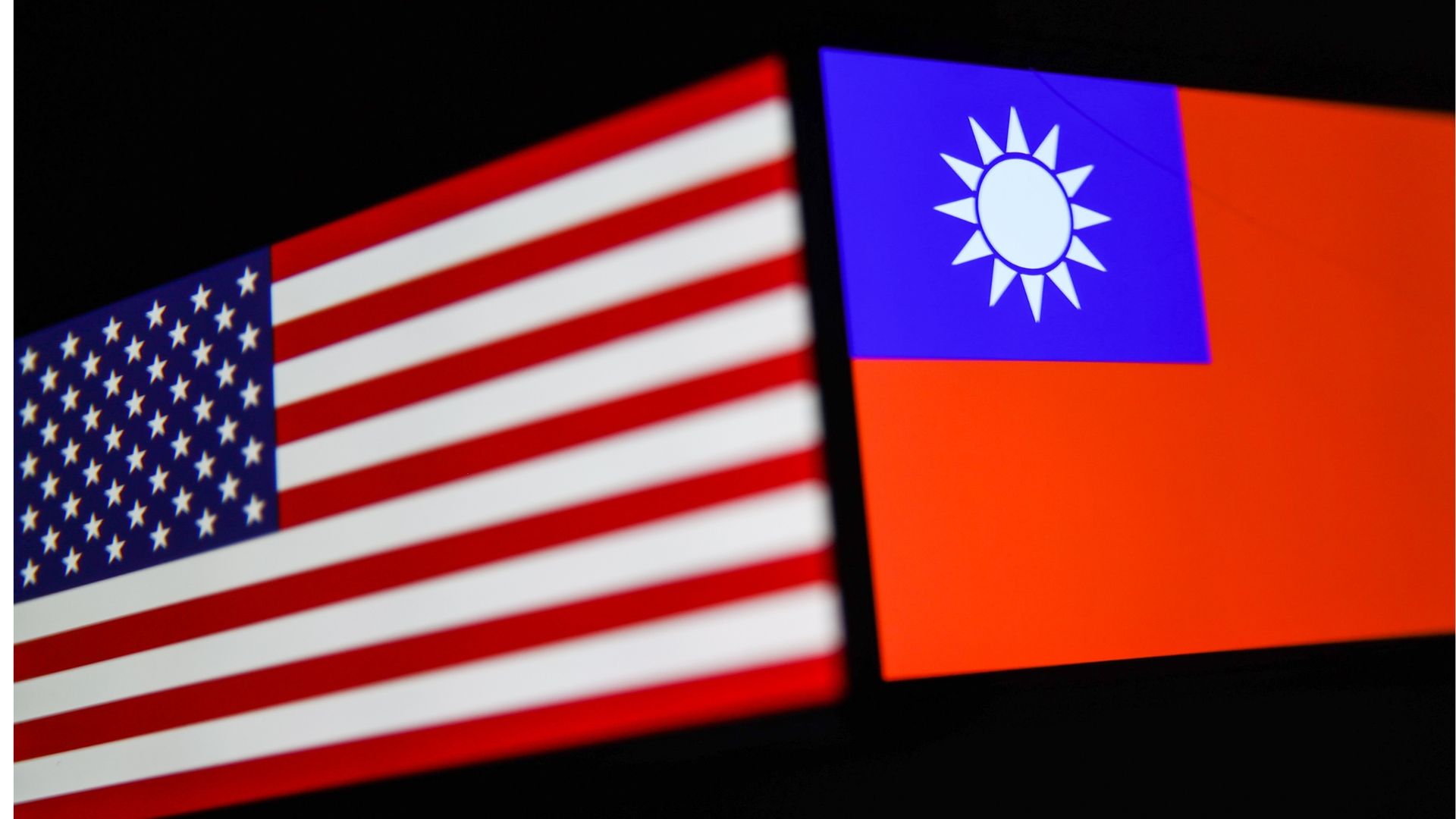
Secretary of State Marco Rubio and Trump delivered notably different messages about Taiwan within the same 24-hour period. Rubio told NBC News late Thursday that U.S. policy is "unchanged as of today," warned it would be "a terrible mistake" for China to use force, and said there would be global "repercussions" if Beijing moved militarily.
Trump, in a Fox News interview taped Friday in Beijing, took a markedly different stance. He questioned why the U.S. would travel 9,500 miles to fight a war and called Taiwan "a very small island" 59 miles from mainland China. On the arms package: "I haven't approved it yet. We're going to see what happens," he said.
Trump calls $14 billion Taiwan arms deal a 'negotiating chip' with China after Xi said Taiwan issue could lead to 'clashes and even conflicts'
Trump tariff turbulence risks handing TSMC a win over American chip manufacturers
US gov't warned Nvidia CEO Jensen Huang, Tim Cook, and Lisa Su that China could invade Taiwan by 2027
Chinese President Xi Jinping had opened the summit by warning that mishandling the Taiwan issue could lead to "clashes and even conflicts.” Trump, meanwhile, has previously called Taiwan’s semiconductor dominance a form of theft, and on Friday, he reiterated that he wanted all of the island's chipmakers to move to the United States.
That demand sits alongside an already-signed trade deal in which Taiwan committed $500 billion in U.S. semiconductor investment for reduced tariffs, with TSMC alone pledging $165 billion toward Arizona fab expansion. Taiwan's parliament also approved a $25 billion defense budget, with roughly $9 billion covering the first tranche of the December arms package and a second phase worth over $15 billion still awaiting U.S. approval.
Taiwan has already rejected Washington's push to transfer half of its advanced chipmaking capacity to U.S. soil and restricted TSMC from producing its most advanced process nodes outside Taiwan. Uncertainty over U.S. security commitments could reinforce that stance because Taiwan's semiconductor leverage is most valuable when production remains concentrated on the island.
Taiwan's Presidential Office highlighted "multiple reaffirmations" from both Trump and Rubio that U.S. policy remains unchanged, with spokeswoman Karen Kuo saying Taipei looks forward to continued cooperation "under the firm commitments of the Taiwan Relations Act.” The foreign ministry separately called arms sales a form of "joint deterrence against regional threats."
Get Tom's Hardware's best news and in-depth reviews, straight to your inbox.
Key considerations
- Investor positioning can change fast
- Volatility remains possible near catalysts
- Macro rates and liquidity can dominate flows
Reference reading
- https://www.tomshardware.com/tech-industry/SPONSORED_LINK_URL
- https://www.tomshardware.com/tech-industry/taiwan-declares-itself-sovreign-and-independent-after-trump-questions-us-defense-commitment#main
- https://www.tomshardware.com
- $1,149 for this 1440p gaming rig is an absolute steal in this Limited-time Woot sale — get an RTX 5060 Ti GPU inside Lenovo's Legion Tower 5i, now $410 off
- Unlock a 50% saving on Hoto's 25-bit electric screwdriver set for PC building and DIY — $29 Amazon deal is on a timer, so act fast
- Intel Core Ultra 7 270K Plus drops below MSRP for the first time — grab the 24-core Arrow Lake Refresh chip for just $279 for a limited time
- [Daily Due Diligence] NVDA NVDA
- Texas county passes data center ban for rural areas for a year, move comes in wake of AI data centers moving to remote areas to skirt regulations — state senato
Informational only. No financial advice. Do your own research.