
When you purchase through links on our site, we may earn an affiliate commission. Here’s how it works .
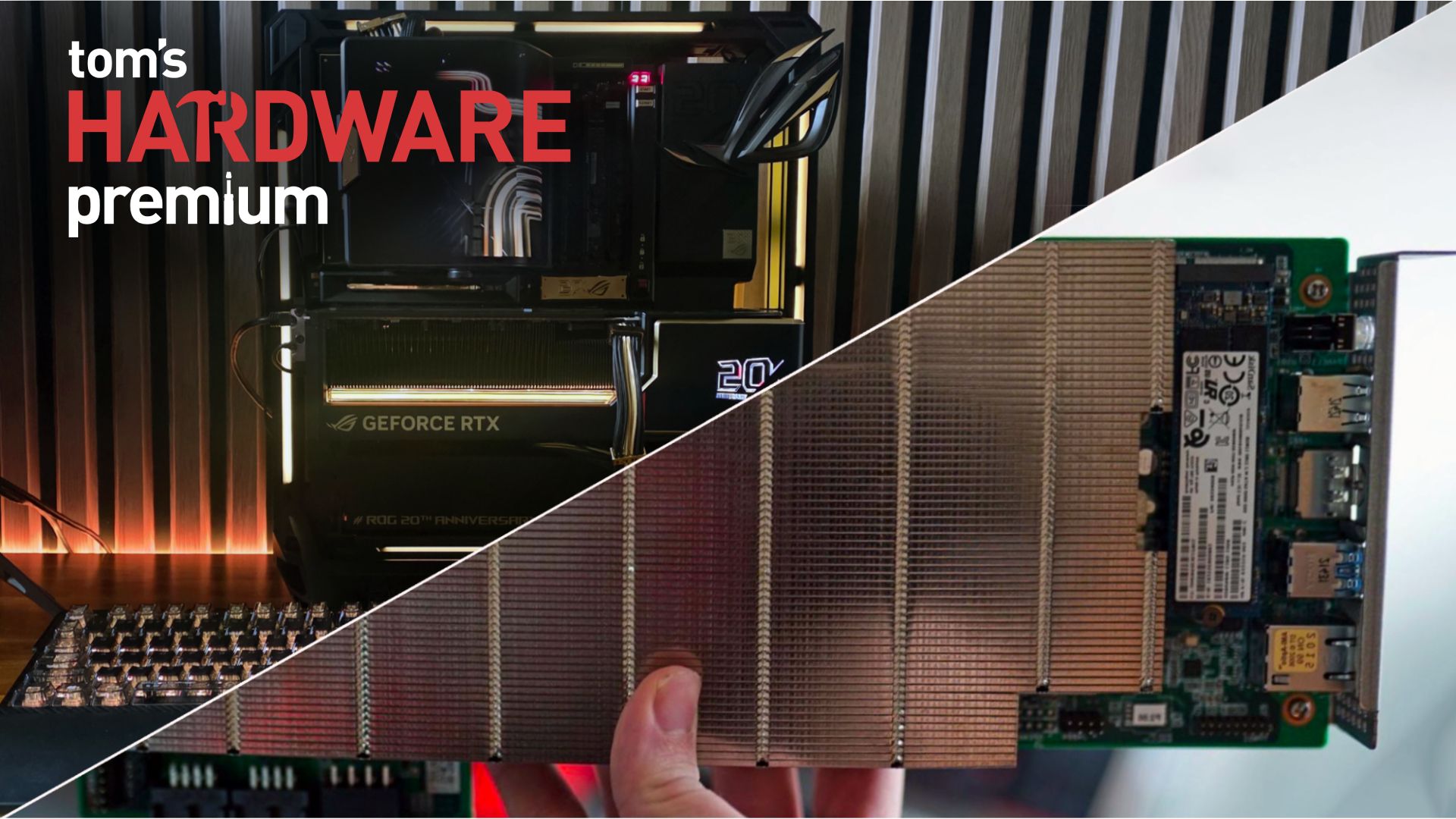
First off, we recently tested AMD’s BC-250 , a 2021-era APU that started off as defective or cut-down PS5 silicon, repurposed as a cryptomining card. But more recently, a community-developed BIOS and drivers have turned this custom hardware into a Linux-based competitor to Valve ’s much-hyped Steam Machine, while costing roughly half the price of a similarly configured system, once you source the power supply and other necessary parts. It even comes with 16GB of shared GDDR6, sidestepping the current RAM pricing issue altogether. Now, this is more of a project than a PC. You have to source the card (from places like AliExpress, eBay, or Etsy), then research and figure out how to flash the board so that it will even boot, followed by getting Linux and the requisite drivers installed, before you can even think about playing games. But depending on your sample, you might also be able to unlock extra CPU cores and compute units for even better performance.
It’s far from a simple setup. But this kind of community-led hardware repurposing and enhancement reminds me of two distinct hardware eras: The very early days of PC kits (which I wasn’t really around for), and the early 2000s, when you could unlock AMD Athlon and Duron multipliers with a pencil (or later, conductive silver lacquer). Unlocking higher clocks and extra performance without paying for a much pricier chip is exactly the kind of achievable dream that the PC enthusiast hobby was founded on, and it’s good to see it making a comeback – even if it’s with this one very specific piece of hardware. But as AI hardware development continues — and especially if (or when) specific areas of the hardware bubble pop or deflate – I expect to see more situations where communities of tinkerers figure out how to get discarded hardware to run games and other compute tasks, giving budget buyers hope for acceptable performance at reasonable prices. Ironically, AI tools like Claude Code will almost certainly make breakthroughs in hardware repurposing much easier.
On the other end of the PC price spectrum, I recently assembled a PC using parts from Asus’ ROG Edition 20 line. The anniversary hardware, which debuted earlier this year at Computex , ignores affordability concerns entirely. Asus instead opted to celebrate two decades of its Republic of Gamers sub-brand by taking several of its already expensive parts and peripherals, adding a few (mostly aesthetic) features and some gold accents, and charging even more for them. How much more? The finished PC, with about $2,000 worth of peripherals, a $3,300 motherboard and cooler combo , and a $6,000 RTX 5090 , costs roughly $15,000 – and that’s with a modest 2TB SSD and 32GB of RAM. If you opt for a more fitting 128GB kit with tight timings and 8TB of solid-state storage, you could easily spend $20,000 on a build like this. As tough as it is for many of us to swallow, there’s likely a large enough customer base of gamers and PC enthusiasts who can and will pay whatever it takes to own high-end, high-performance PCs to keep options like this afloat. Because while the cost of individual parts has certainly increased, the luxury PC market has existed for decades. I know because in the years before I joined Tom’s Hardware , I reviewed several PCs with custom cooling loops and multiple graphics cards (up to quad-SLI) from the likes of Digital Storm and Maingear. That market isn’t going away; it’s just getting more expensive.
So what about the mainstream PC gaming market? Things are tougher there, and I suspect that space will continue to shrink due to, well, everything I linked to up top. Those looking for gaming options in the sub-$2,000 range that “just work” without much tinkering are more likely to make do with consoles (which are, of course, also getting more expensive), gaming laptops or handhelds, or console-like PCs like Valve’s Steam Machine . Intel and AMD are reviving or extending the lifespan of chips and platforms that support last-gen DDR4, but older memory isn’t getting any cheaper either. And our own testing has shown that DDR4 is increasingly holding back gaming performance .
One year into the AI-induced RAM apocalypse
Key considerations
- Investor positioning can change fast
- Volatility remains possible near catalysts
- Macro rates and liquidity can dominate flows
Reference reading
- https://www.tomshardware.com/desktops/gaming-pcs/SPONSORED_LINK_URL
- https://www.tomshardware.com/desktops/gaming-pcs/the-three-pronged-future-of-custom-pc-building-from-repurposing-forgotten-parts-to-ultra-premium-works-of-gaming-art#main
- https://www.tomshardware.com/my-account
- Get this spiffy, stealthy MSI Gaming Trio RTX 5090 for just $4,299
- China launches 'Supercomputing-1' AI satellite as orbital data centers gather momentum
- China's YMTC wins patent battle against Micron in ongoing 3-year legal war over memory patents
- Alibaba claims new Qwen Image 2.1 AI model beats Google Nano Banana 2.0 with minuscule 7B parameter model
- Save big on this vivid 27-inch OLED monitor with fast 240Hz refresh rate
Informational only. No financial advice. Do your own research.