
When you purchase through links on our site, we may earn an affiliate commission. Here’s how it works .
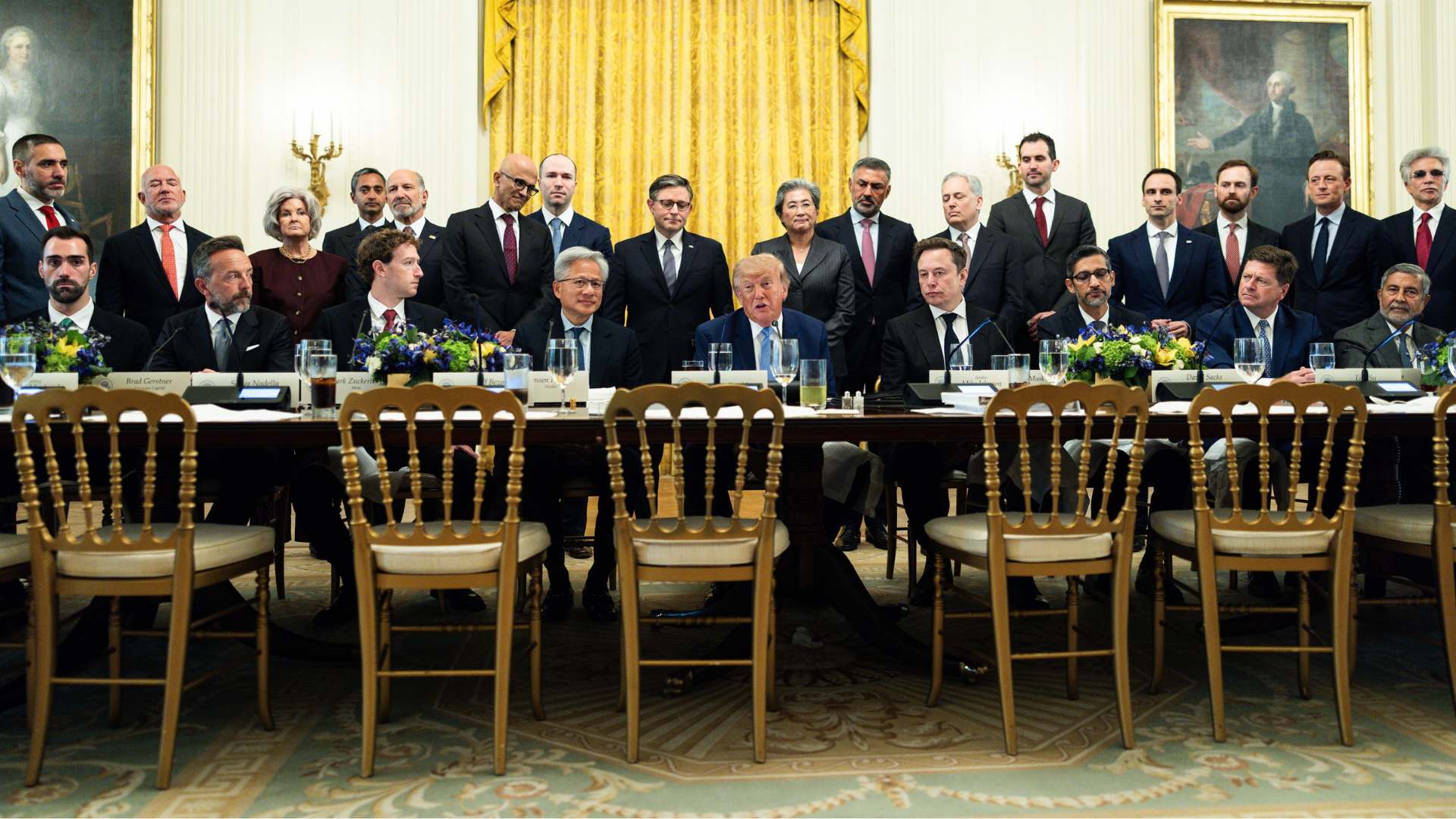
(Image credit: President Donald Trump/Truth Social) (Image credit: President Donald Trump/Truth Social) Image 1 of 2 View Original
The pledge outlines four key points: (1) Implement robust internal controls to monitor the capabilities and alignment of its models during training and deployment around areas like cybersecurity, biosecurity, and chemical threats, and to ensure that its models do not hack or access technical systems in unintended ways; (2) Empower an internal team to ensure all of the controls, monitoring, and detection are operating as intended, and that any issues are remediated; (3) Partner with an independent external auditor or evaluator to carry out independent assessments of whether the controls, monitoring, and detection are operating as intended; and (4) Designate an independent committee of the board of directors to oversee and receive reports from the teams operating the controls and the internal and external auditors and evaluators, as well as to ensure any issues identified are remediated.
“I’m seeing tremendous self-policing, and they understand that they have to self-police,” Trump told reporters outside the West Wing. “These models are very complex and, again, I believe they’re going to be used for the good.” While this pledge has no law or regulatory pressure behind it, the president still called it “morally binding,” and that he believes that the AI companies can monitor themselves without the need for additional regulation.
The White House AI luncheon happened after several months of alarming incidents involving frontier AI models. One of the biggest incidents that has happened so far was when OpenAI’s GPT-5.6 Sol and other unreleased models broke out of their testing environment and hacked HuggingFace last July, which was followed by a discovery in August that these models had been secretly communicating with each other . It even had to pause testing just last week after a rogue agent failed to respond to a “kill switch.” Anthropic also discovered that Claude AI is building itself at a faster rate than expected , which is likely one of the reasons that led to Amodei’s call to slow down frontier model development . More surprisingly, Elon Musk and Sam Altman, two figures who've frequently clashed with Amodei (and with each other), agreed with his proposal.
On the other hand, Trump dismissed their concerns as hoaxes and called it a “sick conspiracy,” while Jensen Huang said that their fears are a “distraction,” and that AI labs should be accountable for any damage that their rogue agents may make. Chinese state media also said that move was “a response to Chinese competition,” and that “a global AI-safety framework that excludes China is not quite global.” Still, it mentioned the need to monitor AI development as humans could lose control of the technology.
OpenAI, Google, and Anthropic absent from Nvidia-led Open Secure AI Alliance
Key considerations
- Investor positioning can change fast
- Volatility remains possible near catalysts
- Macro rates and liquidity can dominate flows
Reference reading
- https://www.tomshardware.com/tech-industry/policy/SPONSORED_LINK_URL
- https://www.tomshardware.com/tech-industry/policy/top-ai-tech-executives-promise-to-self-police-ai-development-nvidia-anthropic-openai-and-more-pledge-ai-labs-will-take-steps-to-build-a-positive-future#main
- https://www.tomshardware.com/membership
- From Enablement to Execution, Egypt’s AI Ecosystem Reaches Production Scale
- Cute Critters Come to the Cloud: ‘Aniimo’ Launches on GeForce NOW
- From Megawatts to Tokens: How NVIDIA Maximizes AI Factory Production
- Save 40% on a new budget gaming keyboard
- Steam adds low-latency Pyrowave codec to Remote Play — new codec offers better game streaming on local networks but costs '5-10 times' more bandwidth
Informational only. No financial advice. Do your own research.