
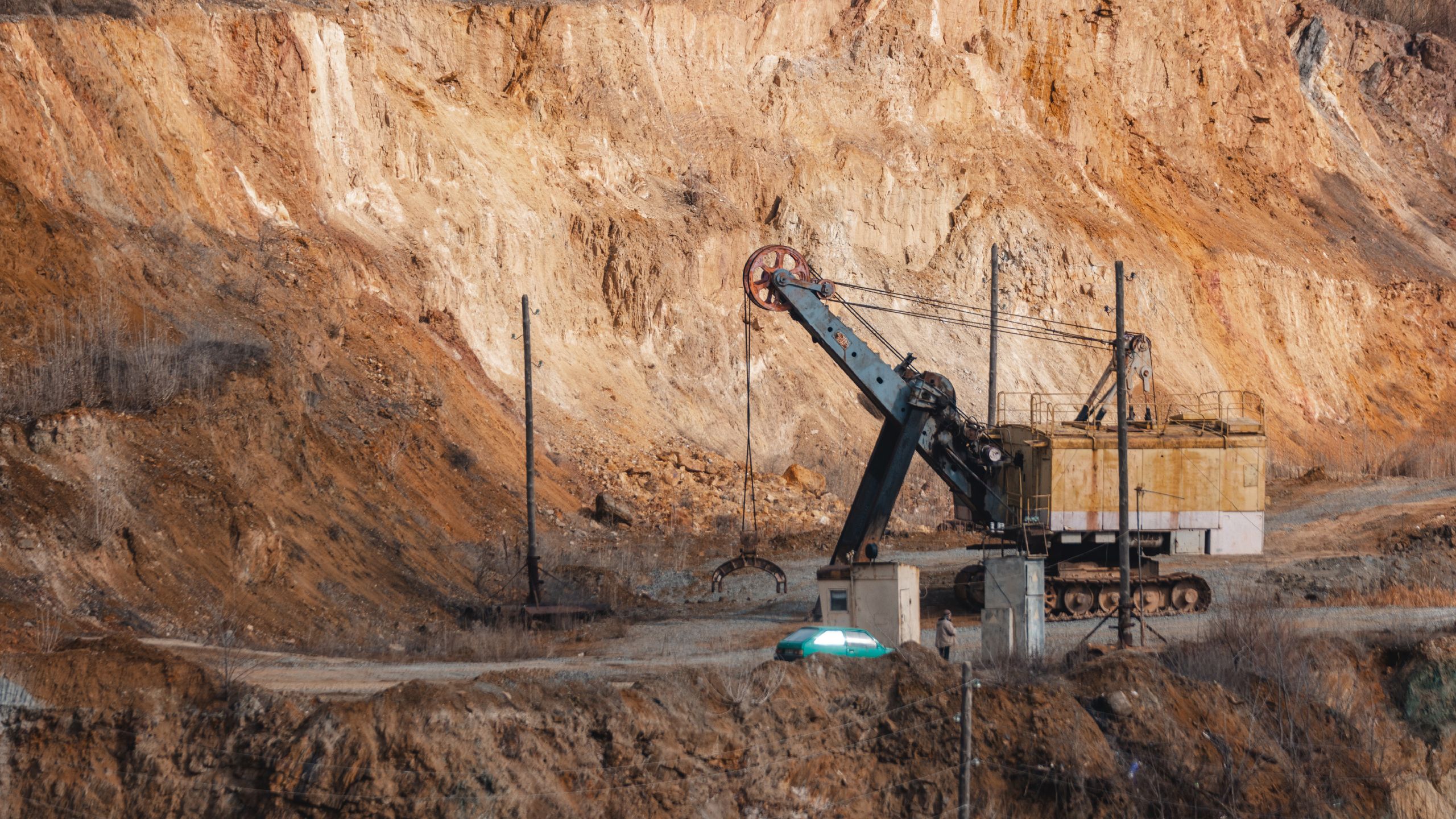
‘Project Vault’ will create a 60-day reserve of key materials for civilian needs.
When you purchase through links on our site, we may earn an affiliate commission. Here’s how it works .
(Image credit: Getty Images / Bloomberg) Share Share by: Copy link Facebook X Whatsapp Reddit Pinterest Flipboard Email Share this article Join the conversation Follow us Add us as a preferred source on Google The Trump administration will soon launch a $12 billion critical minerals stockpile designed to insulate U.S. manufacturing from supply disruptions tied to China’s dominance of mining and refining. According to sources cited by Bloomberg , the initiative, known as Project Vault, will provide a roughly 60-day emergency buffer for key minerals used across electronics, automotive, aerospace, and energy supply chains.
Procurement of the stockpile will primarily be financed through a $10 billion, 15-year loan from the U.S. Export-Import Bank, supplemented by around $1.67 billion in private capital. The bank is expected to vote later today on whether to authorize the 15-year loan, which is more than double the net-largest deal it has ever issued, while President Trump is scheduled to meet with General Motors CEO Mary Barra and mining magnate Robert Friedland.
Trump secures deal with Korea Zinc to build rare earths processing facility in Tennessee
The world is overly reliant on one US-located mine for critical chipmaking material, but China is working to break the stranglehold
Based on what we know so far, Project Vault seems like it will function similarly to the existing U.S. Strategic Petroleum Reserve, but instead focusing on minerals and other strategically important elements with high price volatility. Under Project Vault, materials could be drawn down during periods of acute disruption, subject to the understanding that participating companies will be required to replenish inventories as supplies recover, thereby keeping the stockpile intact. In the case of a major supply disruption, the officials say that manufacturers will be able to access the full inventory.
Although the U.S. already has a national stockpile of minerals for the defense-industrial sector, it doesn’t have one for civilian needs. Gallium and germanium, for example, are critical inputs for semiconductors used in the likes of power electronics and RF components, while rare earth elements are found in the magnets that appear in everything from hard drives to industrial motors.
China has repeatedly tightened controls on exports of gallium, germanium, graphite, and other dual-use materials, using licensing regimes and approvals as leverage in broader trade disputes. While some restrictions were eased late last year, the underlying concentration of mining and processing capacity has not changed, leaving U.S. manufacturers heavily exposed to Chinese policy shifts.
Last month, a bipartisan group of legislators introduced a bill to create a $2.5 billion stockpile of critical minerals in a bid to stabilize market prices and encourage domestic mining and refining. According to the bill, China has moved to “weaponize its influence over prices and volumes in the contest for access to critical minerals."
Get Tom's Hardware's best news and in-depth reviews, straight to your inbox.
Key considerations
- Investor positioning can change fast
- Volatility remains possible near catalysts
- Macro rates and liquidity can dominate flows
Reference reading
- https://www.tomshardware.com/tech-industry/SPONSORED_LINK_URL
- https://www.tomshardware.com/tech-industry/trump-administration-plans-12bn-critical-minerals-stockpile-to-offset-china-supply-risk#main
- https://www.tomshardware.com
- Intel returns to boxed workstation CPUs with Xeon 600 — Granite Rapids WS delivers up to 86 cores, 4TB of memory, and 128 PCIe 5 lanes
- How to save memory in Windows — RAM is expensive; here’s how to maximize the RAM that you already have!
- GeForce NOW Brings GeForce RTX Gaming to Linux PCs
- More Ways to Play, More Games to Love — GeForce NOW Wraps CES With Linux Support, Fire TV App, Flight Stick Controls
- How to save memory in Windows — RAM is expensive; here’s how to maximize the RAM that you already have!
Informational only. No financial advice. Do your own research.