
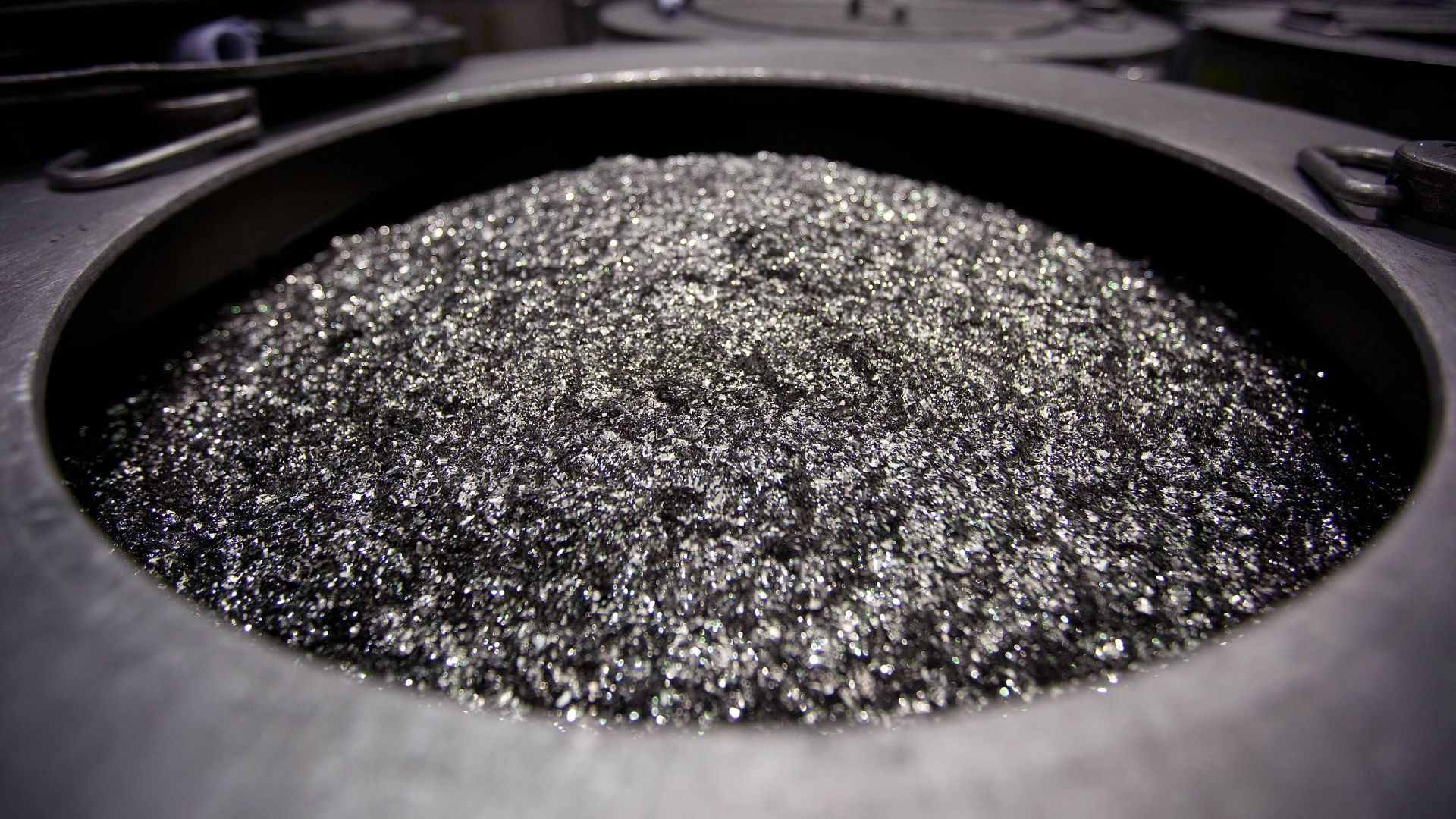
In total, venture capitalists invested around $630 million in U.S. rare mineral startup companies in 2025, a new record for annual investment in the space, as reshoring efforts become clear. This goes hand-in-hand with $670 million of private and public loans and equity investment in North Carolina-based Vulkan Elements, which plans to develop a magnet manufacturing facility in the state (in return for the U.S. government receiving a $50 million stake in the company).
A further $80 million was invested in Indiana-based ReElement Technologies and its magnet recycling industry. The Pentagon has also received a 15% stake in rare-earth mining company MP Materials, which is developing its own new magnet factory in Texas.
The big driver behind all these investments is bringing the magnet and rare-earth mineral supply chain entirely under U.S. control, and ideally, on U.S. shores. The current administration has made a major deal of hegemony over industries that it considers critical for strategic defence, as well as independence from allies and adversarial countries alike.
In many cases of industrial support, the U.S. government itself received stock stakes and profit-sharing agreements in return, creating a tit-for-tat arrangement, but also tying the revenues and ultimate profits of these companies to individuals within Trump’s orbit.
This latest investment in Noveon isn’t entirely different. Of the $215 billion being invested, $200 billion comes from a singular investment firm: One Investment Management. This is the investment firm of Rajeev Misra, the former leader of SoftBank Group’s Vision Fund. This investment makes it the largest shareholder and grants it two seats on the board.
Although the investment strategies of the U.S. government and its encouraged private investment may focus control of key industries on a few key players, that may be by design. Even if Noveon and its contemporaries can scale up production of rare earth minerals and magnets, they are unlikely to make much of a dent in these Chinese-dominated industries, where up to 90% of global production still runs through Chinese firms.
Instead, what the U.S. is doing is building redundancy. Just as the U.S. has flexed its supply-side muscle over the past year to restrict Chinese access to the latest cutting-edge silicon from companies like Nvidia , China has been able to return the favor by restricting access to rare earth minerals and materials required for the manufacture of those same high-end electronics and technologies, with the second round of controls suspended until November 2026 .
Although the U.S. will need to continue to rely on its international partners, including China, for the supply of rare earth minerals for many years to come, its latest moves suggest it is building resilience to future trade embargoes and export blocks, which would otherwise stall industries that are important to the U.S. both for economics and strategic defense.
As WSJ highlights, just last week, a group of U.S. lawmakers proposed developing a $2.5 billion stockpile of supplies of critical minerals and materials, including rare earth magnets, to stave off any future supply shocks caused by restrictions from international trading partners.
Alongside shortages of critical rare earth minerals, many U.S. companies are also facing other component shortages, driven by the AI industry acquiring large majorities of DRAM and NAND supplies.
Jon Martindale is a contributing writer for Tom's Hardware. For the past 20 years, he's been writing about PC components, emerging technologies, and the latest software advances. His deep and broad journalistic experience gives him unique insights into the most exciting technology trends of today and tomorrow. ","collapsible":{"enabled":true,"maxHeight":250,"readMoreText":"Read more","readLessText":"Read less"}}), "https://slice.vanilla.futurecdn.net/13-4-11/js/authorBio.js"); } else { console.error('%c FTE ','background: #9306F9; color: #ffffff','no lazy slice hydration function available'); } Jon Martindale Freelance Writer Jon Martindale is a contributing writer for Tom's Hardware. For the past 20 years, he's been writing about PC components, emerging technologies, and the latest software advances. His deep and broad journalistic experience gives him unique insights into the most exciting technology trends of today and tomorrow.
Key considerations
- Investor positioning can change fast
- Volatility remains possible near catalysts
- Macro rates and liquidity can dominate flows
Reference reading
- https://www.tomshardware.com/tech-industry/SPONSORED_LINK_URL
- https://www.tomshardware.com/tech-industry/u-s-company-noveon-magnetics-raises-usd215-million-to-expand-homegrown-rare-earth-magnet-supply-usd630-million-spent-in-2025-on-american-reshoring-efforts-to-divest-from-chinese-reliance#main
- https://www.tomshardware.com
- Eric Demers leaves for Intel after 14 years at Qualcomm — father of Radeon and Adreno GPUs now sits at Lip-Bu Tan's table
- Nvidia China market share to drastically decrease from 66% to 8%, analysts claim — export curbs and homegrown success to blame
- Benchmarks of Performance-core only Bartlett Lake CPU emerge, 10-core offers 26% faster multithreaded performance than 14-core i5-14400 — 12-core version launch
- NVIDIA BlueField-Powered Cybersecurity and Acceleration Arrive on NVIDIA Enterprise AI Factory Validated Design
- Grab $420 off this prebuilt gaming PC with an RTX 5070, 32GB of DDR5 RAM and 2TB storage — Ryzen-equipped MSI machine costs $1,549 and is perfect for 1440p gami
Informational only. No financial advice. Do your own research.