
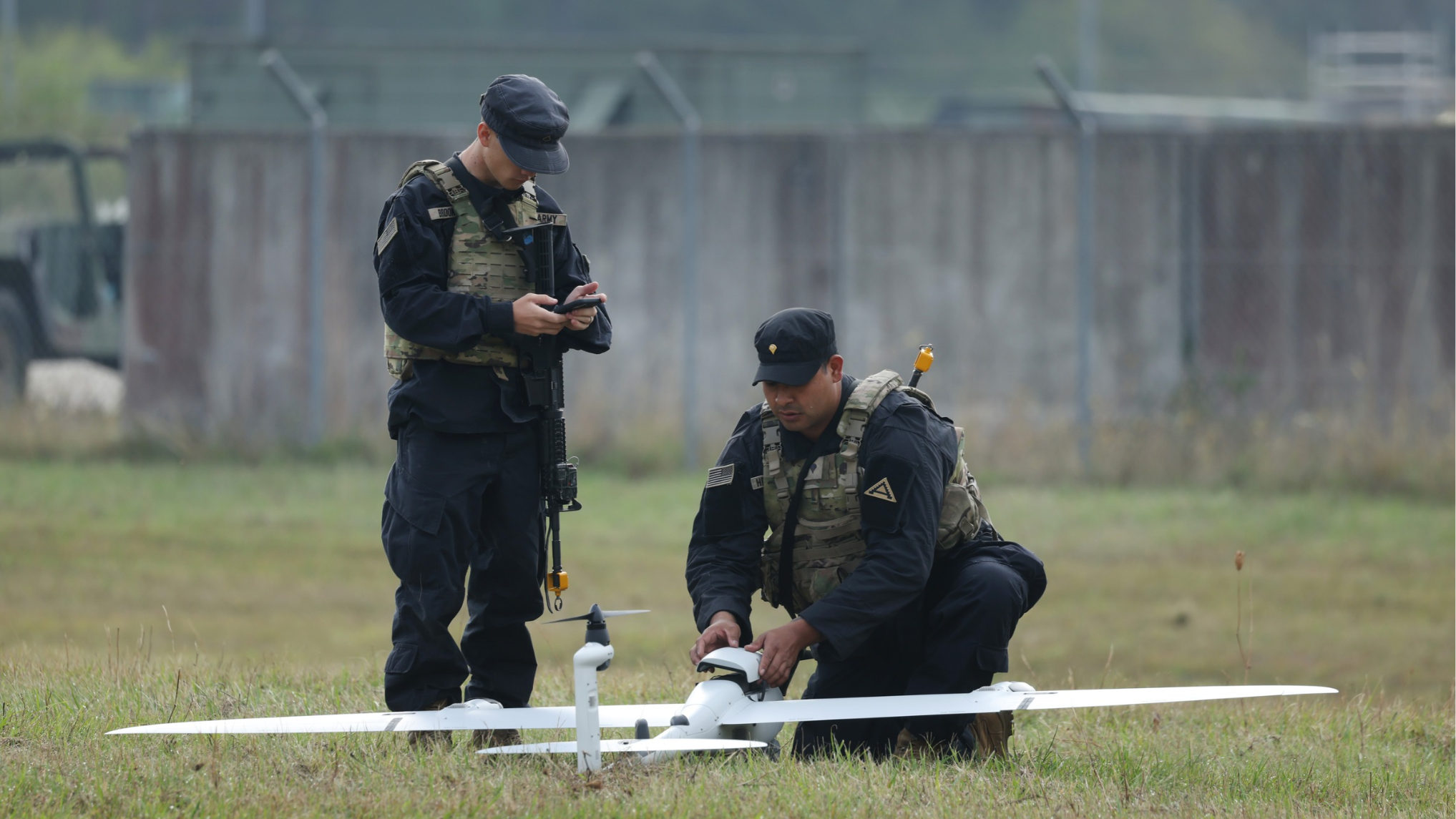
The engine drives a 400v motor-generator that electrically drives the propellers.
When you purchase through links on our site, we may earn an affiliate commission. Here’s how it works .
The heavy fuel (JP8) used in the drone is a denser kerosene-based fuel source compared to regular jet fuel, making it desirable to reduce total fuel load or increase mileage. The JP8 fuel is part of the military’s initiative to power as much of its gas equipment on a single fuel source. However, JP8 is less volatile and harder to atomize, making it a challenge to achieve peak efficiency. Furthermore, the fuel’s flash point is 140℉, compared to gasoline’s -40℉, requiring the engine to have a much higher compression to ignite it, making pressure leaks a common issue.
JP-8 fuel on aircraft and drones is not uncommon; however, the ARL researchers wanted to further optimize the heavy-fuel rotary engine to extract more performance and improve its design. The researchers used computational fluid dynamics (CFD) and a clean-sheet design (designing from scratch, essentially), allowing the engineers to come up with more innovative solutions to get more out of the engine with less.
"The use of advanced manufacturing, including 3D metal printing, allowed us to rapidly redesign engine components based on lessons learned through experimentation,” Dr. Kweon, one of the ARL researchers, said to Army.mil . Dr. Kweon further explained that 3D printing allowed them to design an air-cooled engine and ditch a bulky liquid cooling system, reducing the size of the propulsion system. The rapid iteration eventually allowed the researchers to improve fuel atomization and decrease compression leaks.
The heavy-fuel rotary engine doesn’t actually drive the drone’s propellers directly; it uses the engine to spin a 400-volt motor-generator to generate electricity to drive the propeller motors, allowing the engine to spin independently at its most optimal RPM — similar to some hybrid EVs on the road today, except that the engine doesn’t have a mechanical link to the propellers. This system may include a battery for the drone to fly without the engine running; however, the US military has not disclosed much about the VICTOR drone’s battery configuration.
US Army unit deploys drone assembled completely in-house, uses 3D-printed 'Dragoon Bombs' with ball bearing shrapnel
Engineer builds tiny 3D-printed single-motor drone in their bedroom
Key considerations
- Investor positioning can change fast
- Volatility remains possible near catalysts
- Macro rates and liquidity can dominate flows
Reference reading
- https://www.tomshardware.com/tech-industry/drones/SPONSORED_LINK_URL
- https://www.tomshardware.com/tech-industry/drones/us-army-successfully-flies-a-hybrid-electric-drone-with-3d-printed-heavy-fuel-rotary-engine-400v-motor-generator-uses-advanced-engineering-to-ditch-a-bulky-liquid-cooling-system#main
- https://www.tomshardware.com/membership
- Intel 14A moves closer to production as PDK 0.9 becomes available
- Snag this 360Hz QD-OLED gaming monitor for only $349
- Nvidia can only fulfill 1% of China’s massive $70 billion GPU order for AI chips, report claims
- Grab a huge 44% saving on a 4K 43-inch Samsung smart monitor, now under $280
- Bambu Lab H3C 3D printer review: A nine-tool monster
Informational only. No financial advice. Do your own research.