
When you purchase through links on our site, we may earn an affiliate commission. Here’s how it works .
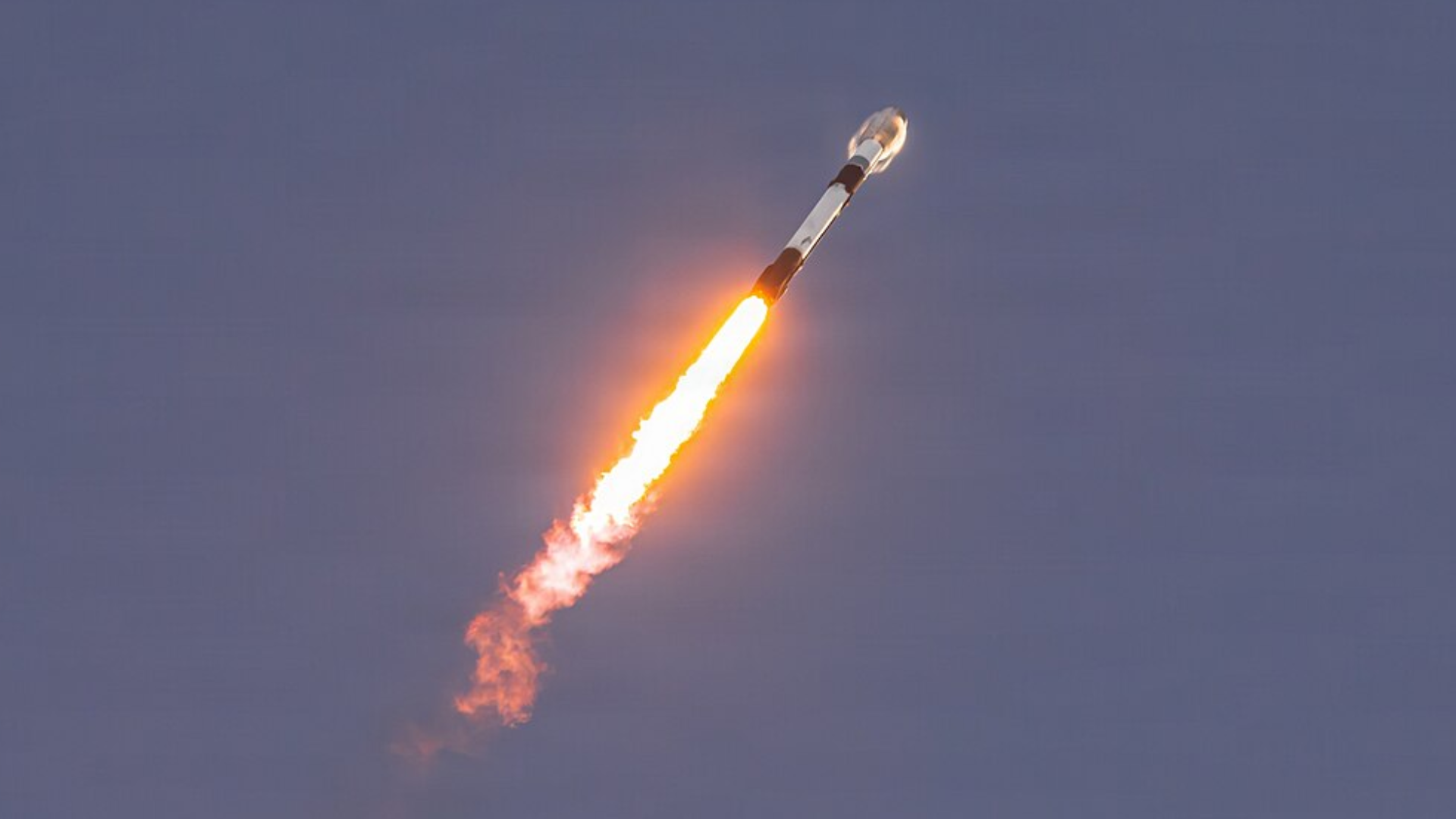
The mission is a test of Rocket Cargo’s point-to-point delivery (P2D) capabilities, which should allow forces to resupply virtually anywhere in the world without needing to risk other assets like aircraft and aircrews, especially in areas where there is active combat.
With support from @SpaceX, the AFRL agile cargo pods were recovered after splashdown in the Pacific Ocean. Each pod contained representative mission equipment to study the effects of temperature, shock, and vibration of the cargo environments during launch and reentry. #Readiness https://t.co/yWoND13ur4 October 26, 2026
“This was a critical achievement to demonstrate the potential of Rocket Cargo delivery for point-to-point rapid global mobility for the Future Force," AFRL Technology Transition Office director Adam Remaly said in a statement. "The cross-discipline collaborations and ability to unleash the speed of our defense industrial base are key to maximizing capability and winning the future.”
The Starfall capsule, which looks like a hockey puck, measures about 10 feet across and has a capacity of up to 2,200 pounds. It uses a carbon fiber heat shield to protect its contents during reentry and uses compressed gas thrusters for attitude control in flight. Finally, it deploys a parachute system to slow down the entire system for landing. While 2,200 pounds might already seem like a substantial capacity, the Air Force is reportedly hoping that it could increase the limit in the order of tens of tons, potentially allowing it to resupply ammunition, weapon systems, and even deploy vehicles from space. This would have to wait for the larger SpaceX Starship rockets, which are still in development, though.
Even though the latest test seemingly relies mostly on SpaceX technologies, it’s not the only company developing that capability for the U.S. military. Sierra Space, a subsidiary of the Sierra Nevada Corporation, is also working on the Ghost reentry vehicle and has already conducted test drops of the system from heights of 35,000 and 68,500 feet.
US military-backed cargo pod promises 90-minute orbital delivery anywhere on Earth, 10-ton Ghost vehicle gets first real-world test
US Army to use 3D-printed rocket motors for low-cost cruise missiles
Key considerations
- Investor positioning can change fast
- Volatility remains possible near catalysts
- Macro rates and liquidity can dominate flows
Reference reading
- https://www.tomshardware.com/tech-industry/space/SPONSORED_LINK_URL
- https://www.tomshardware.com/tech-industry/space/usaf-successfully-tests-dropping-spacex-starfall-cargo-drop-pods-from-space-2-200-pound-capsule-drops-military-supplies-in-the-pacific-to-test-starcraft-like-supply-drops#main
- https://www.tomshardware.com/membership
- Intel’s woes wipe out $1 trillion of semiconductor market cap in one day
- Intel’s woes wipe out $1 trillion of semiconductor market cap in one day
- Veteran Microsoft engineer makes his own RAM from scratch using AI
- Slice Into GFN Thursday: ‘Phantom Blade Zero’ Launches on GeForce NOW
- How Companies Are Using NVIDIA DSX to Break the Power Bottleneck
Informational only. No financial advice. Do your own research.