
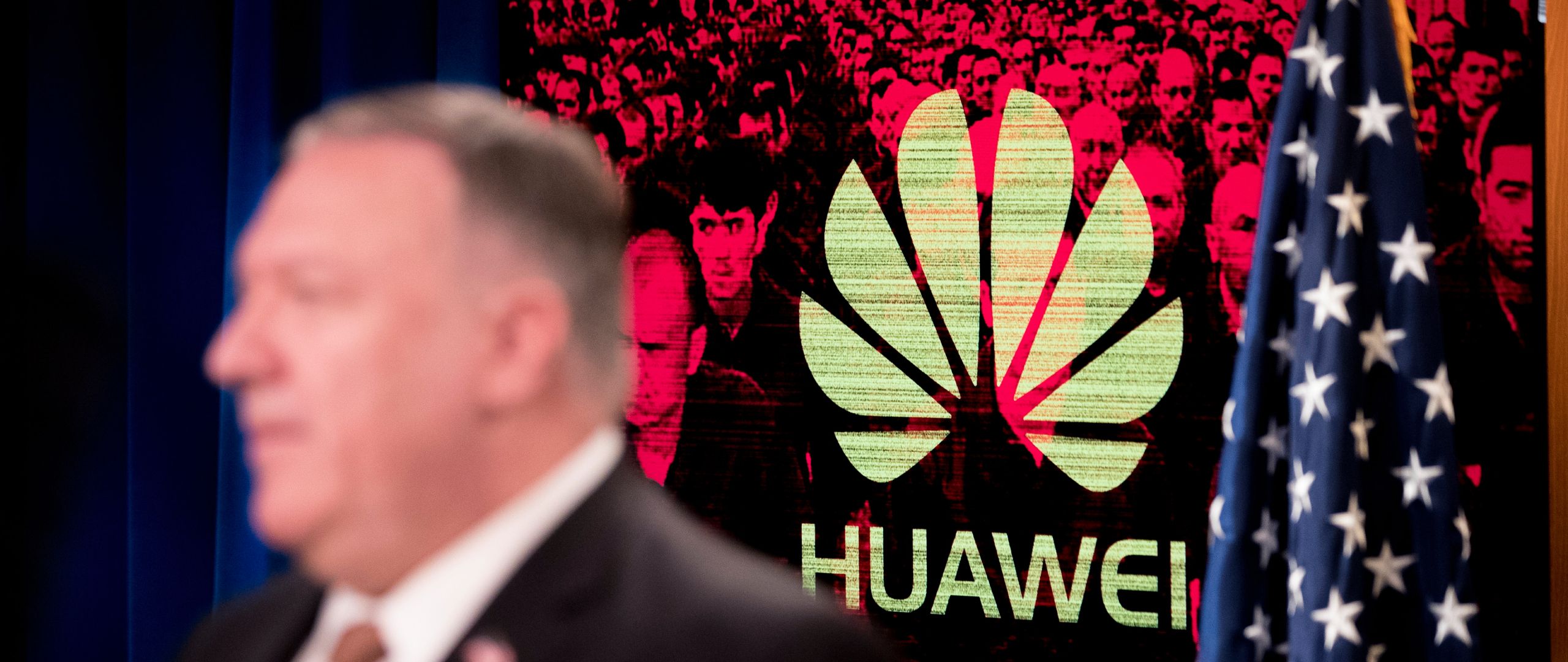
Huawei could seize China’s AI chip crown in 2026 as Nvidia’s H200 shipments stall in regulatory limbo
Sberbank is not an isolated case in this way. Tramplin Electronics, a Russian sovereign IT company set up just over a year ago , is already marketing a processor called Irtysh based on a design from China's Loongson Technology. At the same time, Element, Russia's biggest chipmaker, in which Sberbank acquired a 41.9% stake in January, has reportedly begun producing microchips inside China for the Chinese automobile market. “A shift is clearly underway,” Maggard said, “but toward greater mutual access between the Chinese and Russian electronics sectors, probably skewed in China's favour.”
All that adds up to less of a meeting of equals than Russia becoming a dependent customer of a still-developing semiconductor ecosystem – though Maggard points out that under Vladimir Putin, the Kremlin will likely resist a total surrender of sovereignty. “Moscow would certainly prefer, and likely intends, to build a parallel technology bloc with Beijing,” he said.
The irony is that Western policy, which was designed to try and slow or stymie the development of China and Russia’s high-tech economy, may well have helped manufacture exactly the kind of trading bloc it set out to prevent.
The issue is compounded by uncertainty in Washington DC, where the inhabitant of the White House seemingly can’t decide what he wants from the situation. In the space of 12 months, the Trump administration banned Nvidia's H200, unbanned it, slapped a 25% tariff on it , and created a licensing framework that experts immediately called contradictory. On 13 January, the Commerce Department published a regulation permitting the sale of advanced AI chips to China – a move described by the Council on Foreign Relations as "strategically incoherent" – that, if implemented strictly, would block most exports, but if implemented loosely, would fail to address any of the concerns that motivated the controls in the first place.
Then, a day after the rule cleared Nvidia to sell, Chinese customs officers were reportedly told not to let the chips into the country at all .
US closes loophole that allowed Chinese-owned subsidiaries located outside China to buy AI chips
Huawei chairman thanks the US for export restrictions on chips, says it supercharged China’s semiconductor industry
US Secures Netherlands for Pax Silica Alliance in key win for strategic chip alliance
China is capitalizing on the chaos. Beijing's drive toward self-sufficiency long predates anything Washington has done, said Mishel Kondi, a senior analyst with C4ADS's Human Security and Conflict Prevention team in comments to Tom’s Hardware Premium . "The PRC announced Made in China 2025 in 2015,” she points out. “That precedes export controls.”
Her analysis of Chinese government documentation over that period shows China has maintained a state-directed strategic priority of breaking from U.S. and friend-shored technologies. “In other words,” she said, “China's goal of building a more self-contained AI chip ecosystem predates U.S. export controls.”
Kondi said that it’s too early to judge whether the export controls are a triumph or a failure. "U.S. export controls have created real challenges for China's compute and limited its ability to scale and innovate," she explained, even as Chinese actors exploit loopholes through university procurement, transshipment via Southeast Asian jurisdictions, and corporate diversion through shell companies in secrecy jurisdictions such as the Cayman Islands. But there is a risk in feeding the beast. “The risks of accelerated domestication grow if China has greater access to advanced chips,” she warned, “and it would be a mistake to interpret that strategy as a response to export controls.” (It’s worth noting that China has reportedly gained access to an EUV machine that it was never meant to get its hands on.)
Beyond China’s border, the captive market increasingly includes Russia. The Russian market for GPU-based AI accelerators reached 62.7 billion rubles in 2025 , according to Russia-based analysts TAdviser, up roughly 20% on the year before. Nvidia-based cards still account for around 84% of sales in volume terms, with the RTX 4060 the single most popular model. Russian customers are increasingly forced to look at Chinese cards as an alternative. Nvidia chips arrive through grey channels routed through China, Turkey, the UAE, and India at a premium.
In late May, the European Commission proposed a nine-month derogation on dealings with Yangzhou Yangjie Electronic, a Chinese chipmaker it had added to its 20th Russia sanctions package barely a month earlier, after EU automakers warned that chip stocks could run dry within weeks. That was because European carmakers needed access to the chips after the Nexperia crisis disrupted supply across the continent. Both Russia and China will have noticed the expediency with which Europe is willing to drop sanctions when needed.
By that point, China may be competing on the global stage. In late May, Huawei said its high-end chips would reach transistor density equivalent to 1.4nm processes within five years , unveiling a "Tau Scaling Law" focused on shortening interconnects and improving data movement rather than shrinking transistors. TSMC plans to begin 1.4nm mass production in 2028 , meaning Huawei would still be three years behind, but the gap is closing.
That has experts like Kondi watching on carefully. “The risks of accelerated domestication grow if China has greater access to advanced chips,” she said, “and wider PRC access to these chips also empowers China's defence capabilities and enables it to expand its pervasive and repressive surveillance apparatus.”
Chris Stokel-Walker is a Tom's Hardware contributor who focuses on the tech sector and its impact on our daily lives\u2014 online and offline.\u00a0He is the author of How AI Ate the World, published in 2024, as well as TikTok Boom, YouTubers, and The History of the Internet in Byte-Sized Chunks. ","collapsible":{"enabled":true,"maxHeight":250,"readMoreText":"Read more","readLessText":"Read less"}}), "https://slice.vanilla.futurecdn.net/13-4-25/js/authorBio.js"); } else { console.error('%c FTE ','background: #9306F9; color: #ffffff','no lazy slice hydration function available'); } Chris Stokel-Walker Freelance Contributor Chris Stokel-Walker is a Tom's Hardware contributor who focuses on the tech sector and its impact on our daily lives— online and offline. He is the author of How AI Ate the World, published in 2024, as well as TikTok Boom, YouTubers, and The History of the Internet in Byte-Sized Chunks.
Key considerations
- Investor positioning can change fast
- Volatility remains possible near catalysts
- Macro rates and liquidity can dominate flows
Reference reading
- https://www.tomshardware.com/tech-industry/SPONSORED_LINK_URL
- https://www.tomshardware.com/tech-industry/while-the-u-s-flip-flops-on-chip-sanctions-china-is-building-its-own-chip-supply-market-export-controls-are-creating-conditions-for-a-sino-russian-chip-trade-alliance#main
- https://www.tomshardware.com/my-account
- SiPearl's long-awaited Rhea CPU finally gets in the lab, opening the door for Europe's first sovereign HPC CPU — 'availability of Rhea1 is scheduled for end of
- Minecraft shown running on Game Boy Color and Game Boy in 3D with textures — developer coaxed 3D look out of barely-there hardware
- Chat Control 1.0 sneaks through the EU Parliament, letting companies scan user data without warrants — legal tactic used to force a majority-required re-vote on
- Global consumer Wi-Fi router shipments fell 6% in Q1 2026, down 34% from 2021 peak — mesh systems and gaming routers still prove popular
- NVIDIA and Hugging Face Bring New Models and Frameworks to LeRobot for the Open Robotics Community
Informational only. No financial advice. Do your own research.