
As AI tech companies increasingly buy and destroy books to feed to their AI models, Anna's Archive is calling for volunteers to help preserve them for the public record.
When you purchase through links on our site, we may earn an affiliate commission. Here’s how it works .
According to the blog post, the problems started when Anthropic was hit with a $1.5 billion penalty as it settled a copyright infringement lawsuit from 2024. This settlement is the largest amount ever in a copyright case, with the AI tech firm paying $200 per title based on its collection of 7 million pirated books stored in a central library. However, that same ruling affirmed that the use of existing works to train AI models is fair use. This opened the floodgates for AI firms, which started buying up books online to scan and destroy them .
Independent bookstores all across Europe are seeing a trend like this , where they receive random, relatively large orders that are shipped to local addresses. While orders like these still come through in the digital age, especially from institutional buyers looking to fill out new libraries, they say that most “legitimate” orders often come with coordination and negotiation, not just a straight purchase order. Aside from that, the suspicious orders also include books that no one would buy today, like “Pass Your Driving Test, 2018 Edition” and “The Eddie Hobbs Guide to your SSIA.” An investigation revealed that some of the books are sent to an Amazon processing facility , where workers cut off their spines and feed them into industrial scanning machines.
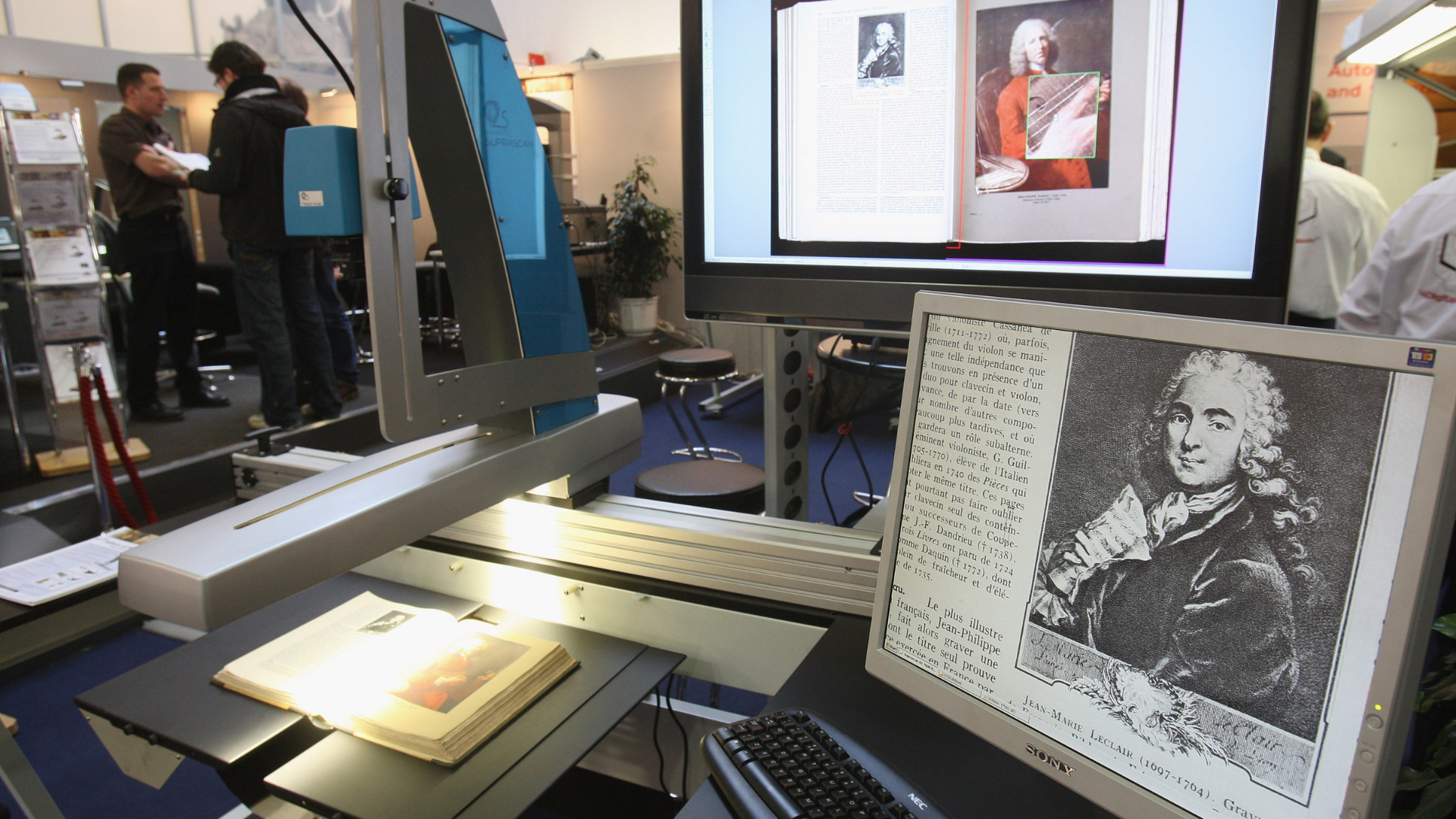
Unfortunately, this method of scanning destroys the books, meaning the printed record is erased in favor of a digital one. There are non-destructive methods of scanning these materials, like using a V-shaped scanner that follows the natural curve of the book binding, but it’s likely that this method is slower and more expensive compared to just stripping out the spine and feeding it into an automatic scanning machine. The blog also says that destroying the original material means that competitors could not use these very same books to train their AI models, giving the original buyer an advantage, especially if the book that is destroyed is a rare one with no other copies in the world, and that it also avoids legal risks.
Using these books, especially those published before 2022, which are said to be “untouched by machines,” comes with legal and ethical issues, but the bigger concern of many is that the destruction of this material could lead to a monopoly of knowledge. If the original copy no longer exists, the knowledge stored in it would only be available to the AI company that scanned it, and anyone else who wants to gain access to it would have to pay for the privilege unless the company shares the original for free (although this would come with its own legal issues). Aside from that, it would probably only be available in processed form if access is limited through the AI model, as most LLMs will not produce it verbatim for fear of copyright restrictions, which is why the author said, “Knowledge is permanently monopolized on private servers.”
AI companies are reportedly shredding millions of books after using them to train AI models — tech giants outsource to middlemen to secretly buy up books for training material
Independent bookstores in Europe receive suspicious orders for thousands of books, prompting fears they'll be destroyed to train AI
Secret tracking device placed in rare book ends up in Amazon processing facility to train AI
This fear has led to the callout for volunteers to scan books and upload them to Anna’s Archive. “If every person scans a book, and there are 10 million volunteers worldwide, we can obtain 10 million pieces of invaluable wealth,” the blog post said. It also added that uploaders of small scans are often recognized and awarded lifetime membership to the shadow library. Those who want to conduct large-scale scans and upload many titles can reach out to the archive for support as the archive says that it “can help pay for the scanning fees and other rewards.”
“This is a race against time,” u said in the Anna's Archive blog post. “Our ideal is to scan and upload all the world’s publications before publishers completely block knowledge, and before AI companies scan and destroy all the world’s books and papers.”
Get Tom's Hardware's best news and in-depth reviews, straight to your inbox.
Key considerations
- Investor positioning can change fast
- Volatility remains possible near catalysts
- Macro rates and liquidity can dominate flows
Reference reading
- https://www.tomshardware.com/tech-industry/artificial-intelligence/SPONSORED_LINK_URL
- https://www.tomshardware.com/tech-industry/artificial-intelligence/worlds-largest-open-library-calls-for-volunteers-to-scan-and-preserve-physical-books-as-ai-companies-buy-scan-and-destroy-them-annas-archive-says-time-is-running-out-as-knowledge-is-permanently-monopolized-on-private-servers#main
- https://www.tomshardware.com/membership
- G.Skill pays out $2.4M settlement over misleading DDR4 and DDR5 speed marketing — buyers get $20 to $25 as vendor agrees to XMP and EXPO packaging warnings
- Get a full-size Keychron mechanical keyboard for just $29 — 50% off this 104-key wired keeb with your choice of Keychron Super Brown or Red switches
- Virginia county with 250 data centers begins to rein in building — Loudoun’s more than 250 data centers made it one of the richest counties in the US, but resid
- Hacker leaks GTA VI gameplay and map to protest digital-only release — claims pre-orders are a legacy of physical game releases
- Get 32GB of RAM for only $241 in this 3-item gaming combo from Newegg —save $249 on this inclusive bundle with Ryzen 7 9800X3D, Corsair Vengeance RAM, and a Gig
Informational only. No financial advice. Do your own research.