
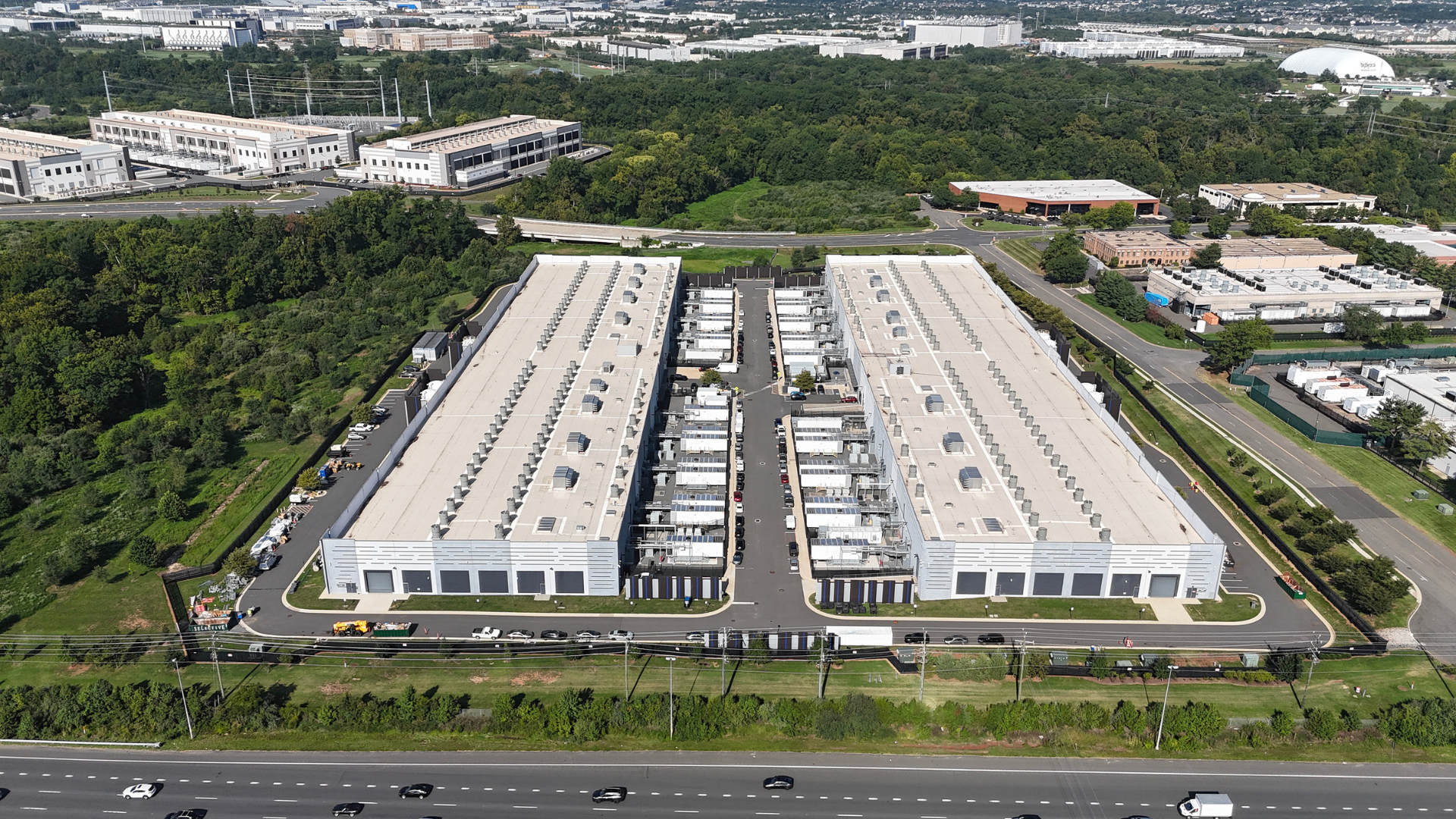
GPU development is happening at breakneck pace, with Nvidia, AMD, and other manufacturers releasing new generations every two to three years. In fact, one Google architect said that a data center GPU service life is only about one to three years , which has got some experts concerned that GPU depreciation could be the next big crisis for hyperscalers . “Railways. Electrification. The internet. Each required enormous amounts of capital and defined an era,” the publication reiterated from the report. “The AI infrastructure cycle underway dwarfs all three. This one resets every four to six years — and shows no signs of ending.”
Nvidia and other chip manufacturers would be some of the biggest winners in this spending spree, but other hardware industries would also benefit, like networking equipment and even the copper material needed for running power inside data centers. PwC is confident in its forecast, especially as it claimed that both capital and demand for the AI build-out exist. It also broke down the investment in each region — spending in the U.S. is projected to hit $15.1 trillion, followed by the Asia-Pacific region, including China and India, at $8.2 trillion. Europe will likely spend $5.6 trillion, and it’s trailed by the Middle East at $1.1 trillion and Africa, with $255 billion.
The AI build-out is not without risks, though. The report cited power availability, data sovereignty requirements, and chip availability as factors affecting the build-out. For example, data centers in the U.S. are forecasted to consume 20% of its total power supply by 2035, which is why operators are turning to natural gas turbines for on-site power. However, this has also led to jet engine shortages , which is why SpaceX has started in-house turbine blade manufacturing to cut delivery delays by up to 18 months. It also said the geopolitical tensions, like trade bans on rare earth elements and high-end chips , could cut the global investment forecast by 20%.
There are still some concerns that the current AI boom is a bubble that will pop sooner or later. This is especially true as some AI tech companies currently have “hidden debt” worth around $1.65 trillion, while costs have started spiking as AI companies like OpenAI look for a path towards profitability. Despite that, Nvidia is still going full steam ahead, partnering with several firms to build a $500 billion AI infrastructure fund for further AI investments.
Big tech spends more than $1 trillion on AI infrastructure
Key considerations
- Investor positioning can change fast
- Volatility remains possible near catalysts
- Macro rates and liquidity can dominate flows
Reference reading
- https://www.tomshardware.com/tech-industry/data-centers/SPONSORED_LINK_URL
- https://www.tomshardware.com/tech-industry/data-centers/ai-data-center-investment-projected-to-hit-usd32-trillion-by-2050-infrastructure-spending-estimated-to-exceed-capital-requirements-for-railways-electrification-or-the-internet#main
- https://www.tomshardware.com/membership
- Startups want to rent your idle gaming PC for AI tasks — Startups pitch an 'Airbnb for AI inference,' but profitability remains unproven
- Oklahoma city tries to charge farmer arrested at data center debate $17,000 for body cam footage of the incident — accused faces trespassing charge for going ov
- CXMT reportedly begins risk production of HBM3E memory in breakthrough for Chinese DRAM production — company could be in mass production in 2027
- Nvidia's controversial DLSS 5 will launch September 3 with NBA2K27, company shares first benchmarks — available on all RTX 50 series GPUs, laptops, and GeForce
- Arm faces potential shareholder revolt over CEO's 'excessive' $800 million pay package — huge stock award would only be fully realised if chip designer hits $2
Informational only. No financial advice. Do your own research.