
If AI can write the low-level code that ties models to Nvidia, CUDA matters less.
a]:text-inherit [&>a]:underline">
When you purchase through links on our site, we may earn an affiliate commission. Here’s how it works .
Tom Brown, Anthropic’s co-founder and chief compute officer, made the time comparison, noting to investors that the original meant using a team of “dozens of engineers.” The company already runs its models on multiple kinds of chips — on GPUs from Nvidia and AMD, Google ’s TPUs, and AWS Trainium — and its fleet is managed as “one fungible pool of compute.” Brown called the early multi-chip decision “an unconventional bet.” It may have been a wise one, given that Google’s TPUs can now natively run AI models built in PyTorch , and Meta uses them in production.
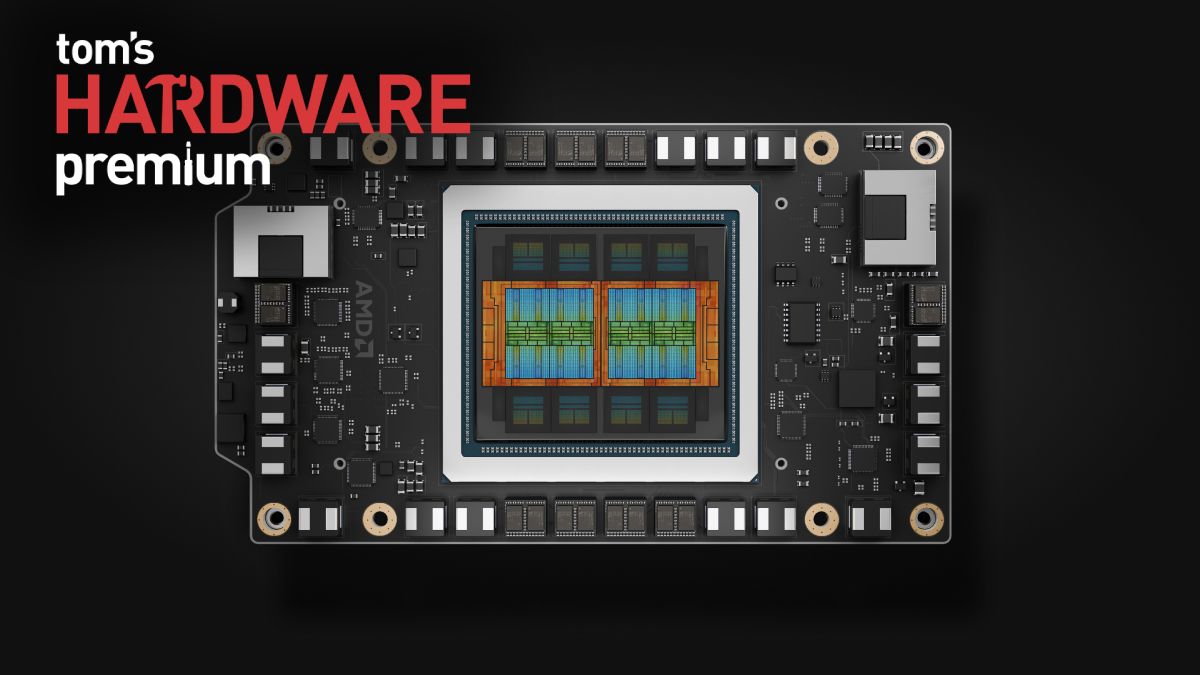
Anthropic's claim that the job used to take six to 12 months comes from past work, from its “historical experience bringing up new accelerators using traditional engineering approaches,” where tailoring the code to each hardware platform was a challenge. Removing that onboarding barrier could reduce things to a purchase decision, and Anthropic started working with AMD GPUs for the first time this year, with an agreement for up to 2 gigawatts now in place.
CUDA, Nvidia’s programming platform, is very mature at nearly two decades old. AMD has an equivalent, ROCm, with HIP as its programming layer. Code written for CUDA has to be transformed to work there, and AMD even built a tool called HIPify for the process. There is still a conversion cost to switching, and AMD’s vice president of AI software, Anush Elangovan, told EE Times in April that “Claude is better than HIPify because it has web search built in.”
AMD has been making the argument that AI can write this type of code since August of last year, presenting a research agent that fell short of human experts at the time. In September of that year, AMD CEO Lisa Su said on the Possible podcast that much of AI software is written in CUDA, which needs to be “translated to AMD,” and “a ton of that can now be done in software.”
Anthropic’s IPO filing shows most of its compute goes to R&D, not serving customers
Solo dev enables using CUDA on AMD hardware in Windows, getting multiple CUDA libraries running on a gaming Radeon RX 9060 XT GPU in Windows
‘This is how AI should be used’ — OpenAI head of hardware breaks down the AI-assisted design of its Jalapeño ASIC
Moving forward to July earlier this year, AMD’s senior vice president of AI, Vamsi Boppana, said its engineers were using AI models to generate GPU kernels, and Su said that when she asked whether her team was helping the Anthropic engineer working on the MI355X, she was told they didn’t need any help. Boppana said that in some cases, the resulting kernels were even “better than the most manually tuned versions.” Under its July agreement with Anthropic, AMD is also using Claude to optimize workloads for its Instinct GPUs and to speed up ROCm development.
At AMD’s Advancing AI event in July , OpenAI’s Philippe Tillet said that once OpenAI got its Helios racks, a single engineer confirmed everything worked within a few days, and that “agents are taking over our jobs, in a sense, as kernel engineers.” Before the event, AMD’s Andrew Dieckman, corporate vice president and general manager of the company’s data center GPU business, told reporters that he has had practically zero conversations with AMD’s customers about CUDA.
Published GEAK, an AI agent that writes GPU kernels; against 30 expert-written kernels it got 19 right, at 0.92 times the experts’ speed on average
Asked about AI coding tools, said much of the code written for CUDA can now be translated to AMD in software: “We’re using software to significantly optimize our customers’ code so that they can run on AMD”
Anush Elangovan, AMD vice president of AI software
Key considerations
- Investor positioning can change fast
- Volatility remains possible near catalysts
- Macro rates and liquidity can dominate flows
Reference reading
- https://www.tomshardware.com/tech-industry/artificial-intelligence/SPONSORED_LINK_URL
- https://www.tomshardware.com/tech-industry/artificial-intelligence/anthropic-says-claude-mythos-slashed-software-work-to-onboard-amd-gpus-from-up-to-12-months-to-around-three-days-writing-almost-100-percent-of-kernels-autonomously-chips-away-at-nvidias-cuda-moat#main
- https://www.tomshardware.com/my-account
- Researchers allege DeepSeek, Kimi, and other Chinese AI models were trained using banned Nvidia Blackwell GPUs
- Hacker gets Doom running on a USB flash drive's built-in LCD, played by copying files
- FBI disrupts North Korean FaceStealer campaign behind $5 billion Binance hack
- Contractor turns a Milwaukee Hackzall into a portable Ethernet untwister after facing job requiring 50,000 custom Cat6 cables
- We tested the RAM-saving storage tech in Gears of War: E-Day
Informational only. No financial advice. Do your own research.