
Hassam Nasir is a die-hard hardware enthusiast with years of experience as a tech editor and writer, focusing on detailed CPU comparisons and general hardware news. When he\u2019s not working, you\u2019ll find him bending tubes for his ever-evolving custom water-loop gaming rig or benchmarking the latest CPUs and GPUs just for fun. ","collapsible":{"enabled":true,"maxHeight":250,"readMoreText":"Read more","readLessText":"Read less"}}), "https://slice.vanilla.futurecdn.net/13-4-25/js/authorBio.js"); } else { console.error('%c FTE ','background: #9306F9; color: #ffffff','no lazy slice hydration function available'); } Hassam Nasir Social Links Navigation Contributing Writer Hassam Nasir is a die-hard hardware enthusiast with years of experience as a tech editor and writer, focusing on detailed CPU comparisons and general hardware news. When he’s not working, you’ll find him bending tubes for his ever-evolving custom water-loop gaming rig or benchmarking the latest CPUs and GPUs just for fun.
usertests There's no reason to be upset over an OEM-only card. Although it should be called a 9040 and there will be some disappointed grandkids forced to play their Lego Batman games at 720p. If AMD releases it generally at $250, then the pitchforks can come out. The 4 GB card could make sense at $100-150, simply based on pricing of the 6500 XT on the used market. No matter what horrible design choices made, it should outperform the 6500 XT with its same number of CUs. Maybe unless it's limited to 30-50W instead of 70W+ (6500 XT 4GB is 107W). If the 1920 MHz game clock and 2600 MHz boost clock are accurate, that's 73.6% and 92.4% of the 6500 XT 4GB. So it probably performs better and maybe it's below 75W. The core count of both variants is the real travesty. There should be very few Navi 44 dies that need half of the CUs disabled. The RX 9060, another OEM-only card, takes it down to 28 CUs from 32, which is reasonable. Reply
warezme We have entered the computer malaise years like the 70's for the automotive industry. New but poorly designed POS. DDR4 and video cards with 4GB of VRAM. 8GB was bad enough. Sadly you see this type of thing in corporate computers for uninformed tech buyers who only see the Nvidia logo on the box and pay a premium. Reply
Jabberwocky79 Repurposing old drives, buying DDR4 and LGA 1700 in 2026, 4GB GPUs…. Is this how our grandparents felt when the depression started? Reply
usertests Jabberwocky79 said: Repurposing old drives, buying DDR4 and LGA 1700 in 2026, 4GB GPUs…. Is this how our grandparents felt when the depression started? Well these are mostly toys (the HDD/SSD pricing surge is most serious IMO) and we can still accomplish a lot with cheap used PCs. If the American obesity rate plummets from 40% to 10% while GLP-1 medication usage falls, then we'll really be getting our depression groove on. Why limit the pricing fun to the electronics market? Let's bring back breadlines. Reply
PEnns And in a few months the 512 KB RAM PC will hit the market, with floppy disks too. Because you know, SSDs are also expensive as heck! The 1980s are calling and waving a box of 12 MS DOS / Windows 3.1 disks at us, because, hey, Windows 11 is making the misery complete. Reply
loosik I am afraid what will be the impact of RAM shortage beyond PC/phones. Reply
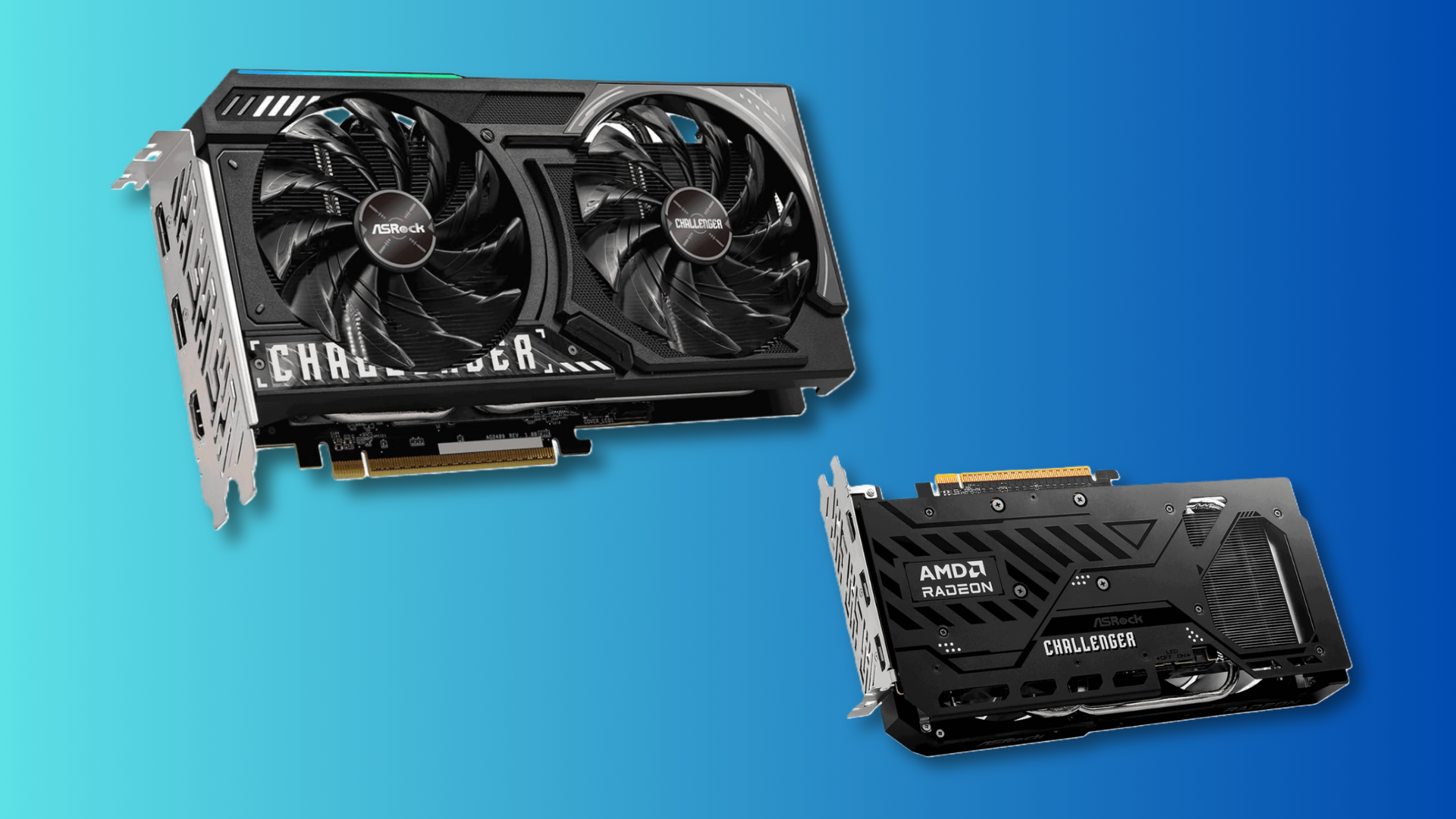
usertests Update – 7/28 10:30 am ET: After taking down an earlier announcement, ASRock has officially announced the RX 9050 Challenger 8GB. As expected, the card features 8GB of GDDR6 VRAM on a 128-bit memory bus, 16 compute units, and boost clocks of up to 2600MHz. The 4GB card remains unannounced, indicating it may be exclusive to OEMs and not available for consumer purchase. So we're getting an actual price tag on this thing eventually? That will take the story to the next level. Reply
DS426 I've been vocal about even 8 GB of VRAM in the past — for PC gaming — but actually 4 GB is fine for OEM GPU purposes. These times have dictated that excess VRAM beyond what will actually be used isn't affordable and practical, so here we are. According to rumor] Let's remember that Zen 6 desktop "Olympic Ridge" CPU's will not have a tiny Radeon iGPU, so RX 9050 4 GB will likely be married to Z6 down the road. A bad time IMO to be getting rid of iGPU's that mostly rely on shared system memory — again, something that might help explain not one but two new OEM-only Radeon GPU's announced now. 9050 (4 GB/vanilla) seems like an appropriate 75W TDP card that's available in HH-HL format. Reply
usertests DS426 said: Let's remember that Zen 6 desktop "Olympic Ridge" CPU's will not have a tiny Radeon iGPU, so RX 9050 4 GB will likely be married to Z6 down the road. That's according to one leaker, and the exact details of the I/O die have been murky so far. I like your idea of a cheap Radeon display adapter being necessary for Zen 6 though. DS426 said: again, something that might help explain not one but two new OEM-only Radeon GPU's announced now. Check the article's update in my preceding comment. Looks like they could actually sell the 8 GB model to retailers. The page for it even has a box: https://asrock.com/Graphics-Card/AMD/Radeon RX 9050 Challenger 8GB/ No price yet though. DS426 said: 9050 seems like an appropriate 75W TDP card that's available in HH-HL format. The product page lists an 8-pin power connector, so apparently the 8 GB card is using more than 75W. But they don't list a TDP/TBP, only a minimum PSU recommendation of 450W. Which would be high for a 75W display adapter. The previous "leak" had the same game/boost clocks for the 4 GB and 8 GB models. Maybe it was incorrect though. It would obviously make sense to constrain the 4 GB model to below 75W. Reply
DS426 loosik said: I am afraid what will be the impact of RAM shortage beyond PC/phones. You mean like network equipment, IoT devices, and other consumer electronics? Everything becomes more expensive that has computer memory (especially modern(ish) DRAM and SRAM). Even streaming devices are going up; Roku just announced a price hike across the board. https://thedesk.net/2026/07/roku-raises-prices-memory-component-shortages-blamed/ Wi-Fi routers, access points, cameras (whether cloud or local), printers… we're already seeing what's effectively huge electronics pricing inflation. Reply
Key considerations
- Investor positioning can change fast
- Volatility remains possible near catalysts
- Macro rates and liquidity can dominate flows
Reference reading
- https://www.tomshardware.com/pc-components/gpus/SPONSORED_LINK_URL
- https://www.tomshardware.com/pc-components/gpus/leaked-radeon-rx-9050-hints-at-the-return-of-4gb-vram-gpus-in-2026-new-budget-rdna-4-card-also-spotted-in-8gb-config-with-half-the-power-of-an-rx-9060#main
- https://www.tomshardware.com/subscription
- Motherboard VRM thermal testing – budget vs. high-end boards, does it really matter?
- 16-hour Xbox outage even stopped physical games from working — company blames licensing issue for incident that prohibited gaming across three generations of co
- AI enthusiast adds Nvidia Tesla V100 as loud as a lawnmower to gaming PC for $266 — 32GB of VRAM rig can run 27 billion parameter model at 32 tokens per second
- Nemotron Labs: How Open Models Give Enterprises and Nations AI They Can Trust, Control and Customize
- Physicists turn particles in chaotic orbits into liquid computers — but this fluid hardware still trails memristor rivals
Informational only. No financial advice. Do your own research.