
When you purchase through links on our site, we may earn an affiliate commission. Here’s how it works .
Cerebras, the supplier of wafer-scale AI processors, has filed for an IPO for the second time after it cancelled such plans due to its ties with G42, an Abu Dhabi-based AI company backed by sovereign wealth fund Mubadala, last year. Financial results disclosed as part of the filing reveal that Cerebras appears to be one of the fastest-growing AI hardware companies right now. However, 86% of its revenue comes from two customers, and the company is bleeding money.
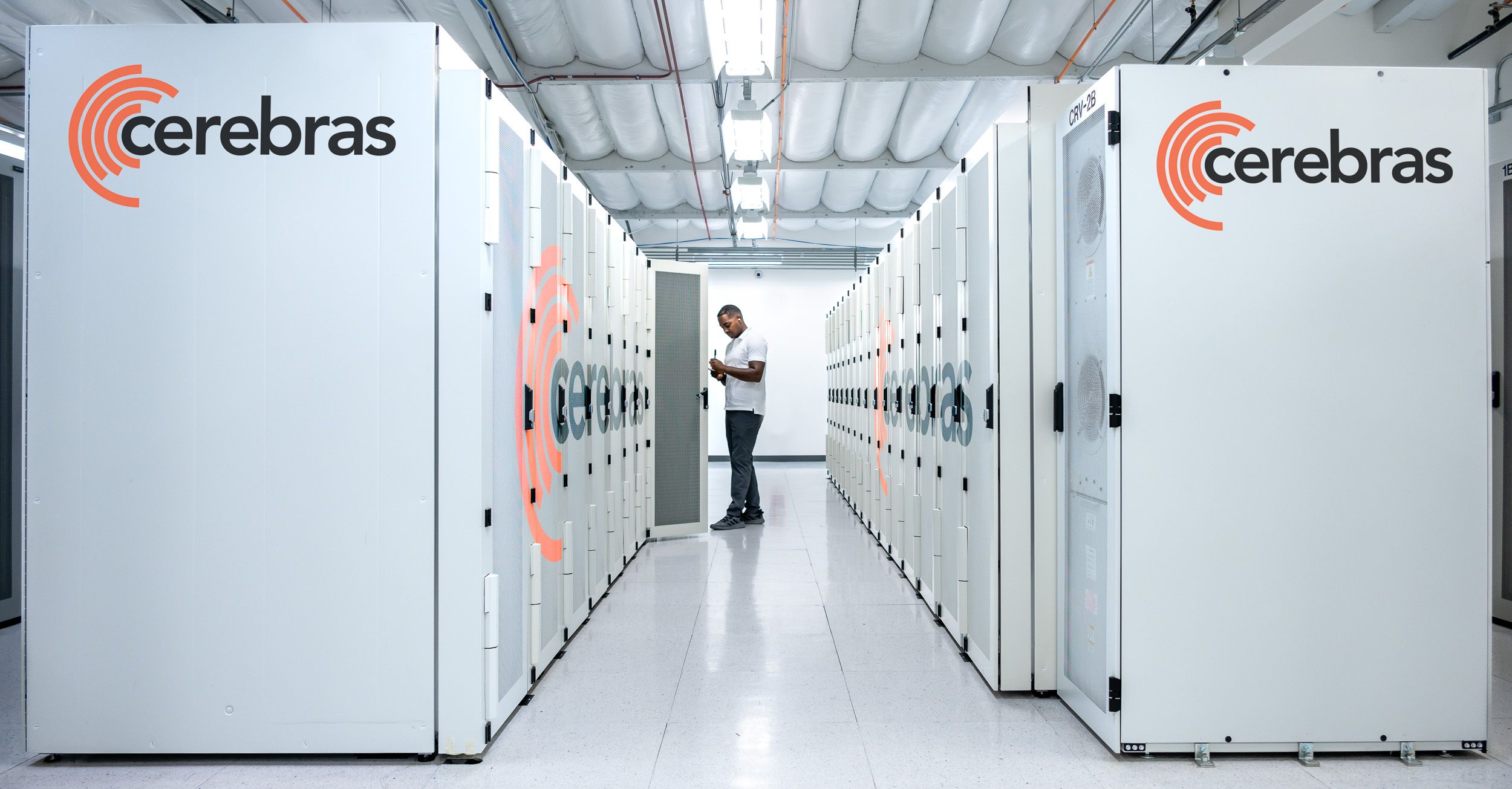
Cerebras positions itself as an AI infrastructure company, not just a maker of AI accelerators. Indeed, Cerebras designs a full stack: wafer-scale engine (WSE, literally a full silicon wafer turned into one processor), systems, and software, delivered as rack-scale systems. While Nvidia sells everything from AI GPUs to fully built rack-scale solutions, Cerebras only sells systems. Because WSE packs around 900,000 compute cores, 44 GB of on-chip SRAM, and 21 PB/s of on-chip bandwidth, its architecture by definition avoids an inter-chip communication bottleneck. Essentially, Cerebras trades system complexity for silicon complexity. There is a major weakness: wafer-scale chips are notoriously hard to yield, though WSE features plenty of redundant cores and memory cells to maximize yields.
Cerebras' revenue has grown rapidly from $24.6 million in 2022 to $510 million in 2025 (20x growth), but the quality of that growth is fragile as ~86% of revenue comes from just two customers (G42 and Mohamed bin Zayed University of Artificial Intelligence, MBZUAI), which makes the company dependent on a handful of large, project-based deployments rather than a diversified, repeatable revenue base that companies like AMD or Nvidia tend to have. The remaining 14% of revenue is generated by a fragmented base of smaller enterprise , government, and cloud customers, but none contribute enough individually to reduce Cerebras' heavy reliance on its top two clients. More recently, Cerebras inked agreements to supply its AI hardware to Amazon Web Services and OpenAI, which will diversify revenue streams for the company.
You may like Alibaba plans IPO for chip-arm T-Head to help bankroll ambitious AI infrastructure investments Montage's strong IPO highlights Chinese investment rush into AI and data center ecosystems Nvidia pumps another $2 billion into CoreWeave and announces standalone availability of Vera CPU Right now, Cerebras has a massive $24.6 billion backlog (including the $20 billion OpenAI deal), which provides strong demand visibility. The company expects to recognize approximately 15% of this revenue within the first 24 months through December 31, 2027, 43% during months 25 to 48, and the remainder thereafter. Still, Cerebras warns that converting this backlog into revenue depends on the manufacturing capacity of its partners, infrastructure deployment, and power availability. The company further warns that all of its manufacturing services and components are bought on a purchase order basis without capacity or volume commitments, which poses massive risks as the company has a very long supply chain.
Cerebras reported GAAP net income of $237.8 million in 2025, compared to a net loss of $481.6 million in 2024. However, this income statement is misleading as the profit did not come from its core business, but from an accounting adjustment. Cerebras recorded a $363 million gain from a change in the fair value (and extinguishment) of a forward contract liability: the company had a financial obligation whose value was reduced, which allows it to book that reduction as income. If the value was not reduced, the company would be unprofitable. In fact, Cerbras' operating losses totaled $145.9 million in 2025.
When it comes to gross margins, they improved significantly from 12% in 2022 to 39% in 2025 as the scale of its business and product mix improved. However, Cerebras has never been profitable.
Cerebras postponed its IPO plans in 2024 after a national security review examined its ties with Abu Dhabi-based G42 amid concerns about potential foreign access to advanced AI processors. G42 is both a customer and investor of Cerebras, which controls a 1% stake in the company that it acquired for $40 million in 2021.
Get Tom's Hardware's best news and in-depth reviews, straight to your inbox.
Key considerations
- Investor positioning can change fast
- Volatility remains possible near catalysts
- Macro rates and liquidity can dominate flows
Reference reading
- https://www.tomshardware.com/tech-industry/artificial-intelligence/SPONSORED_LINK_URL
- https://www.tomshardware.com/tech-industry/artificial-intelligence/cerebras-files-for-ipo-company-remains-unprofitable-despite-20x-revenue-growth#main
- https://www.tomshardware.com
- Anthropic's Model Context Protocol includes a critical remote code execution vulnerability — newly discovered exploit puts 200,000 AI servers at risk
- Ransomware negotiator pleads guilty after leaking victims' insurance details to 'BlackCat' hackers — perp gave attackers a precise picture of exactly how much e
- TSMC unveils process technology roadmap through 2029 — A12, A13, N2U announced, A16 slips to 2027
- The Future of AI Is Open and Proprietary
- No Need for Space Gear — Capcom’s ‘PRAGMATA’ Joins GeForce NOW on Launch Day
Informational only. No financial advice. Do your own research.