
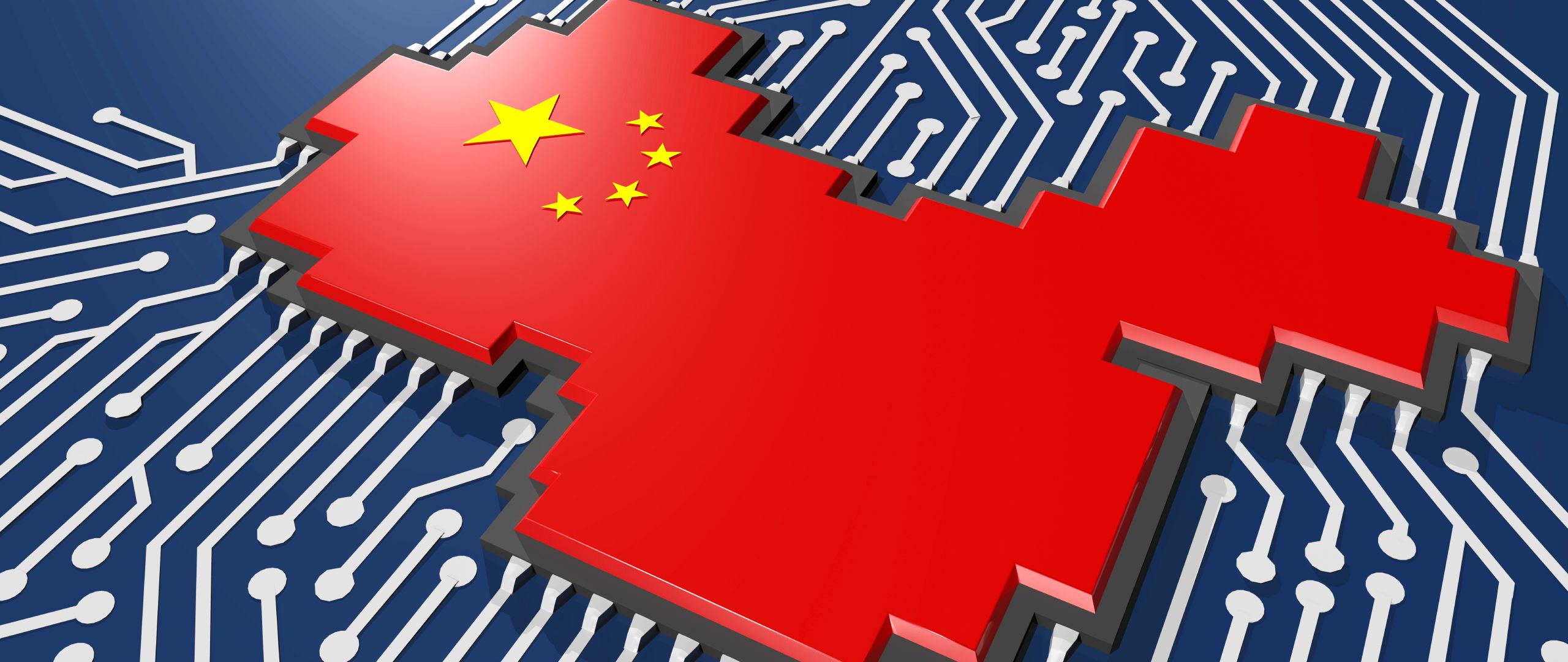
China's toolmakers now outsell KLA in etch and deposition, but lithography is stuck at five machines a year against ASML's 130.
When you purchase through links on our site, we may earn an affiliate commission. Here’s how it works .
The manufacturer was named as Shanghai Aishengna Electronic Technology Group by Reuters the following day, a state-owned company established in August 2023 with 7 billion yuan (around $1 billion) in registered capital that absorbed engineering teams from Huawei-affiliated startup Yuliangsheng and state scanner maker SMEE. The first units are due at SMIC, Hua Hong, and CXMT this year for production-line validation rather than volume output, but the machines are far from matching ASML's models and still require further testing.
Five machines represent about 3.8% of the roughly 130 immersion systems ASML deploys in a typical year (a class of lithography machines that put a super thin layer of liquid over the wafer during processing), with the European giant holding an estimated 98.7% of the total immersion market. The Chinese tool reportedly prints 28nm-class features in a single exposure and reaches 7nm, and theoretically 5nm, through multipatterning, the same route SMIC already runs on its installed ASML fleet. Neither company has confirmed the report, no machine has been shown publicly, and no throughput or overlay figures have been disclosed, against the 330 wafers per hour and 2.5nm overlay of ASML's current flagship immersion tools.
SMIC has been running a domestic immersion scanner, developed under the codename Mount Everest, since September last year, when the Financial Times reported that China's largest foundry had begun testing the Yuliangsheng tool with production-line integration targeted from 2027 after qualification.
FT compared the machine against ASML's Twinscan NXT:1950i, a system that entered the market in 2008, which puts the design roughly a decade and a half behind the tools ASML sells today . Yuliangsheng, founded in Shanghai in 2022 with 1 billion yuan (around $149 million) in registered capital, is understood to have delivered three lithography machines to fabs for testing by late last year, but this hasn’t been officially confirmed.
Shanghai Aishengna named as the maker of China's first domestic immersion DUV chipmaking tools
SMIC founder and AMEC CEO urge Chinese fabs to test domestic chipmaking tools on active production lines
Many of the critical components needed for the machines are still imported from Japan, and delays at those local suppliers are what have capped 2026 output at around five units. The 2027 target of 20 machines is therefore an ambitious target that assumes a domestic component base that hasn't been established yet, and the imported parts remain within reach of any future export-control round.
SMEE's most advanced shipping product remains the SSA600 series, a 90nm-class dry ArF scanner that was in mass production as of May last year. The 28nm-capable SSA/800 immersion tool the company announced in 2023 has never been deployed, and a state-media claim of its successful development was deleted shortly after publication. In December last year, SMEE won a roughly RMB 110 million ($16 million) single-source government contract for a KrF scanner specified at 110nm resolution and 15nm overlay, a useful indicator of where its production-grade capability is at the moment.
Domestic equipment took 35% of Chinese fab purchases in 2025, beating Beijing's 30% target and up from about 10% three years earlier, according to figures from China's semiconductor industry association. Etch and thin-film deposition passed 40% localization, and metrology reached 25%, while lithography managed just 18%, most of it in trailing-edge and packaging tools. From the end of 2025, new fab capacity additions are required to source at least half their equipment domestically, a mandate that guarantees the new scanners a customer base, whatever their specs turn out to be.
Naura Technology became the world's fifth-largest chip equipment maker by 2025 sales, trailing only ASML, Applied Materials, Lam Research, and Tokyo Electron, and moving ahead of KLA. The company booked RMB 27.14 billion ($4 billion USD) in revenue in the first three quarters of 2025 against RMB 6.05 billion ($589 million USD) for all of 2020, holds an order backlog stretching into 2027, and has started developing lithography tools for the first time . AMEC grew revenue and net profit by more than 30% in 2025, while cleaning specialist ACM Research posted $901.3 million for fiscal 2025 and guided to as much as $1.18 billion for 2026.
SiCarrier, the Shenzhen firm widely linked to Huawei, debuted around 30 tools at SEMICON China in March 2025 , spanning etch, deposition, metrology, and test, and was reportedly valued at RMB 65 billion ($9.63 billion USD) by September 2025 with more than RMB 10 billion ($1.48 billion USD) in orders. The U.S. added it to the Entity List in December 2024.
Chinese startup claims photonic chip production without DUV lithography, says nanoimprint process cuts costs by 90%
ASML's planned Low-NA EUV machine price hikes reportedly anger TSMC
Key considerations
- Investor positioning can change fast
- Volatility remains possible near catalysts
- Macro rates and liquidity can dominate flows
Reference reading
- https://www.tomshardware.com/tech-industry/semiconductors/SPONSORED_LINK_URL
- https://www.tomshardware.com/tech-industry/semiconductors/chinese-chipmaking-tool-roadmap-examined#main
- https://www.tomshardware.com/my-account
- NVIDIA Vera Rubin Driving Performance Per Watt, Lowest Token Cost for Partners Worldwide
- Crazed modder turns NAS into a gaming PC with RTX 5060 hanging from the side, boosts frame rate by 828% — Frankenstein rig hides dedicated PSU in drive bay, bre
- Industry Leaders Unite in Open Secure AI Alliance for AI Safety and Security
- At AI Summit, South Korea Outlines Its AI Future With NVIDIA and Partners
- Arm yourself with a Hall Effect controller for just $9 — GameSir's Tegenaria Lite PC controller is 50% off for a limited time
Informational only. No financial advice. Do your own research.