
Export controls, DeepSeek V4, and SMIC's production have reshaped China's AI hardware market in less than a year.
When you purchase through links on our site, we may earn an affiliate commission. Here’s how it works .
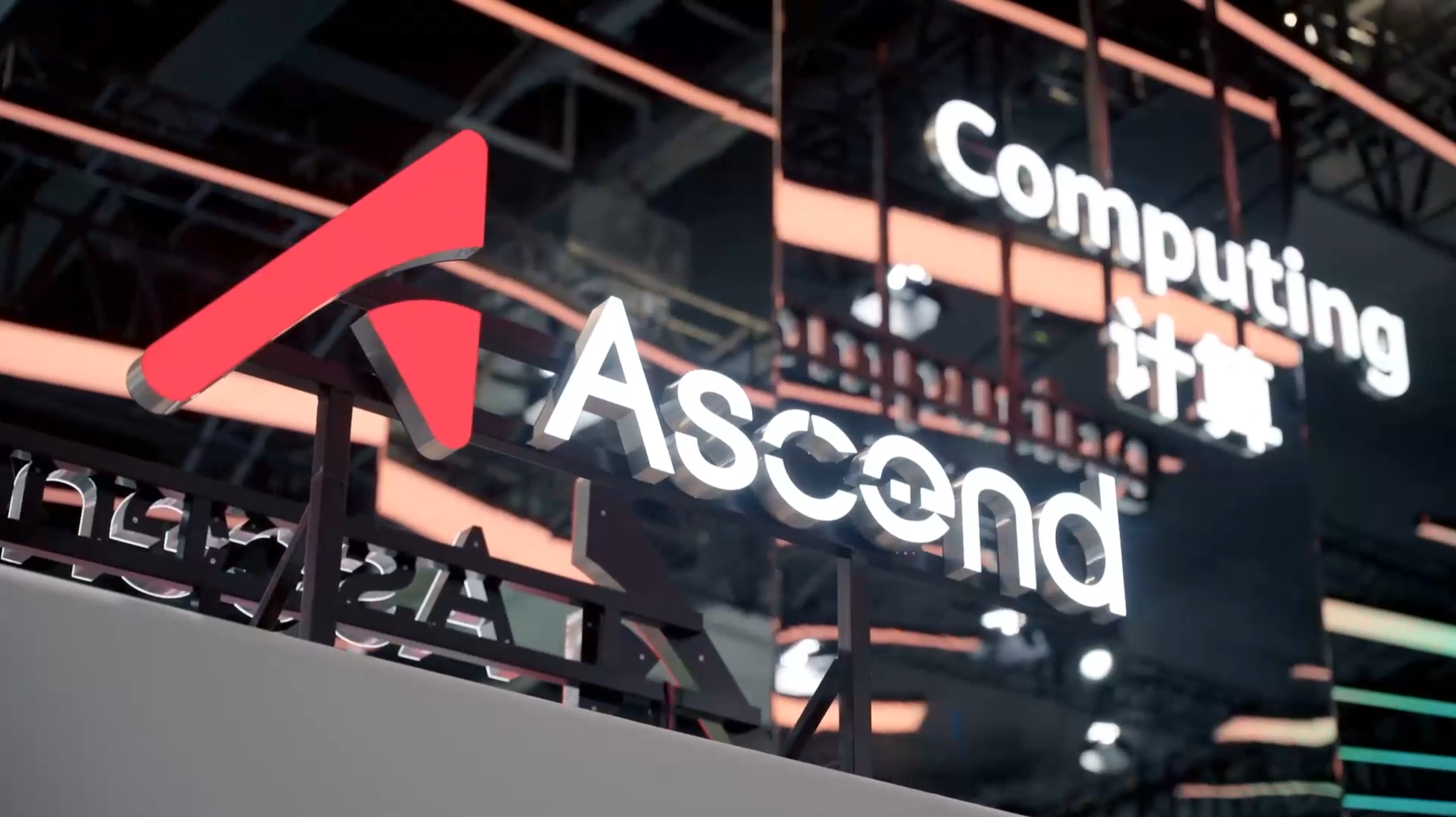
These numbers describe a market that has bifurcated with unusual speed. Just 18 months ago, Nvidia supplied the vast majority of AI training and inference silicon used by Chinese cloud providers. Today, Huawei's Ascend 950PR is the primary procurement target for China's largest tech companies, and a training-focused successor named the 950DT is scheduled for Q4 this year .
This raging demand can be largely attributed to the release of DeepSeek’s V4 LLM in April, which has been optimized specifically for Huawei's Ascend architecture and its CANN software framework rather than for Nvidia's CUDA ecosystem. Huawei engineers, per reporting from South China Morning Post , are said to have collaborated directly with DeepSeek ahead of the model’s launch, and the company confirmed that its full Ascend SuperNode product line was adapted for V4 inference on day one. Alibaba Cloud and Tencent Cloud both deployed V4 services within hours of release.
DeepSeek gave Huawei early optimization access, but didn’t extend the same to Nvidia or AMD. While V4's open weights are released in standard formats compatible with CUDA-based frameworks, DeepSeek's own infrastructure runs on Huawei Ascend silicon. The collaboration has pulled forward procurement timelines across the Chinese cloud industry, and chip prices for the 950PR have reportedly risen by about 20% as a result of the demand.
Huawei's ability to fill those orders depends on SMIC, China's leading foundry. SMIC manufactures the 950PR on its N+3 process, a 7nm-class node built without EUV lithography. Huawei is said to be targeting production of roughly 750,000 950PR units this year, with full-scale shipments expected in the second half following samples that were shipped to customers in January, but that figure is expected to fall short of demand.
Meanwhile, SMIC has been working on expanding its advanced-node capacity for more than a year. The goal is a five-fold increase over a period of two years that’ll lift 7nm and 5nm production to 100,000 wafers per month and half a million by 2030. In addition, the combined capacity for 22nm and below could rise from 30,000-50,000 wafer starts per month in 2025 to 50,000-60,000 or higher this year. Huawei is adding two dedicated fabrication plants, though ownership structures remain unclear. Once fully operational, those facilities could exceed the current output of comparable lines at SMIC.
Yields remain a thorn in China’s side, with SMIC’s 7nm-class process delivering substantially fewer good dies per wafer than TSMC’s equivalent nodes, and the 950PR is likely to be a much larger chip than a TSMC equivalent. SMIC’s cycle time from wafer start to finished and packaged as an Ascend processor is also a problem, currently sitting at around eight months , according to estimates from JP Morgan. For similar nodes at TSMC, it’s around three months.
Then there’s HBM — Huawei announced in September that it had developed its own HBM chips with up to 1.6 TB/s bandwidth, HiBL 1.0, and HiZQ 2.0, in partnership with CXMT, but how quickly CXMT can ramp production of competitive HBM remains an open question.
Huang's admission that “In China, we have now dropped to zero,” came during an interview with the Special Competitive Studies Project's "Memos to the President" podcast. He criticized U.S. export policy as having "already largely backfired," arguing that conceding a market the size of China doesn’t make strategic sense.
Nvidia market share in China falls to less than 60%
Key considerations
- Investor positioning can change fast
- Volatility remains possible near catalysts
- Macro rates and liquidity can dominate flows
Reference reading
- https://www.tomshardware.com/tech-industry/SPONSORED_LINK_URL
- https://www.tomshardware.com/tech-industry/huawei-expects-12-billion-in-ai-chip-revenue-this-year-as-nvidias-china-market-share-hits-zero#main
- https://www.tomshardware.com
- Anthropic in early talks to buy DRAM-less AI inference chips from UK startup — Fractile's SRAM architecture reduces need for pricey memory during extreme pricin
- Microsoft now recommends 32GB of RAM as the future-proof 'no worries' config for gaming — 16GB becomes the new 'practical starting point' during the RAMageddon
- Intel's Arc Pro B70 workstation GPU with 32GB of VRAM gets tested in games — Roughly twice as fast as Arc B580 on average, beats RTX 5060 Ti in some titles
- Secretlab launches Mandalorian Titan Evo gaming chair in Star Wars collection for May the 4th — collab builds with a new high-end themed chair
- New server-focused SPEC CPU 2026 benchmarking suite has results for a Raspberry Pi 5 — updated tools feature more tests and can run a wide range of systems
Informational only. No financial advice. Do your own research.