
TSMC says panel packaging won't replace CoWoS anytime soon for the largest future AI processors
TSMC's details next-gen CoWoS roadmap: over 14-reticle packages and 48x leap in compute power expected by 2029
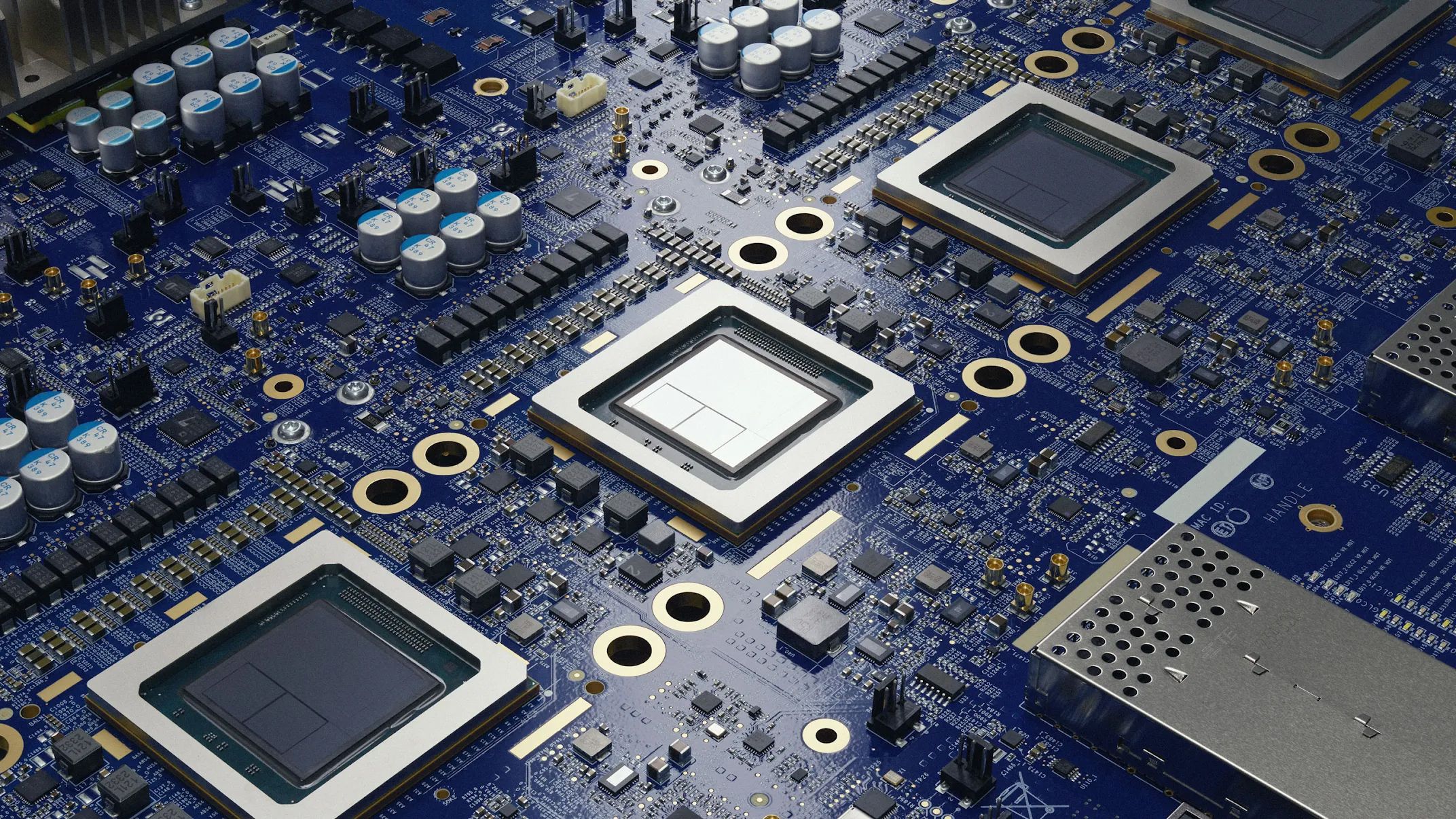
The main selling point of EMIB (and EMIB-T) is that it is not constrained by interposer reticle limits as it places small silicon bridges only where high-density die-to-die links are needed. Strictly speaking, CoWoS-L is not either, as it uses LSIs locally as well. The difference is that those bridges are embedded into a package-wide RDL interposer that connects everything and enables dense interconnections across the package.
Since both CoWoS-L and EMIB-T are designed to address the same applications and have many similarities in the way they do this, the choice between them is likely driven by a combination of factors rather than one single advantage or disadvantage. On the technology side of matters, these factors include interconnect performance and density, power delivery, scaling beyond very large package sizes, and mechanical rigidity. On the business side of things, costs, capacity availability, and supply chain diversification are also a significant factor.
SemiAnalysis claims that the main advantage of EMIB/EMIB-T over CoWoS is the lack of reticle limit, but this argument does not fully hold against CoWoS-L, as it was invented specifically to escape the reticle limitation by replacing the monolithic silicon interposer with localized LSI bridges.
When it comes to dense, package-wide routing, CoWoS-L's RDL interposer is fundamentally superior to an ordinary organic substrate offered by EMIB-T. Organic substrate wiring has coarser line/space dimensions and larger vias, so it cannot provide the same routing density as CoWoS-L's fine-pitch RDL. Where an EMIB bridge connects adjacent dies, Intel can achieve very high interconnect density. But anything that needs to travel beyond those bridges must use the package substrate or cross a topology involving additional bridges.
By contrast, CoWoS-L gives the designer two levels of connectivity: LSIs provide extremely dense local die-to-die connections, while the global RDL interposer provides relatively dense and flexible routing across the entire package. This means the RDL can carry longer, lower-density connections without consuming valuable LSI resources, while still offering much finer routing than the underlying package substrate.
Analyzing TSMC's fab expansion roadmap — multi-fab N2 ramp, CoWoS, SoIC, and uncorking bottlenecks
Inside Google's TPU V8 strategy, delivering two chips for two crucial tasks at incredible scale
Intel, SK hynix shares surge following reports of chip packaging partnership — SK is said to be testing Intel's 2.5D EMIB for HBM integration
One scenario for Google's choice is that it potentially wanted better power delivery than what CoWoS-L could offer. EMIB-T integrates TSVs for vertical power delivery, sophisticated MIM capacitors for local decoupling, and a dedicated ground plane into its silicon bridges. The combination of these features substantially reduces power-delivery impedance and improves transient response and power integrity, which gives EMIB-T a major advantage over conventional EMIB for power-hungry AI accelerators. However, we have no idea how EMIB-T stacks up against CoWoS-L in the case of Google’s Humufish.
Of course, the larger the RDL interposer becomes, the greater its parasitics can become, potentially limiting scaling unless TSMC finds ways to mitigate them. However, EMIB does not eliminate long-distance wiring: If two distant dies must communicate, those signals still have to travel somewhere, and routing them through an organic substrate is not inherently electrically superior to routing them through a purpose-built RDL interposer. Therefore, it is difficult to claim that Google chose EMIB-T over CoWoS-L, simply because EMIB-T offers superior package-wide electrical characteristics.
After Nvidia suffered yield loss with its Blackwell data center GPUs due to an alleged mismatch in the coefficient of thermal expansion (CTE) among the GPU chiplets, LSI bridges, RDL interposer, and motherboard substrate, which led to warping and system failure, it is reasonable to question the mechanical rigidity of CoWoS-L packages. Nvidia has found a solution for its dual compute chiplet Blackwell packages, and so have other developers of AI accelerators. However, as package dimensions increase, they may behave differently, therefore causing yield losses.
By contrast, EMIB/EMIB-T eliminates the large RDL interposer and embeds small silicon bridges in the organic substrate, so most of the package consists of the substrate itself. This does not make EMIB/EMIB-T packages immune to mechanical failures, as large packages can warp and bend, causing various problems. However, as such packages lack the very source of global thermomechanical stress, they can potentially be more robust mechanically. However, EMIB-T can potentially complicate things because TSVs, additional metal structures, MIM capacitors, and their ground plane make the bridge more complex. Thus, Intel must manage both global package warpage and local stresses around each embedded bridge to ensure the mechanical rigidity of these packages.
Ironically, while CoWoS-L can offer denser package-wide routing, which is better for ultra-large processors, EMIB-T may potentially provide better mechanical rigidity required for such devices. Nonetheless, EMIB-T and its organic substrate do not eliminate package bending or cracking risks entirely.
If Google's Humufish TPU really moves to EMIB-T, the decision could well be both technical and strategic. Google has the engineering resources to opt for an all-new packaging technology in an effort to lower costs and eliminate dependence on TSMC's constrained CoWoS capacity. Nvidia tends to procure advanced packaging allocations years in advance, so it is possible that Google could simply not get enough CoWoS-L wafers for its 9th-generation TPU.
As a bonus, Google can also build relationships with Intel Foundry without using the company's fabrication technologies. In fact, keeping in mind that Intel and Google already have a strategic agreement covering Intel Xeon CPUs, it wouldn't be too surprising to learn that the cloud giant is courting Intel Foundry as well.
Both Intel's EMIB-T and TSMC's CoWoS-L have their own technological and economic advantages and disadvantages. Perhaps the biggest advantage of CoWoS-L is its predictability, as the company has experience with that tech. However, if Google has decided to drop that predictability in favor of an all-new packaging method, it may well have a combination of technological and strategic reasons to do so.
Anton Shilov is a contributing writer at Tom\u2019s Hardware. Over the past couple of decades, he has covered everything from CPUs and GPUs to supercomputers and from modern process technologies and latest fab tools to high-tech industry trends. ","collapsible":{"enabled":true,"maxHeight":250,"readMoreText":"Read more","readLessText":"Read less"}}), "https://slice.vanilla.futurecdn.net/13-4-25/js/authorBio.js"); } else { console.error('%c FTE ','background: #9306F9; color: #ffffff','no lazy slice hydration function available'); } Anton Shilov Social Links Navigation Contributing Writer Anton Shilov is a contributing writer at Tom’s Hardware. Over the past couple of decades, he has covered everything from CPUs and GPUs to supercomputers and from modern process technologies and latest fab tools to high-tech industry trends.
Key considerations
- Investor positioning can change fast
- Volatility remains possible near catalysts
- Macro rates and liquidity can dominate flows
Reference reading
- https://www.tomshardware.com/tech-industry/semiconductors/SPONSORED_LINK_URL
- https://www.tomshardware.com/tech-industry/semiconductors/intels-emib-packaging-gains-traction-as-chip-designers-look-to-skirt-tsmcs-cowos-constraints-googles-reported-decision-for-9th-gen-tpus-highlights-intels-attractive-alternative#main
- https://www.tomshardware.com/my-account
- AMD Ryzen 7 5800X3D is back in stock with up to $173 in savings, thanks to these Newegg deals — free $70 MSI MAG cooler brings costs well below MSRP for the sta
- China claims chip exports nearly doubled to $177 billion in the first half of 2026 as memory prices surged — 96% year-on-year increase inflated by hikes
- Apple's rumored M7 Ultra targets 1.5TB of memory and Blackwell-class AI performance, report claims — monster 2028 offering would depend on memory shortage easin
- Grab 32GB of Corsair Vengeance DDR5 for just $236, $150 cheaper than the best standalone price — epic Newegg combo deal saves you $234 overall and comes with an
- NVIDIA BioNeMo Agent Toolkit Brings Accelerated AI to Life Sciences Researchers in Claude Science
Informational only. No financial advice. Do your own research.