
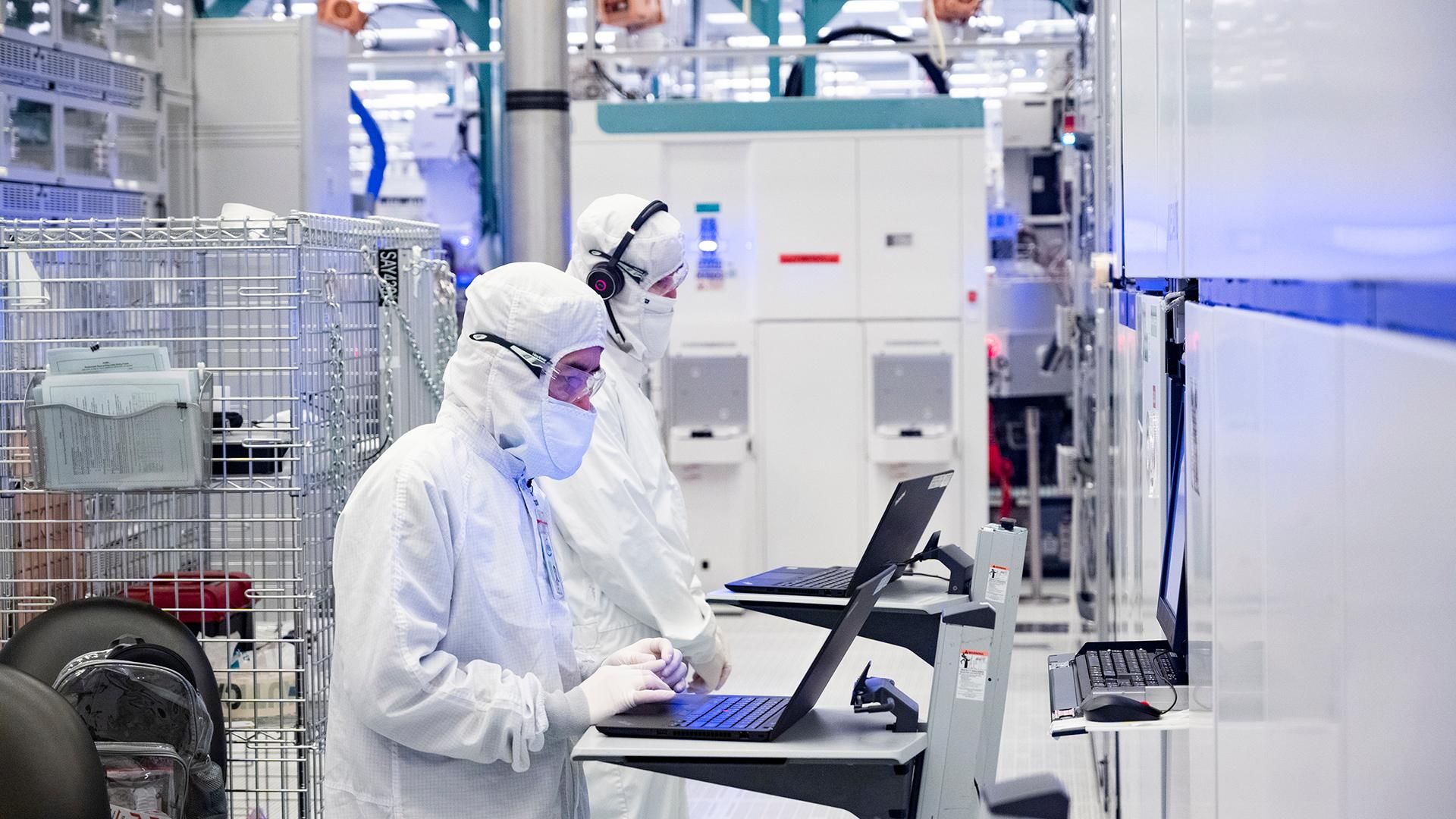
Intel is also accelerating the expansion of its leading-edge manufacturing operations in Arizona. The company is ramping Intel 18A production at Fab 52 and is accelerating equipment installation into the adjacent Fab 62, which is set to become the company's second high-volume manufacturing facility for 18A, 18A-P, and derivative process technologies.
These investments will support future Intel 18A/18A-P-based products, including server CPUs, although the company has not disclosed the precise allocation of manufacturing capacity between client and data center products at the facility. While the latter is natural, Intel said during the conference call that it expects to win some market share in the client space with its Core Ultra 400-series 'Nova Lake' CPUs, which will require the company to produce these parts in high volumes.
To support its capacity expansion, Intel aggressively procured new tools in the third quarter.
Intel reportedly set to hike CPU prices by 10% ahead of 'major annual product' launch in March 2027
Deadly Intel Fab 28 explosion causes two-week shutdown, to cost $600 million and severely disrupt server chip manufacturing for six months
ASML struggling to keep up with demand for chipmaking equipment as AI spending continues to boom
While expanding production of Intel 3 and Intel 18A/18A-P wafers is a must to increase output of data center CPUs, producing more wafers will not necessarily solve Intel's supply problems. The company also faces shortages of advanced organic substrates required to package its multi-chiplet processors (or rather system-in-packages, or SiPs?) that rely on EMIB and/or Foveros 3D packaging technologies. Intel has been working with substrate suppliers to expand their production capacity and expects approximately 40% additional substrate capacity to become available in the second half of 2027.
"We are not only constrained on the wafer side, we are also constrained on the substrate side," Zinsner said. "So, it is important we get the substrate piece of this ramped up to be able to meet the demand."
In addition, Intel is expanding its advanced packaging operations in New Mexico and Malaysia to support growing demand from internal product groups and external customers. The company already uses its EMIB technology to connect multiple compute dies in Granite Rapids processors, while its newer Clearwater Forest Xeons combine EMIB with Foveros Direct 3D and hybrid bonding to stack Intel 18A compute dies on Intel 3 base dies. Additional packaging capacity will be essential as Intel increases production of these processors and introduces more complex multi-die products as well as assembles advanced system-in-packages using EMIB, EMIB-T, Foveros 3D, and other technologies for external clients.
"On Advanced Packaging, we are pleased by the progress we are making with EMIB and EMIB-T for our internal products," Tan said. "Both continue to see significant external customer traction as well. We continue to improve on execution, working with our supply chain to secure the capacity to meet the needs of our Advanced Packaging customers. We are also seeing robust progress in the readiness of Hybrid Bonding Interconnect (HBI), which is an enabler of 3D chip stacking for our upcoming server products."
Intel's expansions will require substantial capital. Intel expects its capital expenditure (CapEx) budget to reach approximately $20 billion in 2026 and increase significantly in 2027 (though it did not reveal any firm numbers). The company said firm purchase orders to semiconductor equipment suppliers increased by nearly 40% sequentially as it secured tools for its manufacturing expansion. Intel is also evaluating opportunities to accelerate construction of its semiconductor manufacturing complex in Ohio, where the first major structural truss was recently installed.
"We have made good progress securing the equipment required to support our growth plans with firm purchase orders to equipment suppliers increasing nearly 40% sequentially," Zinsner said. "We are also accelerating clean room build-outs, including Fab 62 in Arizona and exploring opportunities to accelerate in Ohio.
Yet Intel's capacity expansion will take time to produce results. New equipment must be installed and qualified, additional wafers must pass through lengthy manufacturing cycles, and substrate suppliers must increase their output (which will likely require them to procure new tools and install them) before Intel can ship more finished processors. Consequently, the company expects supply constraints to remain particularly severe during the first half of 2027, even as the client PC market is set to continue contracting.
Nevertheless, Intel expects its data center business to continue growing and believes that additional manufacturing capacity, higher yields, and improved substrate availability will enable it to capitalize on demand for AI infrastructure in the second half of 2027 and beyond.
Follow Tom's Hardware on Google News , or add us as a preferred source , to get our latest news, analysis, & reviews in your feeds.
Anton Shilov Social Links Navigation Contributing Writer Anton Shilov is a contributing writer at Tom’s Hardware. Over the past couple of decades, he has covered everything from CPUs and GPUs to supercomputers and from modern process technologies and latest fab tools to high-tech industry trends.
TechieTwo Is this rearranging deck chairs on the Titanic? Reply
Key considerations
- Investor positioning can change fast
- Volatility remains possible near catalysts
- Macro rates and liquidity can dominate flows
Reference reading
- https://www.tomshardware.com/pc-components/cpus/SPONSORED_LINK_URL
- https://www.tomshardware.com/pc-components/cpus/intel-shifts-production-capacity-from-consumer-to-server-cpus-in-face-of-unprecedented-ai-demand-company-navigating-one-of-the-most-significant-supply-shortages-in-history#main
- https://www.tomshardware.com/membership
- Fujifilm plans 5x production boost of 100TB magnetic storage tapes driven by skyrocketing AI storage demand
- Intel’s woes wipe out $1 trillion of semiconductor market cap in one day
- Modder uses a trash 4-kW air conditioner radiator for his test bench to see how well it can cool a PC
- Anthropic's Claude AI blocks video game cloning and reverse-engineering
- Cisco gives 27-year-old engineer unlimited AI tokens to rewrite 98% of the company's legacy code in 24 months
Informational only. No financial advice. Do your own research.