
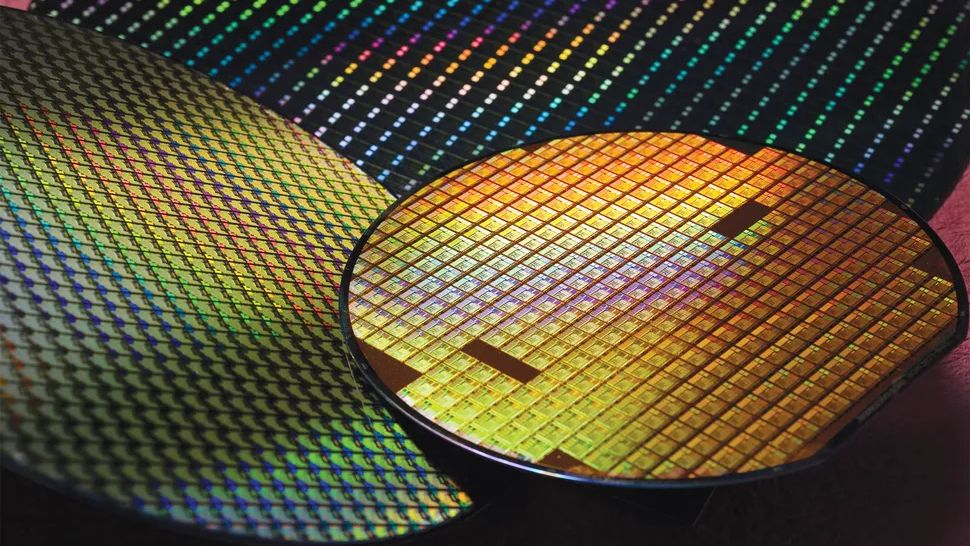
Japan's second-largest photoresist maker was the last of the big three without a Taiwan production base.
When you purchase through links on our site, we may earn an affiliate commission. Here’s how it works .
The facility will close a gap that has put JSR at a disadvantage relative to its two largest Japanese rivals. Tokyo Ohka Kogyo (TOK) and Shin-Etsu Chemical both already operate production facilities in Taiwan, where they work directly with TSMC on resist development.
Photoresist is the light-sensitive material used to transfer circuit patterns onto silicon wafers during lithography. At advanced process nodes, the resist must be precisely tuned to work with specific exposure tools and etch chemistries, and that tuning requires constant back-and-forth between the resist supplier and the foundry.
You may like Rapidus secures $1.7 billion from Japan’s government and private investors for 2nm chip production Imec's new post-exposure bake method speeds up EUV chipmaking tools, boosting production for the most advanced chips Taiwan rejects possibility of transferring 40% of the island's semiconductor capacity to U.S. JSR currently develops products for Taiwanese customers by shipping samples from its facilities in Japan, the U.S., and Belgium. Each round trip can take weeks, according to Nikkei , dragging out an iteration process that its competitors can complete far more quickly from local production sites. A Taiwan plant would let JSR embed its engineers closer to TSMC's development teams, a model TOK and Shin-Etsu have already adopted. Beyond photoresist, JSR told Nikkei Asia that it’s also considering producing other materials at the Taiwan site, such as abrasives used to smooth semiconductor substrates.
JSR's Taiwan expansion is part of a broader expansion with the company simultaneously building the world’s first production-scale facility for metal oxide resist (MOR) in South Korea, with mass production expected to begin this year. That plant will supply Samsung Electronics and SK hynix with tin-based MOR for EUV lithography.
MOR absorbs EUV photons more efficiently than the conventional chemically amplified resists used at older nodes, enabling higher resolution with fewer pattern defects. JSR acquired MOR pioneer Inpria in 2021 and has been developing tin-oxide-based formulations since. The company plans to market MOR to TSMC as well, according to Nikkei , putting itself in place for the next generation of EUV and high-NA EUV production lines that TSMC will need at 2nm and beyond.
Japanese companies collectively hold around 80% of the global photoresist market and dominate the high-end EUV segment almost entirely. Chinese firms have made inroads at the KrF and i-line level, but their penetration at ArF and above remains minimal.
Get Tom's Hardware's best news and in-depth reviews, straight to your inbox.
Key considerations
- Investor positioning can change fast
- Volatility remains possible near catalysts
- Macro rates and liquidity can dominate flows
Reference reading
- https://www.tomshardware.com/tech-industry/SPONSORED_LINK_URL
- https://www.tomshardware.com/tech-industry/jsr-to-build-first-taiwan-photoresist-plant-to-co-develop-advanced-resists-with-tsmc#main
- https://www.tomshardware.com
- Save $1,100 on this prebuilt gaming rig with Nvidia RTX 5070 Ti, Intel 14900KF, 32GB of RAM, and 2TB of storage — AB Kaze II Aqua on deep discount
- New server-focused SPEC CPU 2026 benchmarking suite has results for a Raspberry Pi 5 — updated tools feature more tests and can run a wide range of systems
- Nvidia CEO Jensen Huang says China should not have Blackwell or Rubin AI GPUs — firmly states US should have 'the first, the most, and the best' when it comes t
- Nvidia accelerates end-of-life for some Jetson AI processors due to memory shortages — RAMpocalypse sends older DDR4-based modules to the great scrapheap in the
- Enthusiast builds a PC big enough to live in — humans in this RGB-lit fish tank case look just like figurines
Informational only. No financial advice. Do your own research.