
CXL is a protocol that sits on top of the PCIe physical interface. As a result of this, many early CXL implementations were built by modifying existing PCIe IP, which is why such implementations inherited architectural characteristics optimized for PCIe rather than for memory-semantic communications, which added substantial latency, according to Panmnesia. By contrast, its new CXL controller IP features a redesigned data path that replaces separate per-layer buffers with shared buffers to eliminate much of the synchronization overhead. In addition, it features additional latency optimizations throughout the protocol stack that offset the additional hop introduced by the switch.
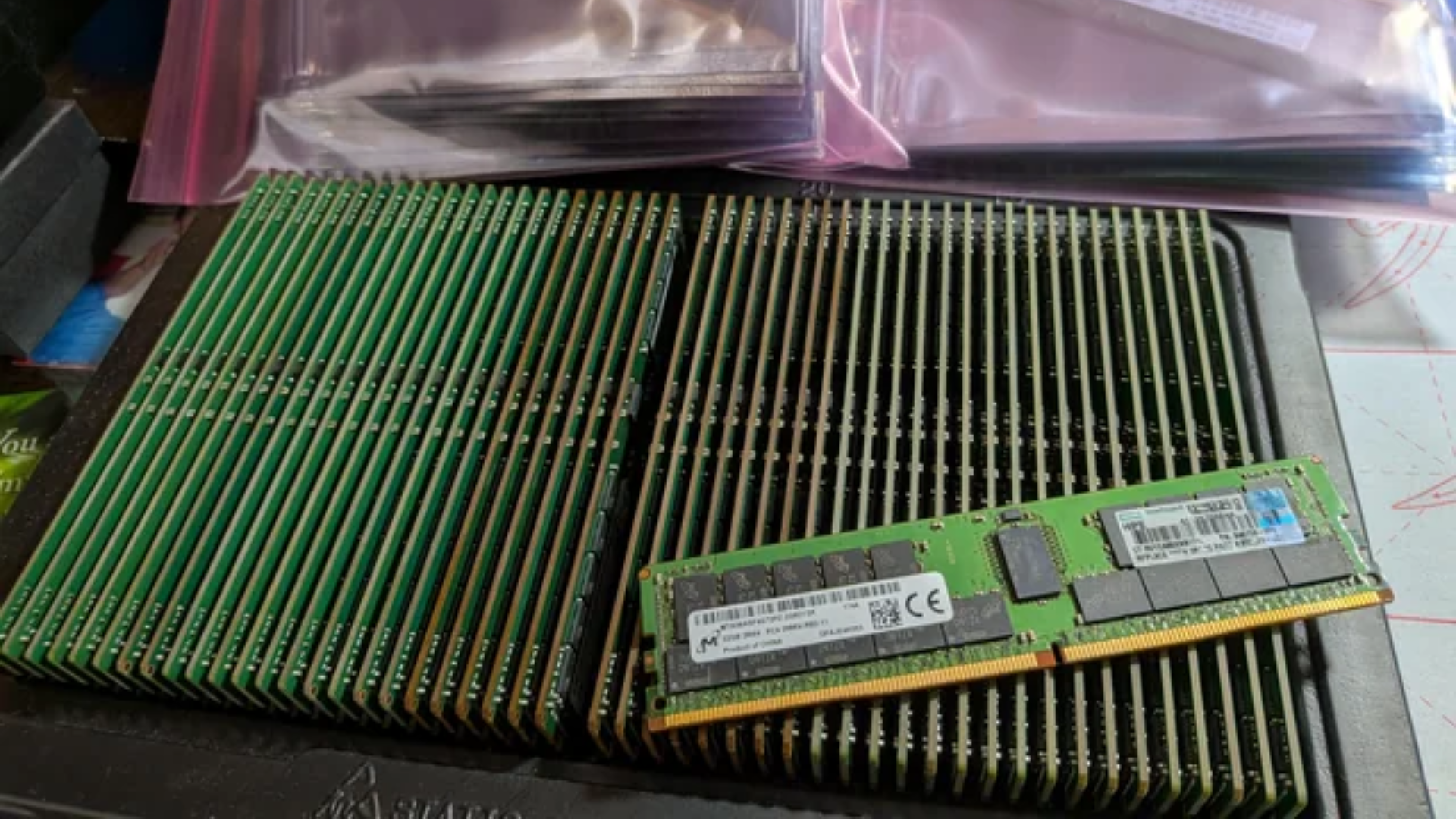
The accompanying CXL fabric switch introduces Port-Based Routing (PBR), which removes the tree-topology limitations of conventional Hierarchy-Based Routing (HBR) used by PCIe and early CXL implementations. The fabric switch still supports both PBR and HBR to enable flexible system topologies, optimized traffic routing, and stable performance. In practice, it enables companies like Meta to install more DDR4 memory into their modern servers without major performance degradation because of high latency.
Panmnesia claims that while early CXL deployments could connect only a handful of compute nodes to shared memory pools, its fabric scales to up to 64 nodes, which means greater flexibility for hyperscalers that tend to run thousands of servers, but which now have to rationalize usage of expensive DRAM.
Panmnesia says its next-generation CXL technologies are progressing toward commercialization. The company has pre-release silicon for its PCIe 6.4/CXL 3.2 Fusion Switch and has completed development of its PCIe 7.0/CXL 4.0 Combo IP, which supports the latest features introduced by the CXL 4.0 specification.
Follow Tom's Hardware on Google News , or add us as a preferred source , to get our latest news, analysis, & reviews in your feeds.
Anton Shilov is a contributing writer at Tom\u2019s Hardware. Over the past couple of decades, he has covered everything from CPUs and GPUs to supercomputers and from modern process technologies and latest fab tools to high-tech industry trends. ","collapsible":{"enabled":true,"maxHeight":250,"readMoreText":"Read more","readLessText":"Read less"}}), "https://slice.vanilla.futurecdn.net/13-4-25/js/authorBio.js"); } else { console.error('%c FTE ','background: #9306F9; color: #ffffff','no lazy slice hydration function available'); } Anton Shilov Social Links Navigation Contributing Writer Anton Shilov is a contributing writer at Tom’s Hardware. Over the past couple of decades, he has covered everything from CPUs and GPUs to supercomputers and from modern process technologies and latest fab tools to high-tech industry trends.
Key considerations
- Investor positioning can change fast
- Volatility remains possible near catalysts
- Macro rates and liquidity can dominate flows
Reference reading
- https://www.tomshardware.com/pc-components/dram/SPONSORED_LINK_URL
- https://www.tomshardware.com/pc-components/dram/meta-fights-soaring-hardware-costs-by-reusing-old-ddr4-server-memory-in-new-ddr5-only-servers-custom-cxl-2-0-chip-marries-legacy-ddr4-2400-with-cutting-edge-ddr5-6400#main
- https://www.tomshardware.com/subscription
- From Materials Simulation to Experimental Astronomy, New NVIDIA AI Software Unlocks Scientific Discoveries
- Digital archivists rush to save PS3 game data before Sony shuts down the store forever in 2027 — RPCS3 emulator urges users to preserve all content
- NAIRR Science Program Reshapes Scientific Research, Powered by NVIDIA AI Infrastructure
- The best tech deals this July 4th — save on gaming desktops, laptops, GPUs, gaming chairs, monitors, and more
- Elon Musk categorically denies SpaceX is making an AI device with proprietary OS — says rumors of a handheld thinner than an iPhone are 'utterly false'
Informational only. No financial advice. Do your own research.