
When you purchase through links on our site, we may earn an affiliate commission. Here’s how it works .
This is another example of the so-called " RAMageddon " that's gripping the DRAM market, with contract prices having risen at record rates this year. Analysts projected that conventional DRAM contract prices would climb 58% to 63% quarter-over-quarter in Q2 2026, following a Q1 surge of 90% to 95%, as suppliers reallocated capacity toward HBM and server products. SK hynix said in October last year that it had already sold out its entire 2026 memory production capacity, and Samsung and SK hynix raised 2026 HBM3E supply prices by close to 20% before the year began.
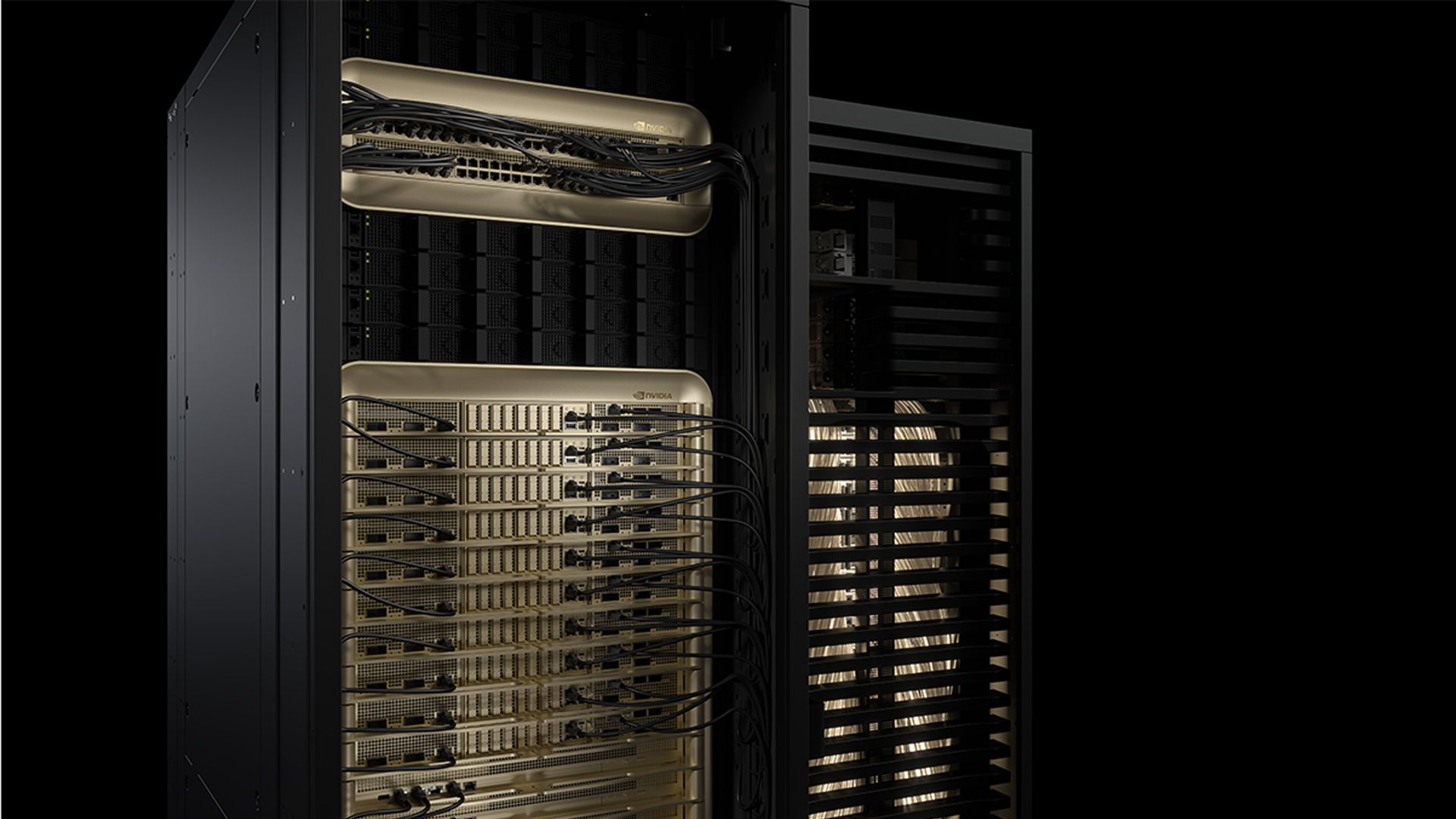
AI systems carry enormous memory loadouts, with Nvidia's Rubin GPU shipping with up to 288GB of HBM4 per package, and the NVL72 rack-scale system combines 72 of those GPUs, putting more than 20TB of HBM in a single rack before accounting for the LPDDR attached to its Vera CPUs. With HBM production consuming roughly four times the wafer area of equivalent conventional DRAM, memory has become one of the largest line items in an AI server's bill of materials, and it's continuing to rise at a stratospheric pace.
Ironically, the supply crunch that's now inflating Nvidia's systems is the same one its demand helped to create. The three major memory makers spent this and last year shifting advanced nodes and new capacity toward HBM and high-capacity server DRAM, starving commodity markets in the process. Consumer DDR5 pricing has more than doubled since late 2025 as a result, with a mainstream 32GB DDR5-6000 kit selling for around $392 in August against $110 to $140 a year earlier, according to our RAM price tracker.
Nvidia has already passed rising costs through to consumers, raising prices on GeForce graphics cards earlier this month. The Bloomberg report indicates the same unrelenting pressure has now reached the top of the Nvidia stack, where hyperscalers as well as PC builders will be absorbing the increase. A 15% rise on rack-scale systems that sell for several million dollars each adds hundreds of thousands of dollars per rack across deployments that run to thousands of racks.
Nvidia reportedly testing lower memory configs of Rubin Ultra as memory shortage bites back
The rise of local agentic computing faces a brutal reality: rising DRAM prices
Key considerations
- Investor positioning can change fast
- Volatility remains possible near catalysts
- Macro rates and liquidity can dominate flows
Reference reading
- https://www.tomshardware.com/pc-components/dram/SPONSORED_LINK_URL
- https://www.tomshardware.com/pc-components/dram/nvidia-reportedly-warns-biggest-customers-of-15-percent-price-hikes-on-ai-servers#main
- https://www.tomshardware.com/membership
- GeForce NOW Shakes Up August With 26 New Games
- Razer HyperFlux V2 Review: The best wireless charging mat for Razer mice
- TP-Link Deco 7 Pro BE13000 Wi-Fi 7 mesh router review: Value pricing, but average performance
- Slovakia discovers Russian backdoors in 279 new traffic cameras — SMS-triggered shell access and passwordless live feeds found in EU-funded rollout
- Microsoft blames RGB peripherals for crashing Windows 11 — RGB software is causing blue screens, crashes, and game freezes
Informational only. No financial advice. Do your own research.