
Nvidia's N1/N1X chips leak ahead of Computex launch, up to 20 Arm cores and RTX 5070-tier graphics
Microsoft veteran recalls the last time Nvidia and Arm was the future of Windows
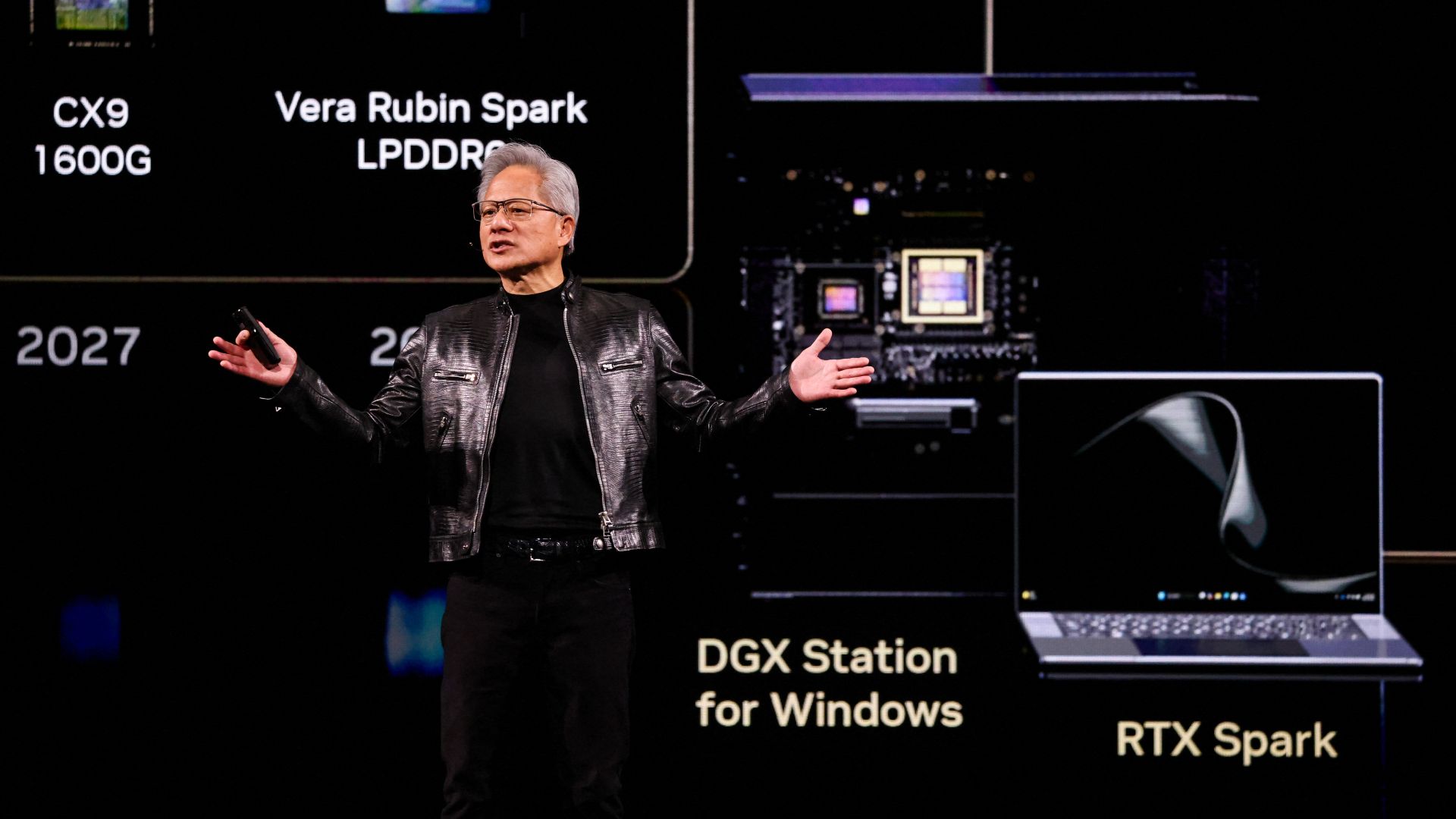
Unlike Qualcomm, Nvidia isn’t selling battery life. RTX Spark's USP is the GPU, CUDA, and the 128GB unified memory pool , hardware aimed at local AI, agents, creators, and gamers rather than all-day portability. Adobe is rearchitecting Photoshop and Premiere for the platform with a claimed two-times uplift in AI and editing workflows, and over 100 Windows software vendors, plus game developers including KRAFTON, NetEase, Remedy Entertainment, Riot Games, and Microsoft Xbox are listed as backing the platform.
Two problems dogged Windows on Arm for nearly a decade that won’t simply disappear with a faster chip, though. First: x86 emulation. Any application without a native Arm build still runs via Prism, and that has meant performance penalties and outright failures across the Snapdragon era.
Nvidia's full CUDA and RTX stack is native, which helps AI and graphics workloads, but says nothing about the long tail of legacy Windows software and peripheral drivers. The second problem is Microsoft itself: its slow progress on the next-gen Windows on Arm platform was cited as a primary cause of the N1X delays, and developers won’t be getting the full picture of the Windows agent features until Microsoft's Build keynote on June 2nd and 3rd, days after the chip was announced.
As for pricing, we’ve got nothing on that yet. The only reference point is the DGX Spark's $3,999 desktop baseline, a figure that’s now approaching $5,000 but also heavily inflated by enterprise networking hardware that consumer-grade devices will omit. That said, LPDDR5X memory costs and TSMC 3nm manufacturing both point toward premium pricing rather than the sub-$700 bracket Qualcomm targeted to broaden Arm's reach.
With the RTX Spark, Nvidia is opening a door that Qualcomm could only pry at, carrying the one asset it never had, and inheriting compatibility and OS dependencies that no amount of compute can resolve on its own.
Luke James is a freelance writer and journalist.\u00a0 Although his background is in legal, he has a personal interest in all things tech, especially hardware and microelectronics, and anything regulatory.\u00a0 ","collapsible":{"enabled":true,"maxHeight":250,"readMoreText":"Read more","readLessText":"Read less"}}), "https://slice.vanilla.futurecdn.net/13-4-24/js/authorBio.js"); } else { console.error('%c FTE ','background: #9306F9; color: #ffffff','no lazy slice hydration function available'); } Luke James Social Links Navigation Contributor Luke James is a freelance writer and journalist. Although his background is in legal, he has a personal interest in all things tech, especially hardware and microelectronics, and anything regulatory.
usertests Good luck with that used car pricing. I didn't see this in the coverage but I guess the N1 uses a smaller, cheaper die with 2,560 CUDA cores, which is an RTX 5050 sized GPU. Then cut down to 2,048 CUDA cores in the bottom SKU. This is paired with as little as 16 GB of memory. If they get serious with these parts, maybe they'll gain some traction. I hope to see some die shots, area measurements, and analysis for the smaller one. Reply
Notton "sub-$700 bracket Qualcomm targeted to broaden Arm's reach." Did you mean over $700 bracket? 2024-Q2, when Snapdragon X launched, every Snapdragon X Elite laptop was above $1000. More specifically the $999 to $1600+ range. Despite X Plus launching on the same day as X Elite, you couldn't even find them until the tail end of 2024. Those were still over $800. Arguably, at this point, I was completely disinterested because X Plus was already dog poo, but… Come 2025-Q1, Qualcomm finally decided to launch Snapdragon X non-elite-non-plus, and it took until the tail end of 2025 to see any of them, and it was only then they barely started breaking the $700 barrier. So IDK what the writer remembers, but I sure as heck don't remember Qualcomm targeting the sub $700 laptop market. Reply
Bikki looking back, direct x was for nvidia and always for nvidia. it's features were always first on nvidia and second on amd. no surprise it continues here. why not linux, well first gaming, then close source, proprietary software. windows is the only candidate. Reply
Key considerations
- Investor positioning can change fast
- Volatility remains possible near catalysts
- Macro rates and liquidity can dominate flows
Reference reading
- https://www.tomshardware.com/laptops/SPONSORED_LINK_URL
- https://www.tomshardware.com/laptops/nvidia-enters-the-windows-pc-market-with-rtx-spark#main
- https://www.tomshardware.com
- Anthropic files for IPO — Claude maker races OpenAI and SpaceX to Wall Street
- Github Copilot customers report up to 100-fold price hikes — AI sticker shock bites as Microsoft switches to usage-based pricing
- NVIDIA AI Cloud Ecosystem Expands Worldwide to Meet Global AI Compute Demand
- Hands-on with Asus’ ROG Azoth Extreme Edition 20 mechanical keyboard – when carbon fiber isn’t enough, Asus goes for the gold
- Jensen Huang says Nvidia wants to 'reinvent the single most important tool of humanity' with RTX Spark — Nvidia CEO touts support of 'literally every computer m
Informational only. No financial advice. Do your own research.