
Jowi Morales is a tech enthusiast with years of experience working in the industry. He\u2019s been writing with several tech publications since 2021, where he\u2019s been interested in tech hardware and consumer electronics. ","collapsible":{"enabled":true,"maxHeight":250,"readMoreText":"Read more","readLessText":"Read less"}}), "https://slice.vanilla.futurecdn.net/13-4-24/js/authorBio.js"); } else { console.error('%c FTE ','background: #9306F9; color: #ffffff','no lazy slice hydration function available'); } Jowi Morales Social Links Navigation Contributing Writer Jowi Morales is a tech enthusiast with years of experience working in the industry. He’s been writing with several tech publications since 2021, where he’s been interested in tech hardware and consumer electronics.
scottsoapbox How does the cost compare to a used traditional server? That’s the real benchmark not a bleeding edge server. Reply
hwertz I wonder if they're using the usb port to get them online or if some poor wireless network is going to have 2000 phones on it? Not that it's an issue, universities do have 'enterprise' style APs and 5ghz has enough channels to keep the number of devices per channel reasonable anyway. As for a used server… the power draw can be an issue. Obviously a singler server wouldn't break the bank for UCSD but it's worth considering. That said, I thnk part of the point here is just seeing about keeping phones out of the dump (hopefully they got phones with cracked screens or whatever and aren't just scrapping 3 year old pixels for no good reason?) For those of you who aren't Linux afficionados, nvidias DGX systems are Arm with Nvidia compute hardware, Raspberry Pis are Arm, and there's basically zero missing software on Arm compared to x86-64. Arm Linux is a 1st class experience. If needed, there is very good x86 and x86-64 emu, good enough that Steam has an Arm version using this if they did have something piece of software or a canned vm or whatever that is not ported. Reply
JCNicholsLOL They really be scraping everything they can get their hands on to make data centers Reply
Gururu Wouldn’t it be better to keep our old smartphones and donate new phones to our local data center? Reply
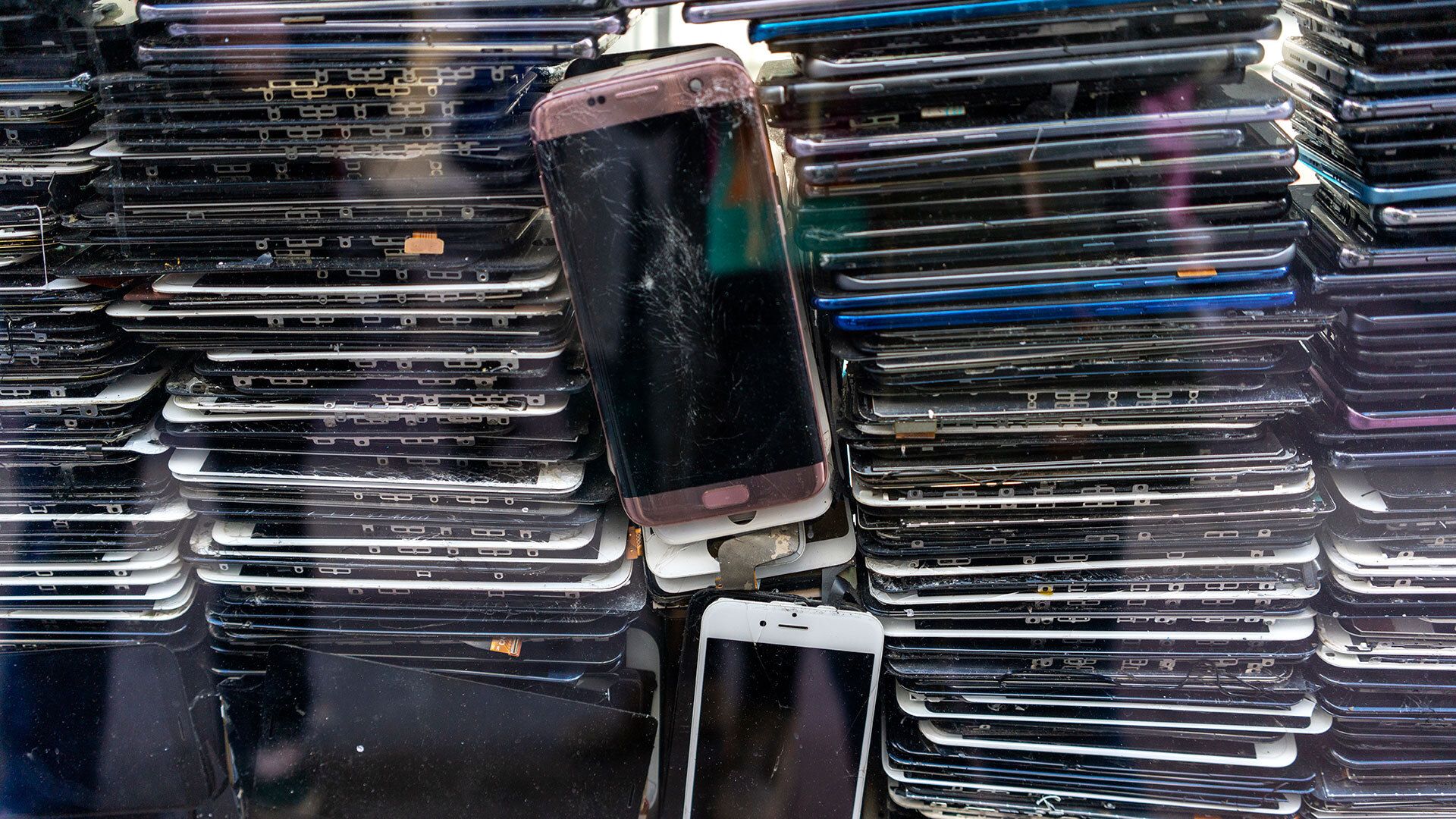
bit_user The article said: researchers could still use them for compute tasks with a little creativity. Either non-critical compute tasks, or else you have to feed the same operations to different devices and only accept the results if they match. That hurts not only the efficiency of the proposition, but also increases transaction latency. So, it won't work for some use cases. That's because the DRAM and storage in phones is not server-grade, in reliability. Furthermore, if you're using old devices, the memory is worn down and more likely to produce errors. In fact, maybe the very reason why someone disposed of the device is because it had become flaky! Also, some workloads require lots of memory, vCPUs, and/or fast local storage. These won't be viable on phones, no matter what. Reply
bit_user Gururu said: Wouldn’t it be better to keep our old smartphones and donate new phones to our local data center? If you just don't replace your phone as often, then fabs will have more available wafer capacity they can devote to building server CPUs. That applies, at least for as long as the fabs continue to be bottlenecked. I guess a related question is why don't datacenters just buy CPUs that are more like smartphones. Well, all of the big designers of server cores have efficiency-optimized alternatives: AMD provides EPYCs with C-cores Intel provides Xeons with E-cores ARM provides Neoverse N-series and E-series cores So, if cloud operators are using P-core powered CPUs, then they made a conscious decision to favor performance over efficiency. In such cases, I wouldn't expect them to consider a cluster of phones as a viable option, either. But, if they are using the efficiency-optimized CPUs, then that erodes the argument to use the phones. Reply
bit_user hwertz said: I wonder if they're using the usb port to get them online or if some poor wireless network is going to have 2000 phones on it? Not that it's an issue, universities do have 'enterprise' style APs and 5ghz has enough channels to keep the number of devices per channel reasonable anyway. Unless they have some low-communication workload, then they must use wired networking. WiFi scales horribly, when you have large numbers of devices. Particularly if they're densely-packed, because that undermines schemes like MU-MIMO which routers normally rely on, to minimize interference between users. I think the way most cloud services provision workloads is that they have storage on one network and the VMs which use your cloud storage sit on another. That's why cloud folks are so keen on ultra high-bandwidth networking, like 800 Gbps and 1.6 Tbps – because most of the storage I/O to feed hundreds of vCPUs is being squeezed through a couple of network ports. Reply
LabRat 891 Not the direction viable for large-scale eWaste reuse but… A conceptual stepping stone. (Sadly, right along with bot clusters ran on eWaste/cheap mobiles) 'Need a semi-universal package that lets the phone communicate over wifi and USB concurrently. So, anyone can start using their old smartphones for cluster computing. Reply
voyteck In fact, humanity’s penchant for mobile devices and replacing them every few years is one of the biggest contributors to e-waste Really? Look at how much bulky electronic equipment it replaces compared to, say, the '90s, from wired and wireless phones through Walkmans and Discmans to photo and video cameras, not to mention the fact that people read on their screens what they used to read on paper. Hey, some even don't use PCs/laptops anymore. Reply
Key considerations
- Investor positioning can change fast
- Volatility remains possible near catalysts
- Macro rates and liquidity can dominate flows
Reference reading
- https://www.tomshardware.com/desktops/servers/SPONSORED_LINK_URL
- https://www.tomshardware.com/desktops/servers/researchers-recycle-old-phones-and-cluster-them-into-computing-platforms-says-processors-on-modern-smartphones-deliver-higher-single-core-performance-than-comparable-multicore-servers#main
- https://www.tomshardware.com/subscription
- NVIDIA Jetson Brings Agentic AI to the Physical World
- Nvidia preps to sell its Vera CPUs into China as its GPU sales stay frozen — customers encouraged to place orders for CPU shipments as early as August
- NVIDIA Research Unlocks Advanced Grasping, Smarter Autonomous Driving and Agent Training at Scale
- Razer Kiyo V2 X Review: Auto-focus for life
- Dev releases ‘unblockable’ ASCII video stream software, stoking fears of unstoppable ads — delivers 360p video at 30 FPS and acts as a ‘bridge for AI’
Informational only. No financial advice. Do your own research.