
When you purchase through links on our site, we may earn an affiliate commission. Here’s how it works .
The pre-strike adjustments, described as “emergency management mode," are designed to limit losses at facilities that normally operate around the clock. However, they also mean that Samsung's chip production is already declining days before the union's 18-day walkout is scheduled to begin on May 21st.
The process involves restricting how many new wafers are fed into production lines and changing the product mix to focus on higher-value chips like HBM and advanced node semiconductors, per a source reported by the Herald .
Samsung's critical union negotiations break down eight days before planned 18-day chip factory strike that's projected to cost $700 million per day
Samsung holds desperate final talks with union over 18-day chip factory strike that could cost $20 billion
Union rally causes Samsung fab production to plummet by 58% during night shift as workers demand up to $400,000 bonuses
This slowdown adds to a timeline of disruption that’ll extend well beyond the planned strike dates. KB Securities analyst Kim Dong-won estimated in a recent report that restarting and stabilizing Samsung's highly automated production lines after an 18-day stoppage could take an additional two to three weeks. Combined with this pre-strike wind-down period, Samsung's total window of reduced output could stretch to six weeks or longer.
According to the Seoul Economic Daily , daily losses could approach 3 trillion won ($2 billion) if fabrication lines are paused entirely. Professor Kwon Seok-joon at Sungkyunkwan University previously estimated that the 18-day walkout alone would cause 10 trillion to 17 trillion won ($17 billion) in direct losses, while JPMorgan has projected total losses of up to 43 trillion won ($28 billion) when factoring in labor costs and extended production disruption.
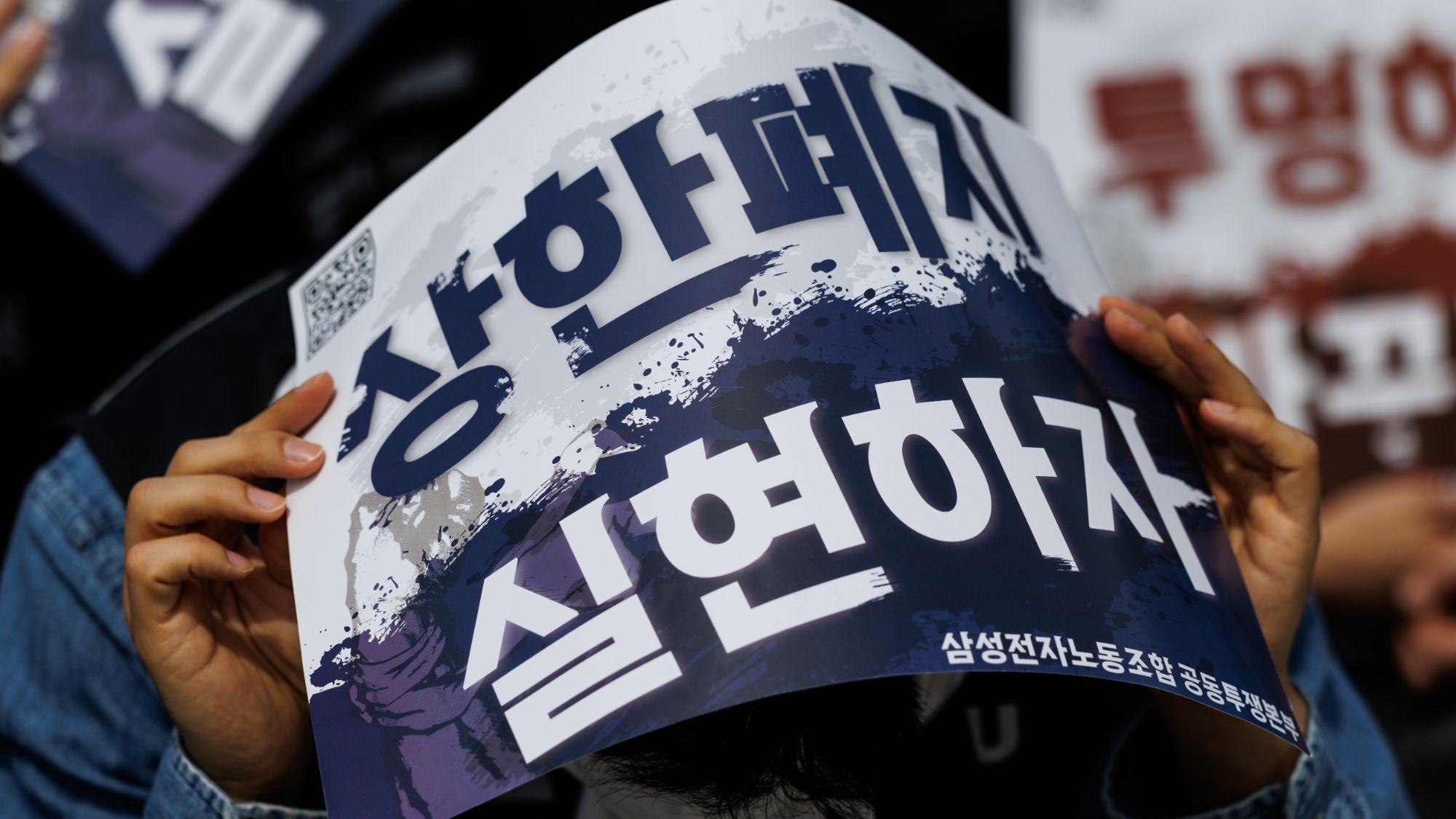
As of yesterday, May 14th, more than 43,000 workers had signed up to participate in the walkout, approaching the union's target of 50,000. "Even at the current level, more than half of the entire semiconductor (DS) division workforce is joining, and the company judges that a de facto shutdown is imminent,” a source told the Seoul Economic Daily .
Samsung sent a letter to the union today following the collapse of talks earlier this week , proposing that both sides resume talks without preconditions on Saturday, but union head Choi Seung-ho rejected the overture, telling Korean media that negotiations could take place after June 7, the scheduled end date of the strike.
Get Tom's Hardware's best news and in-depth reviews, straight to your inbox.
Key considerations
- Investor positioning can change fast
- Volatility remains possible near catalysts
- Macro rates and liquidity can dominate flows
Reference reading
- https://www.tomshardware.com/tech-industry/SPONSORED_LINK_URL
- https://www.tomshardware.com/tech-industry/samsung-starts-winding-down-chip-producton-six-days-before-planned-18-day-strike#main
- https://www.tomshardware.com
- NVIDIA and SAP Bring Trust to Specialized Agents
- South Korean official proposes 'citizen dividend' payouts from AI windfall — markets spooked by suggestion AI revenue should be redistributed to citizens
- AMD reaches 46% of server x86 CPU revenue — Intel still controls 70% of the consumer PC market share
- AMD expands its Ryzen 9000 PRO lineup with six new SKUs, now featuring 3D V-Cache for the first time — new workstation CPUs have up to 170W TDPs, available with
- ‘Your Career Starts at the Beginning of the AI Revolution,’ NVIDIA CEO Tells Graduates
Informational only. No financial advice. Do your own research.