
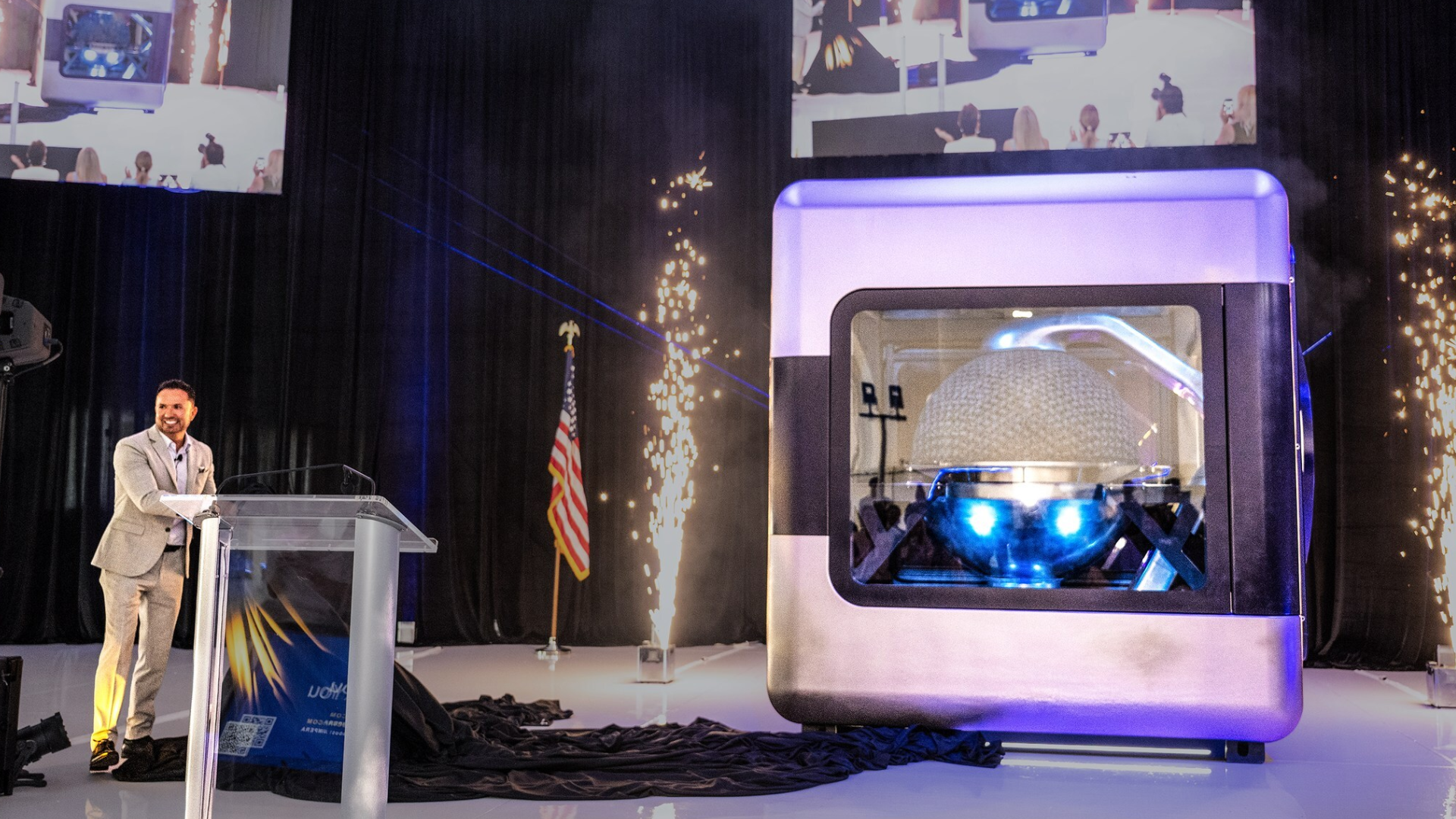
"This next-generation nuclear core and pressure vessel sets the foundation for factory-built, mass-produced nuclear energy," said Ampera CEO and founder Brian Matthews. "The advanced technology and additive manufacturing used demonstrate a clear commercial path for new nuclear technology coming to market in an accelerated manner."
The company’s description for its groundbreaking product is quite a mouthful, but it shows how advanced this nuclear reactor is. Subcritical means that its fuel does not reach criticality on its own, requiring an external source to jump-start the fission process. This is inherently safer because it reduces the chance of a runaway reaction that could lead to a meltdown. It also features a “solid-state” core, meaning it does not have any moving parts, making maintenance and operation simpler.
Factory-built suggests that the nuclear module could be manufactured relatively quickly in a production line. This would make it easier to scale for mass production and transport via shipping containers, thus cutting production costs to make it more affordable. Lastly, it uses thorium as its primary fuel source. Thorium is more abundant than uranium, so it’s easier and cheaper to acquire. It’s also not inherently fissile, requiring an external neutron source to produce protactinium-233, which then decays into U-233. While it could still be used for nuclear weapons, it’s relatively harder to do so, which is why the World Nuclear Association says that it “is sometimes promoted as having excellent non-proliferation credentials.”
While the startup unveiled the finished nuclear module, it didn’t mention turning it on and producing electricity with the system yet. This is in contrast to Valar Atomics, which turned on its Ward 250 nuclear microreactor recently and produced electricity to power an Nvidia RTX Spark desktop. Its CEO, Isiah Taylor, also announced that it’s partnering with Nvidia to power a 30MW data center using its technology.
Startup activates nuclear microreactor live on stage to power an Nvidia RTX Spark desktop PC
China says 'world's first' offshore wind-powered underwater data center has entered full operation
Ampera is also targeting a 30MWe output with its complete system using a proprietary closed-loop, supercritical CO2 Brayton-cycle turbine to produce energy. One advantage of its modular approach to developing its power solution is that customers can purchase them as necessary. It can match the turbine module with its Waste Heat Recovery module to supplement power production in data centers, or it could attach a Conventional-Fueled Power Generation unit to the entire unit as a site’s primary power source. Once the nuclear module becomes available, operators could then easily swap that out to reduce their carbon footprint.
The company did not give a timeline for when it expects to start producing power with their solution, but it seems that they’re confident that they could deploy it soon in various applications. "Our reactors are built for the markets that need power the most: AI data centers, defense, industrial and maritime," Matthews said. "We expect to be the first company to industrialize factory-built nuclear power with near-term deployment timelines."
Get Tom's Hardware's best news and in-depth reviews, straight to your inbox.
Key considerations
- Investor positioning can change fast
- Volatility remains possible near catalysts
- Macro rates and liquidity can dominate flows
Reference reading
- https://www.tomshardware.com/3d-printing/SPONSORED_LINK_URL
- https://www.tomshardware.com/3d-printing/startup-unveils-3d-printed-nuclear-reactor-module-to-power-ai-data-centers-touted-as-the-worlds-first-subcritical-solid-state-factory-built-thorium-nuclear-reactor#main
- https://www.tomshardware.com/subscription
- Up to $129 off Secretlab gaming chairs and desks in July 4 sale — save on the Titan Evo, Magnus, and more
- AOC U27G4XM 27-inch 4K 160 Hz Dual-Refresh Gaming Monitor Review: Speed, Flexibility And Value
- At ISC, JUPITER Shows What Exascale Science Looks Like
- NVIDIA Brings Trusted, 24/7 AI Agents to Telecom Operations
- Chinese YMTC SSDs make their way into retail Lenovo laptops — media outlet slams YMTC PCIe 4.0 drive for 'below average for an SSD in an office laptop' in revie
Informational only. No financial advice. Do your own research.