
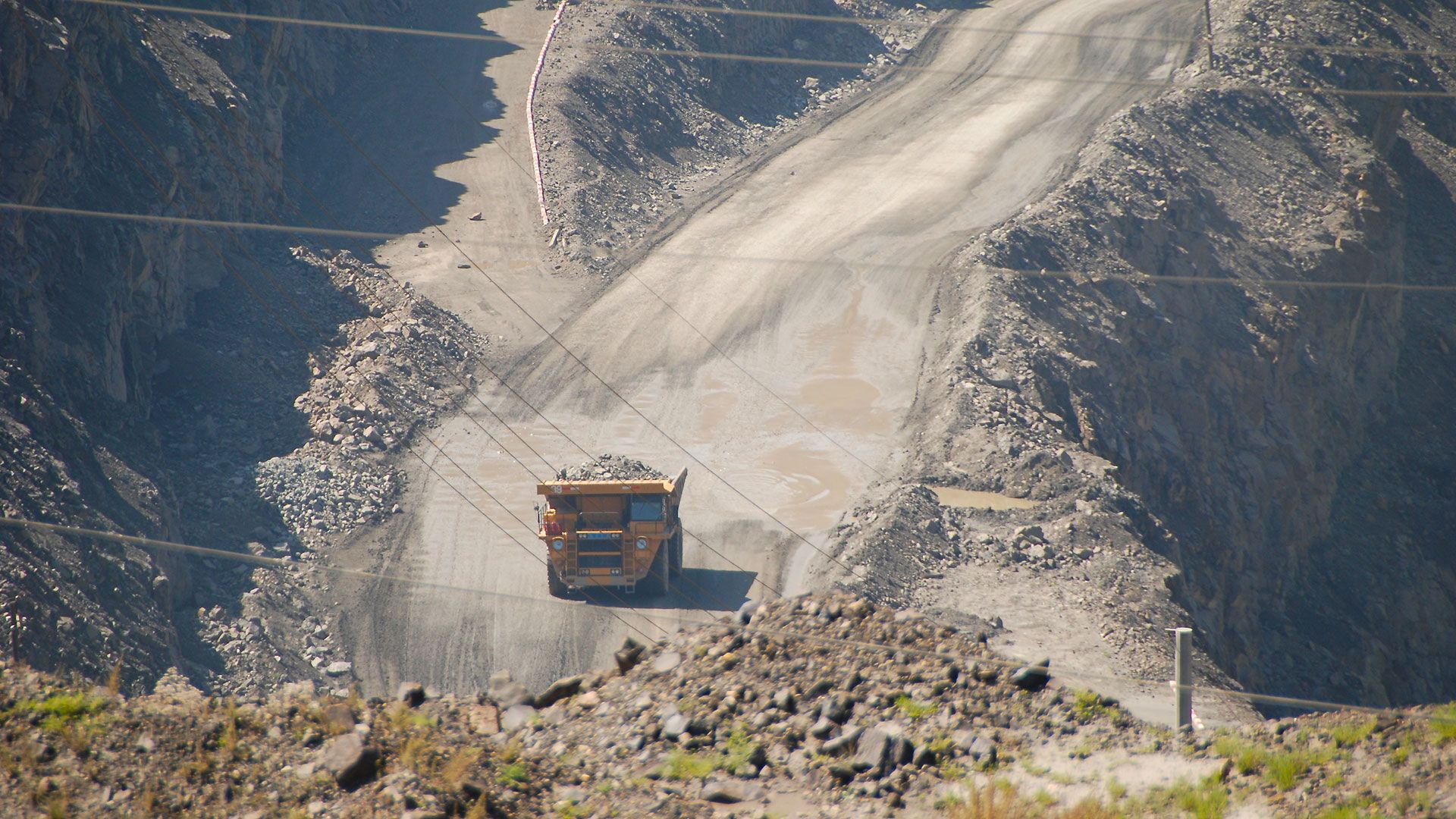
The program in question is DARPA's Open Price Exploration for National Security (OPEN), launched in 2023 to calculate what a metal should cost once labor, processing, and other inputs are factored in and alleged Chinese market manipulation is stripped out.
According to Reuters' sources, the administration intends to use OPEN's pricing model as the backbone for the reference price system that Vice President JD Vance proposed at a Critical Minerals Ministerial in Washington on February 4, where more than 50 countries were represented. Vance proposed that member nations adopt reference prices for critical minerals "at each stage of production," enforced by adjustable tariffs.
Trump administration plans $12bn critical minerals stockpile to offset China supply risk
Trump administration announces new tariffs on Chinese chips and electronic components
How China’s control of battery supply chains is becoming a critical risk for U.S. military power and AI initiatives
Trump officials are initially focusing OPEN's model on four minerals: germanium, gallium, antimony, and tungsten, with S&P Global and Finnish data firm Rovjok supplying data and technical assistance, the sources said. Gallium, in compounds such as gallium nitride (GaN) and gallium arsenide (GaAs), is used in compound semiconductors found in RF chips and power electronics, while germanium is used in chip doping, fiber optics, and high-speed microelectronics.
China controls an estimated 60% to 80% of global germanium production and the U.S. Department of Energy has reported that the United States relies on China for roughly 95% of its gallium supply. Beijing imposed export licensing requirements on both metals in August 2023, then escalated to an outright ban on shipments to the U.S. in December 2024, before partially suspending that ban in November 2025 amid broader trade negotiations.
OPEN has been focused from its inception on metals that are thinly traded or not actively exchange-traded, where manufacturers struggle to determine whether quoted prices reflect actual supply-and-demand conditions rather than subsidized Chinese output. The program is scheduled to be transferred to the non-profit Critical Minerals Forum next year.
Not everyone is convinced the tariff-backed pricing model will hold. "You can try to set something approximating a price floor, but ultimately the trade barriers aren't going to guarantee someone on the other side of that tariff wall an actual price floor because multiple producers are still going to compete on price," Nathaniel Horadam, a former U.S. Department of Energy staffer who managed critical minerals lending programs across both the Biden and Trump administrations, told Reuters .
Get Tom's Hardware's best news and in-depth reviews, straight to your inbox.
Key considerations
- Investor positioning can change fast
- Volatility remains possible near catalysts
- Macro rates and liquidity can dominate flows
Reference reading
- https://www.tomshardware.com/tech-industry/SPONSORED_LINK_URL
- https://www.tomshardware.com/tech-industry/trump-to-use-pentagon-ai-to-set-mineral-reference-prices#main
- https://www.tomshardware.com
- Tinkerer builds VR headset with CRTs repurposed from Sony Watchman — makeshift VR rig isn't the sharpest, but eliminates screen-door effect
- Nvidia's N1/N1X chips leak once again, this time tipped for release in first half of 2026 — hotly-anticipated chips to reportedly debut on Dell and Lenovo lapto
- Trump tariff turbulence risks handing TSMC a win over American chip manufacturers — prior exemptions for onshoring manufacturing may hinder the likes of Intel
- ASML makes breakthrough in EUV chipmaking tech, plans to increase speed by 50% by 2030 — new 1,000-watt light source fires three lasers at 100,000 tin droplets
- Survey Reveals AI Advances in Telecom: Networks and Automation in Driver’s Seat as Return on Investment Climbs
Informational only. No financial advice. Do your own research.