
When you purchase through links on our site, we may earn an affiliate commission. Here’s how it works .
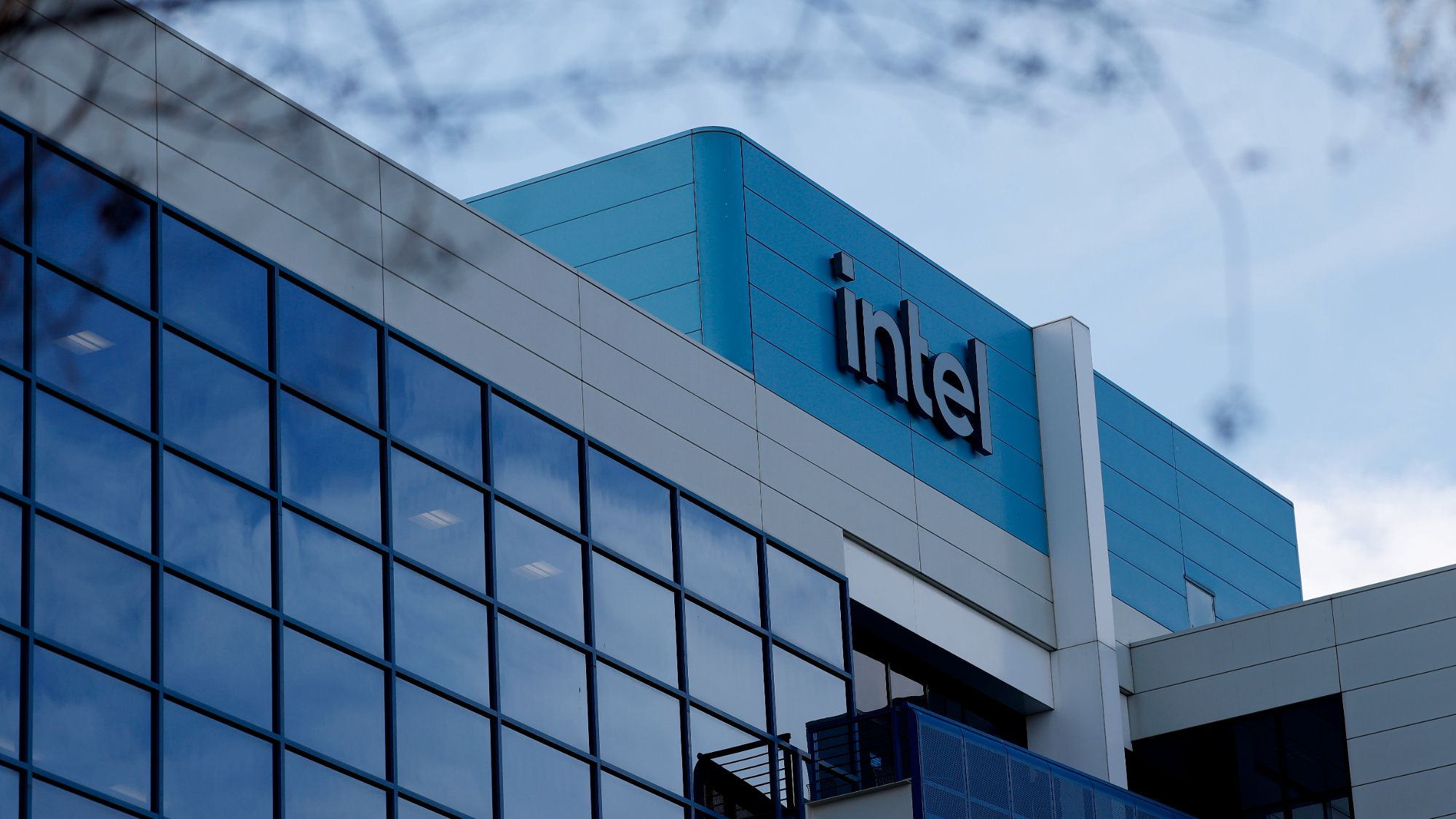
TSMC's chief executive has warned that Intel Foundry is a 'formidable' rival in the chipmaking industry at the company's most recent earnings call. Despite not yet landing many high-volume external customers, Intel's semiconductor production operations remain among the largest in the industry, a fact now more keenly felt by TSMC.
"We view Intel as our formidable competitor and do not underestimate them," said C.C. Wei, chief executive of TSMC, during the company's latest earnings call this week. "But having said that, there are no shortcuts. The fundamental rules of the foundry game never change: they need the technology leadership, manufacturing excellence, customer trust, and most of all, the service [to win market share]."
Although TSMC produces a significant percentage of Intel's products, the company still makes the bulk of its products, including its data center-grade server CPUs, at its own fabs. Intel's Xeon processors command a larger server CPU market share than AMD's EPYC products (even though AMD has captured the most lucrative parts of the market thanks to high core count and performance), so Intel is not an underdog.
You may like Why TSMC grew four times faster than its foundry rivals in 2025 Global semiconductor foundry market hit a record $320 billion in 2025 as TSMC pulled further ahead TSMC is on track to have more employees than Intel for the first time in history Furthermore, the company is now ramping up production of client Core Ultra 3-series 'Panther Lake' and data center Xeon 6+ 'Clearwater Forest' CPUs at its Fab 32 in Arizona using its 18A fabrication process (1.8nm-class) that relies on gate-all-around RibbonFET transistors and boasts a backside power delivery network called PowerVia. While TSMC's N2 production is now ramping at two fabs and also uses GAA nanosheet transistors, it does not support a BSPDN, which makes Intel's technology somewhat more progressive, at least for some designs. TSMC's A16 will bring an even better BSPDN implementation called Super Power Rail (SPR), but this will happen only in late 2026.
When it comes to revenue from chip production and packaging (and associated services), TSMC earned $33.731 billion in Q4 2025, whereas revenue of Intel Foundry was $4.5 billion , which makes Intel Foundry the world's second-largest foundry, but a long way off first place. TrendForce estimates that Samsung Foundry earned $3.399 billion in Q4 2025, SMIC's revenue was $2.489 billion, UMC's earnings totaled $1.993 billion, whereas GlobalFoundries followed with $1.83 billion in the fourth quarter of last year. While Intel Foundry primarily serves the Intel Products division and provides advanced packaging for AWS and some other companies, so does Samsung Foundry, as its parent company's LSI and Semiconductor divisions are its key customers.
It remains to be seen whether Intel's 14A process technology will gain traction with external customers and whether the company will ever have production capacity comparable to that of TSMC. Yet, at this point, there are only three companies in the world — Intel, Samsung, and TSMC — that still have ambitions and the capability to produce logic chips on leading-edge process technologies, which is another reason why TSMC calls Intel a formidable rival. At the end of the day, being one of the three semiconductor champions already deserves respect.
Follow Tom's Hardware on Google News , or add us as a preferred source , to get our latest news, analysis, & reviews in your feeds.
Get Tom's Hardware's best news and in-depth reviews, straight to your inbox.
Key considerations
- Investor positioning can change fast
- Volatility remains possible near catalysts
- Macro rates and liquidity can dominate flows
Reference reading
- https://www.tomshardware.com/tech-industry/semiconductors/SPONSORED_LINK_URL
- https://www.tomshardware.com/tech-industry/semiconductors/tsmc-warns-of-intel-foundrys-growing-prowess-during-the-companys-latest-earnings-call-we-view-intel-as-our-formidable-competitor-and-do-not-underestimate-them#main
- https://www.tomshardware.com
- Anonymous perps behind 86 million files scraped from Spotify hit with $322 million court judgement — Anna's Archive case presents intriguing precedent for AI tr
- Corsair Vengeance RGB Custom Lab Cherry Blossom DDR5-6000 C36 2x16GB Review: RAM customization made easy
- TSMC ups revenue guidance and CapEx, buoyed by 'multiyear AI megatrend' — warns Middle East conflict may impact profitability as costs increase
- Pragmata PC performance tested: 18 GPUs take us to the Moon
- Google and Pentagon in talks to run custom AI chips inside classified environments — Google pushes for tight controls for TPUs surrounding use for mass surveill
Informational only. No financial advice. Do your own research.