
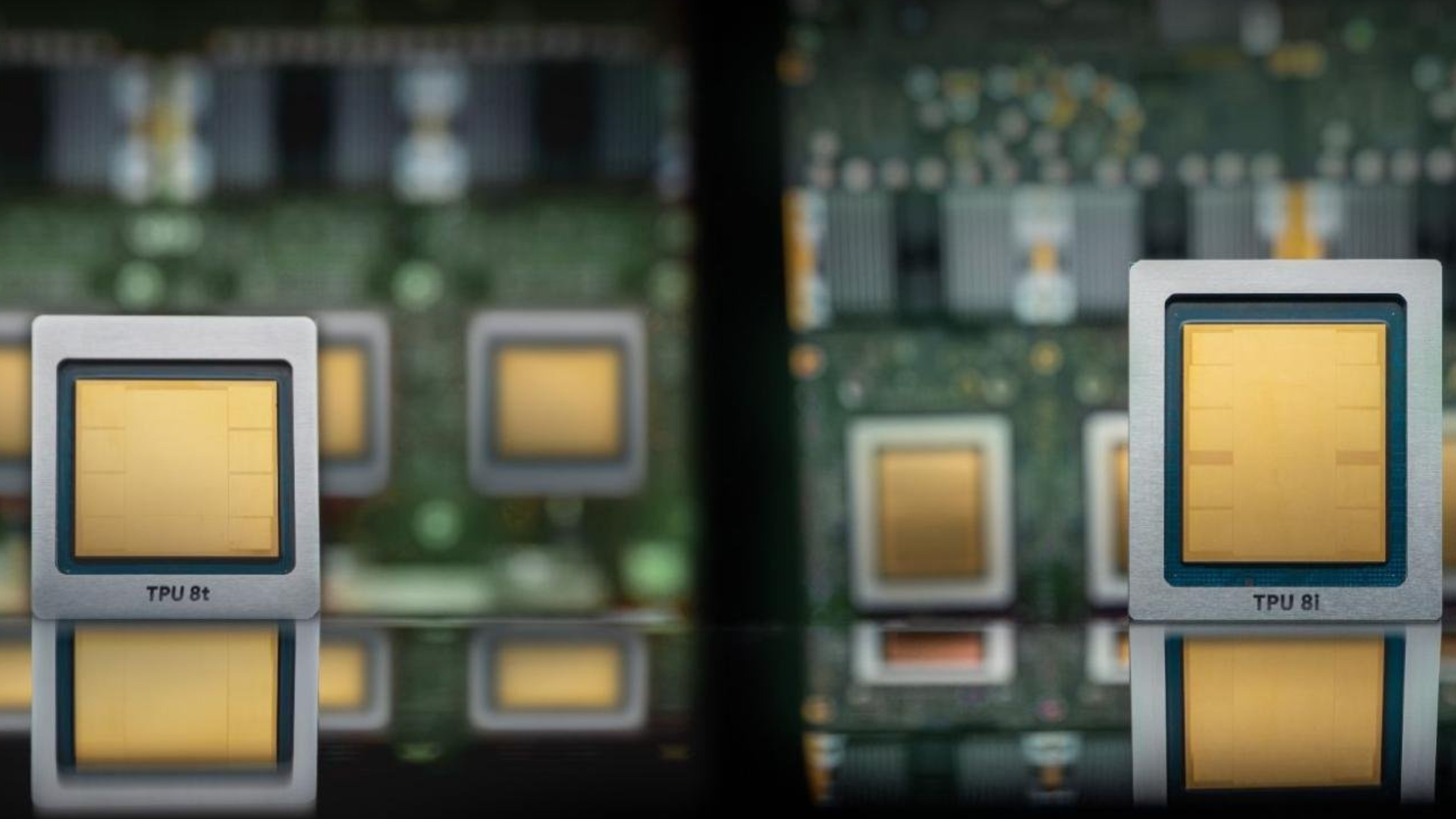
Google began recognizing revenue from TPU system sales in the quarter, with Ashkenazi telling analysts the systems were "delivered to customer data centers for the first time in Q2" and that "the vast majority of the revenues from these agreements will be realized in 2027." According to Google's balance sheet, inventory stood at $10 billion on June 30, roughly four times the $2.4 billion recorded at the end of 2025. A meaningful slice of the quarter's cash outflow bought hardware that sits on the balance sheet today and will be sold to customers next year, bringing cash back in. Money spent on data centers doesn't return in the same manner; instead, it is written down over the years of use.
Anthropic is anchoring a great deal of Alphabet's external demand, with its October 2025 agreement giving the Claude developer access to up to one million TPUs and more than 1 GW of capacity coming online this year, and an April securities filing from Broadcom, Google's TPU co-designer, added roughly 3.5 GW of TPU capacity from 2027 while locking Broadcom into future TPU generations through 2031. Meta entered talks for multi-billion-dollar TPU deployments in its own data centers last November. The current flagship, the seventh-generation Ironwood TPU , carries 192GB of HBM3E per chip and scales to 9,216-chip pods that Google rates at 42.5 FP8 exaflops.
Every TPU Google manufactures serves four functions: training and serving Gemini, running Search and YouTube inference, renting to Cloud customers, and now shipping as sold hardware. No other hyperscaler's capex spend works that many jobs, and none of the others has a chip business generating third-party revenue at this stage.
Alphabet issued Class A, Class C, and mandatory convertible preferred stock in June for net proceeds of $49.6 billion, earmarked in the release for "capital expenditures to scale AI infrastructure and global compute," and sold $20.3 billion of senior unsecured notes during the quarter. Long-term debt reached $98.2 billion on June 30, up from $46.5 billion at the end of 2025 and from roughly $16 billion a year before that, a run-up Ashkenazi acknowledged on the call. The February bond program alone raised more than $30 billion across multiple currencies, including a 100-year sterling tranche, it was reported at the time.
Together, the four largest hyperscalers plan a combined 2026 capex of around $725 billion , up 77% on 2025, and Alphabet's new range now tops the group alongside Amazon 's roughly $200 billion. Meta raised its own 2026 forecast to $125 billion to $145 billion in April, citing component pricing and competition for land, power, and labor. Alphabet's headline Q2 net income of $112.1 billion overstates the reality somewhat, however, as $99.0 billion of other income came primarily from unrealized gains on equity securities, contributing $6.26 of the $9.11 in diluted EPS. Operating income, the cleaner measure, rose 30% to $40.8 billion.
Google Cloud grew 82% to $24.8 billion in the quarter with an operating margin of 35.6%, and backlog reached $514 billion, up more than $50 billion sequentially, with just over half expected to convert to revenue within 24 months. Those contracts are the collateral behind the spending, with the buildout chasing demand Alphabet has already booked rather than demand it hopes to find. Ashkenazi said free cash flow "will remain under pressure" and confirmed capex will rise significantly again in 2027, so the question the next few quarters will answer isn't whether Alphabet returns to positive territory in any given period, but whether operating cash flow, up 41% year over year in Q2, can keep growing faster than a spending that shows no sign of slowing down.
Luke James is a freelance writer and journalist.\u00a0 Although his background is in legal, he has a personal interest in all things tech, especially hardware and microelectronics, and anything regulatory.\u00a0 ","collapsible":{"enabled":true,"maxHeight":250,"readMoreText":"Read more","readLessText":"Read less"}}), "https://slice.vanilla.futurecdn.net/13-4-25/js/authorBio.js"); } else { console.error('%c FTE ','background: #9306F9; color: #ffffff','no lazy slice hydration function available'); } Luke James Social Links Navigation Contributor Luke James is a freelance writer and journalist. Although his background is in legal, he has a personal interest in all things tech, especially hardware and microelectronics, and anything regulatory.
Key considerations
- Investor positioning can change fast
- Volatility remains possible near catalysts
- Macro rates and liquidity can dominate flows
Reference reading
- https://www.tomshardware.com/tech-industry/big-tech/SPONSORED_LINK_URL
- https://www.tomshardware.com/tech-industry/big-tech/alphabet-goes-cash-flow-negative-for-the-first-time-as-ai-capex-doubles-to-44-9-billion-in-a-single-quarter#main
- https://www.tomshardware.com/my-account
- Upgrading an MSI Claw 8 EX AI+ handheld gaming PC with a 2TB SSD
- DRAM chip supply to module makers could drop by more than 70% year-on-year in 2027, says Apacer CEO — demand for HBM and server RAM continues to devour manufact
- Apple launches official program for leasing Macs as AI price crunch bites — 24- and 36-month leasing options provided by Klarna
- The Neo Geo AES+ retro console is now available to pre-order starting from $249 — game cartridges cost $90 each; the Ultimate Edition with all games and accesso
- Upgrading an MSI Claw 8 EX AI+ handheld gaming PC with a 2TB SSD
Informational only. No financial advice. Do your own research.