
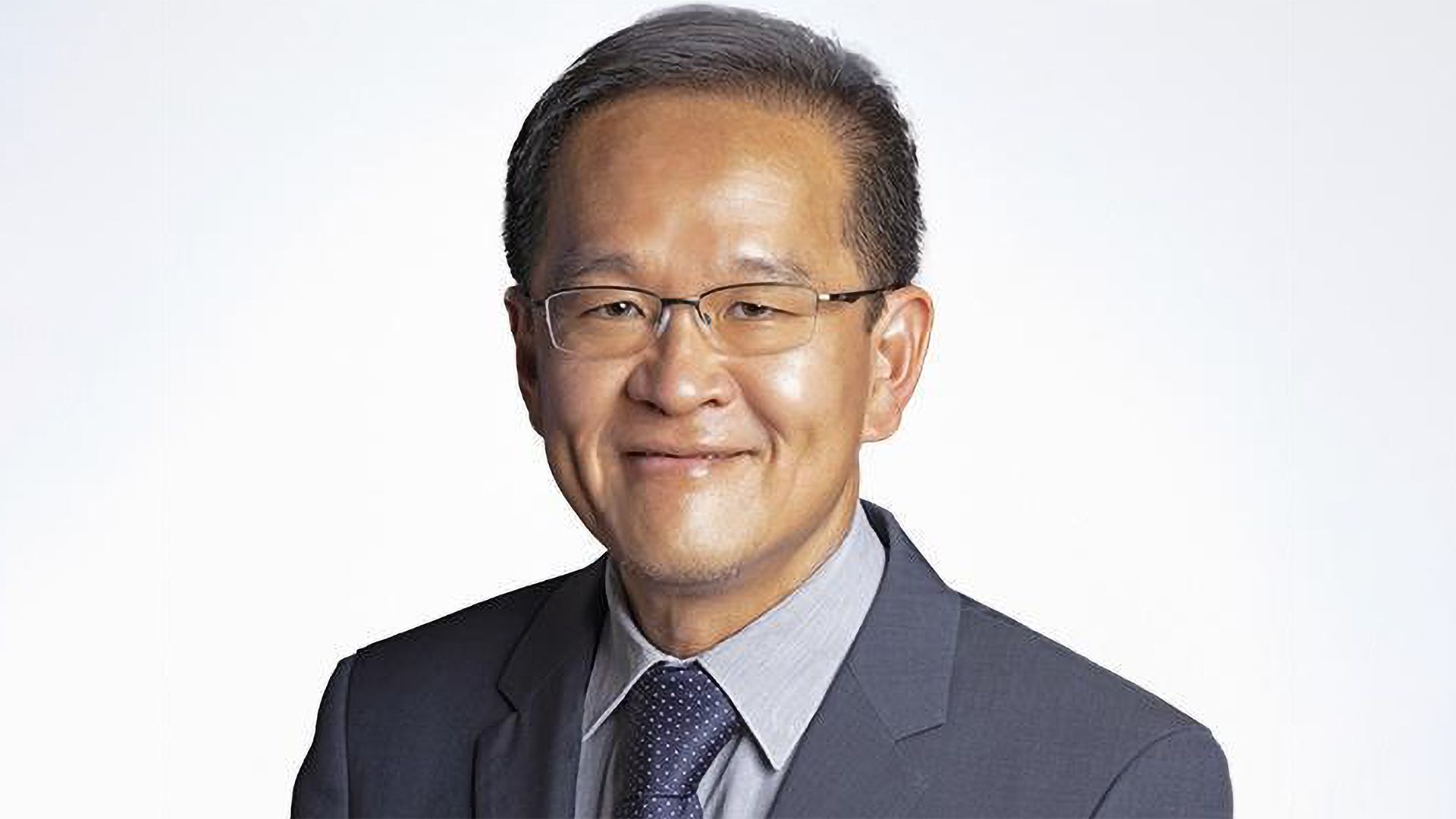
Alex Chou: Correct. PCIe Gen7 is already in active development. The current plan is to have internal samples in 2H, 2027 and to move toward production in that same general timeframe.
As controller development becomes more complex, you cannot wait until the market is ready before starting work. By the time a new interface reaches the market, the controller has to be nearly finished already. So, we are always working at least one generation ahead, and in practice often two.
Anton Shilov: As NAND becomes denser and more complex, error correction also becomes a bigger issue?
Alex Chou: That is a major part of controller development now. As NAND moves to higher layer counts and denser cell structures, the controller has to do more work to maintain reliability, endurance, and data integrity.
One of the areas we are working on is stronger LDPC. On the enterprise side, LDPC with a 16KB collaborative codeword is already used with SM8466 , SMI’s first Enterprise PCIe Gen6 controller, and it is part of the roadmap because future NAND will require more robust error correction. That is one of the reasons enterprise controller architecture keeps becoming more complex generation after generation. You are no longer designing only for interface speed. You are also designing for signal integrity, power, security, QoS, error correction, and support for future NAND generations that may behave very differently from today's devices.
Anton Shilov: Will LDPC with 16KB collaborative codeword be enough for next generations of 3D NAND with hundreds of active layers?
Alex Chou: A 16KB LDPC engine already consumes a significant amount of silicon area and is quite sophisticated. For PCIe Gen7 controllers, our goal is to optimize and improve that engine from multiple angles rather than simply keep expanding it. We still need our architects to make the final call on exactly which improvements we will implement, but at this point we are more likely to refine and enhance the current design than to move beyond 16KB LDPC.
Anton Shilov: Speaking more generally, SSD controllers are increasingly becoming full platforms rather than just controllers, because integration matters so much. Do you expect close collaboration between controller vendors, NAND makers, and SSD manufacturers to become even more important as the industry moves to next-generation storage devices?
Alex Chou: I may not fully understand your question, but let me explain how we approach it.
At Silicon Motion, we design the controller architecture and build the firmware stack with a rich feature set. For example, we have developed our own [PerformaShape] traffic-shaping engine to improve QoS. That is the foundation of the platform.
From there, we have to look at how NAND evolves from one generation to the next. As we move from PCIe Gen5 to Gen6 to Gen7, controller performance has to scale accordingly. If you want to saturate the PCIe interface and deliver, say, 7 million IOPS today and much higher performance in future generations, you have to understand exactly where NAND is going.
That is why my team meets regularly with Samsung, SK hynix, SanDisk, Kioxia, and all other NAND vendors to review their roadmaps. Silicon Motion is part of that ecosystem, and because of those relationships, we usually get early visibility into future NAND generations and often receive early samples so we can bring up our controllers and make sure they take advantage of new NAND as quickly as possible.
That matters even more in the current supply environment. Because we work with all NAND suppliers, hyperscalers and cloud service providers can come to us and ask for a solution that is not tied to a single memory vendor. A company like Samsung naturally builds around its own NAND, but we have the advantage of being able to support multiple suppliers. That gives customers much more flexibility when supply is tight.
So yes, we have a core controller architecture and a common firmware base, but one of our strengths is that we work very closely with NAND vendors on future generations and make sure our platform can take advantage of faster interfaces, higher die counts, and new NAND capabilities as they arrive.
Anton Shilov: What about storage-class memory? Are there any developments there? As far as I can tell, adoption of Kioxia’s XL-Flash has been limited.
Alex Chou: That’s a very good question. I am actually going to visit Kioxia, so I should have a better sense of their plans after that. At the moment, Kioxia is essentially the only company still pushing XL-Flash, so they are trying to build something around it.
The challenge is that it is not just about the technology itself. You need a broader ecosystem to support it, and that is what makes the situation more complicated. We are watching it closely and trying to understand whether it is something we really need to support, but at this point I do not have a definitive answer. We are still evaluating it.
Anton Shilov: Have you heard anything similar from other suppliers? Quite a few memory makers used to talk about storage-class memory or similar technologies in their roadmaps.
Alex Chou: Based on what we know, not really. If you look back at last year’s Flash Memory Summit, several NAND makers were talking about higher-performance flash and storage-class-memory-like concepts. That created a lot of buzz at the time, and we looked into it, just as we have looked into XL-Flash, to understand whether there was a real ecosystem forming around it.
But there is much less discussion around those ideas now. One reason is simple: memory vendors do not really need those products at the moment because they can sell conventional NAND at very high prices and still generate strong returns.
Anton Shilov: In other words, they can just sell QLC 3D NAND and be perfectly happy.
Anton Shilov: On the other hand, Nvidia wants storage devices capable of 100 million IOPS.
Alex Chou: Yes, that is where Storage Next comes in.
Key considerations
- Investor positioning can change fast
- Volatility remains possible near catalysts
- Macro rates and liquidity can dominate flows
Reference reading
- https://www.tomshardware.com/pc-components/ssds/SPONSORED_LINK_URL
- https://www.tomshardware.com/pc-components/ssds/pcie-gen7-development-has-already-started-says-silicon-motions-alex-chou-nvidias-storage-next-initiative-is-becoming-a-focal-point#main
- https://www.tomshardware.com/subscription
- Nvidia slashes list of authorized customers in Asia in a bid to reduce AI chip smuggling, report claims — company sent field inspectors, called customers to che
- GeForce NOW Turns Up the Heat With New GeForce RTX 5080-Powered Toronto Server
- Claude Meets Blackwell Ultra: Anthropic’s Models Now Run on NVIDIA GB300 in Azure
- Intel invests $5.7 billion in Ireland fab — aims to boost output of Xeon 6, next-gen Xeon products built on Intel 3 process
- Researchers create programmable material that can steer heat and remember its state without power — breakthrough could eventually aid AI chip cooling and silico
Informational only. No financial advice. Do your own research.