
Jowi Morales Social Links Navigation Contributing Writer Jowi Morales is a tech enthusiast with years of experience working in the industry. He’s been writing with several tech publications since 2021, where he’s been interested in tech hardware and consumer electronics.
bit_user Ironically, I heard that CD audio sales were up last year. I've mostly stopped buying audio CDs, but I long-ago stopped actually listening to them by swapping discs. Pretty much the first thing I do with a new CD is just rip it to FLAC. CDs just happen to be a means of getting lossless audio and having a physical backup. I do still have a car with an in-dash CD player, BTW. These days, I actually buy more UHD blu-rays than audio CDs. Reply
erazog That product was SACD which is an extreme niche, so that's not surprising those are disappearing from the market. The music market has segmented into two categories. 1 – Bulk of customers are digital/streaming. 2 – Collectors favour vinyl over CD, because of physical design, music culture, the experience, the whole vibe for want of a better term that CD never retained. You can see the same thing in gaming. 1 – Bulk of customers are digital. 2 – Premium collectors favour game cartridges over CD/DVD games, at almost every event/store/expo the physical cart is what takes centre stage, similar to vinyl its culture based. Reply
bit_user erazog said: 2 – Collectors favour vinyl over CD, because of physical design, music culture, the experience, the whole vibe for want of a better term that CD never retained. You forgot about the RIAA EQ curve and its byproducts. Harmonic Masking and Vinyl "Warmth"The interaction between the RIAA curve and the inherent distortion of vinyl playback changes the tonal perception of music: A fundamental tone at 40 Hz gets boosted significantly by the RIAA playback preamp. Its 2nd harmonic (80 Hz) and 3rd harmonic (120 Hz) are also amplified, though slightly less so because the curve begins to flatten out. This amplification of low-frequency harmonics adds a psychoacoustic sense of fullness, richness, and "warmth" that listeners often associate with analog audio. Source: https://www.whestaudio.co.uk/blogs/news/what-is-riaa-equalization(summary provided by Gemini) Reply
usertests https://en.wikipedia.org/wiki/Super_Audio_CD SACD has several copy protection features at the physical level, which made the digital content of SACD discs difficult to copy until the jailbreak of the PlayStation 3. The content may be copyable without SACD quality by resorting to the analog hole, or ripping the conventional 700 MB layer on hybrid discs. Copy protection schemes include physical pit modulation and 80-bit encryption of the audio data, with a key encoded on a special area of the disc that is only readable by a licensed SACD device. The HD layer of an SACD disc cannot be played back on computer CD/DVD drives, and SACDs can only be manufactured at the disc replication facilities in Shizuoka and Salzburg. Unofficial playback of SACD disc images on a PC is possible through freeware audio player foobar2000 for Windows using the open source plug-in extension SACDDecoder. First of all, how many albums have ever been released as SACD? I think the answer is around 14,000. Compare to millions of different standard CDs. It's probable that people have already ripped every single one of the SACDs and made them available for piracy. The SACD is basically a DVD. I'm not clear on if you can trivially bypass the encryption on any computer with a DVD drive, but if that is possible, there's hundreds of millions of devices on the market. Hook it up to the hi-fi player with broken drive if you want. Reply
bit_user usertests said: First of all, how many albums have ever been released as SACD? I think the answer is around 14,000. Wow! That's about 10x as many as I'd have guessed. I have a few DVD Audio discs, but I think I don't own any SACDs. usertests said: It's probable that people have already ripped every single one of the SACDs and made them available for piracy. Well, the wikipedia article said people managed to get raw, unprotected DSD streams with flawed or hacked drives, but I still wouldn't assume every disc has been ripped. As for the DSD streams, the format is pretty weird. You could convert to 24-bit 96 kHz and still maintain good quality, but you'd want a really good converter. The format is designed to be fed directly into a delta-sigma DAC chip. I saw the links you posted, but if the goal is to listen to those bitstreams anywhere but on your PC, then you'll need to convert them. usertests said: The SACD is basically a DVD. I'm not clear on if you can trivially bypass the encryption on any computer with a DVD drive, Not from a copy protection standpoint, at least. The wikipedia article you linked talks a little about it. DVD Audio discs are also more challenging than DVD Video. They use a distinct encryption format, although I'm reading that was still successfully cracked. Reply
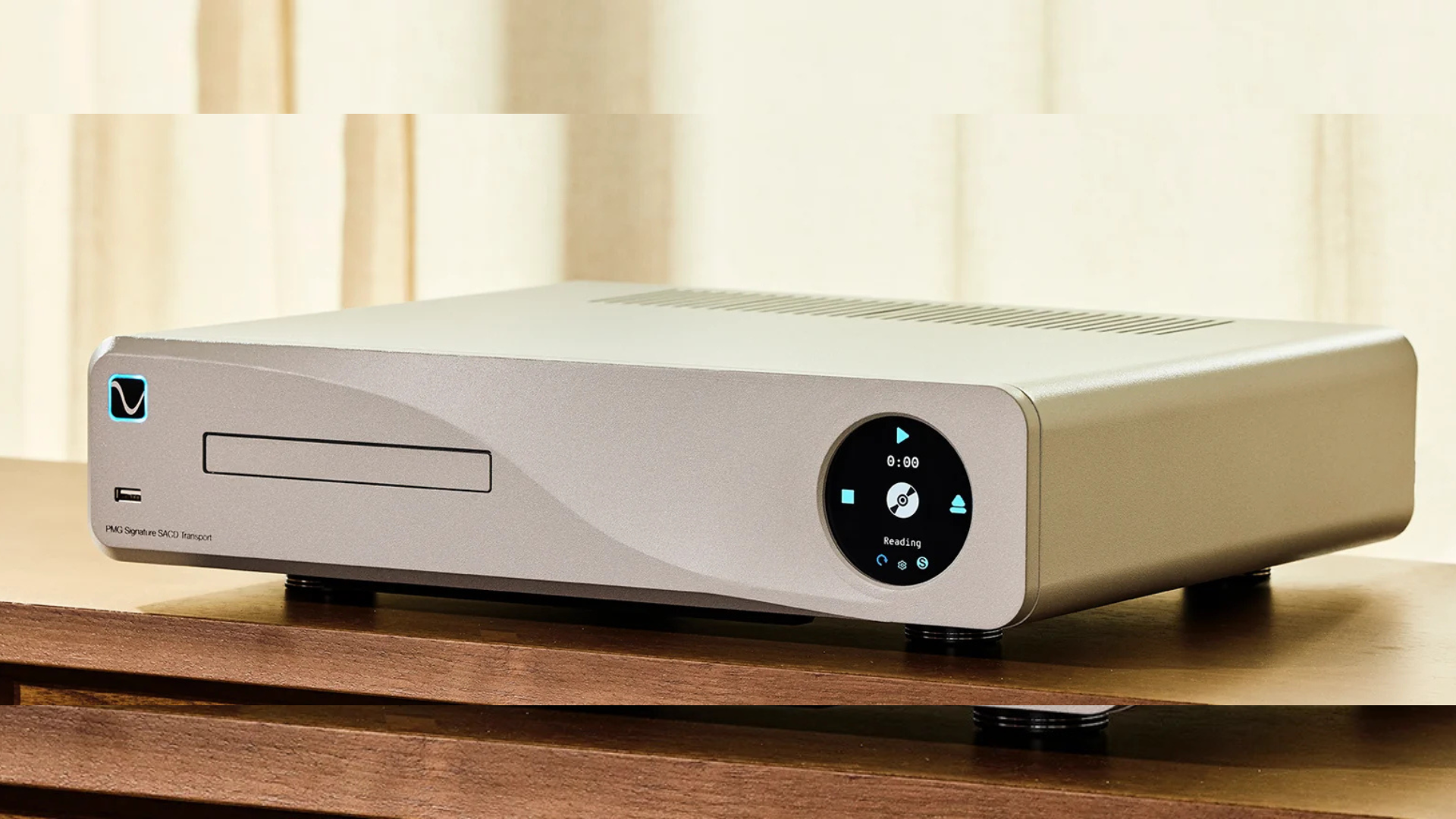
thestryker SACD never really caught on to any degree outside of Japan. The Playstation 3 had SACD support, but I think that's the only device with broad adoption to support it. It's a good format, and I wish it had supplanted CD, but it appeared on the market at the worst possible time. Reply
bit_user thestryker said: SACD never really caught on to any degree outside of Japan. The Playstation 3 had SACD support, That's interesting. I mostly don't think of PS3 as an audio disc player. You don't want your CD player to have a fan, unless it's inside a cabinet. But, that just makes it even more inconvenient to swap discs. thestryker said: It's a good format, and I wish it had supplanted CD, but it appeared on the market at the worst possible time. The thing about CD is that it's good enough and lacks meaningful copy protection. That's enough to cement its legacy. BTW, the CDs I do buy are almost always out-of-print recordings of which I want to make sure I have an uncompressed copy. Reply
thestryker bit_user said: That's interesting. I mostly don't think of PS3 as an audio disc player. You don't want your CD player to have a fan, unless it's inside a cabinet. But, that just makes it even more inconvenient to swap discs. Yeah the PS3 was pretty much the most full featured multimedia device to ever exist which made it rather interesting that they dumped functionality across the board for the PS4. I came close to buying one just for that functionality, but by then I'd already had a computer hooked up to my TV for years and by the time I was getting blu-rays playback on PC was fine. bit_user said: The thing about CD is that it's good enough and lacks meaningful copy protection. That's enough to cement its legacy. CDs drove a lot of specific compression during mastering so something better may have helped here. I wasn't as much into audio at the time so I'm not totally sure but I imagine SACD and DVD-A battling for the same market probably didn't help. Unfortunately we ended up with effectively lossy rips of CDs taking over the audio market. Reply
bit_user thestryker said: CDs drove a lot of specific compression during mastering Are you talking about dynamic range compression? Audio engineers do that sort of thing for playback on FM radio and in noisy environments. It has nothing intrinsically to do with CDs. thestryker said: I'm not totally sure but I imagine SACD and DVD-A battling for the same market probably didn't help. I think a problem with both formats is that they required an upgraded transport, compared to what CD players traditionally use. So, that and the additional compute requirements added a lot of cost, which probably kept them out of mainstream audio disc players at just the time when they would've needed to catch on. Instead, like you said, the mass market went for MP3 players. Ironically, SACD and DVD-A both use bitstream formats that make it easier & cheaper to build a good DAC. The point of DVD-A's 96 kHz sampling frequency was to enable cheaper analog post-processing. SACD's bitstream enabled the use of inexpensive delta-sigma DACs. Reply
Key considerations
- Investor positioning can change fast
- Volatility remains possible near catalysts
- Macro rates and liquidity can dominate flows
Reference reading
- https://www.tomshardware.com/peripherals/SPONSORED_LINK_URL
- https://www.tomshardware.com/peripherals/audiophiles-in-trouble-as-manufacturers-cease-optical-drive-production-hi-fi-cd-players-require-extensive-rework-to-use-components-from-other-companies#main
- https://www.tomshardware.com/membership
- Massive 192GB GTA leak reveals early GTA VI map and canceled DLCs — files show liquid nitrogen death for Trevor and scrapped Liberty City expansion
- Researchers create DNA computer that performs 100-bit calculations without electricity — molecular system uses self-assembling strands to perform computing
- Investigative report details how export-restricted Nvidia AI chips reach China — public records reveal how Chinese entities skirt US sanctions
- AI developer vibe codes DLSS 5 onto Intel CPU's integrated graphics — Intel Arc 140T runs neural rendering in 360p at 10 frames per second
- Modder gets Nvidia's DLSS 5 working in a web browser using WebGPU — 147MB browser port runs on non-Nvidia GPUs and macOS but takes two seconds per render
Informational only. No financial advice. Do your own research.